



கம்பராமாயணம் 10237 · யுத்த 37.224
பாடல் · The poem
Tap a word to see its gloss in the commentary and where else it occurs.
பொருள் · Meaning in Tamil
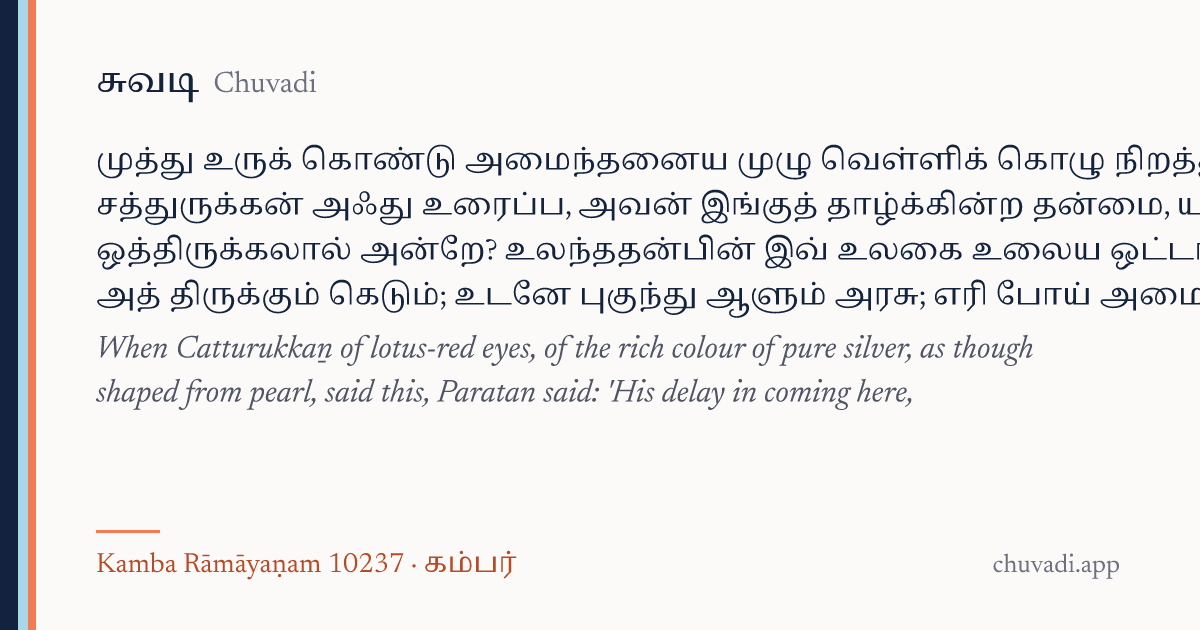
முத்து உருக் கொண்டு அமைந்தனைய முழு வெள்ளிக் கொழு நிறத்து முளரிச் செங்கண் சத்துருக்கன் அஃது உரைப்ப - முத்து வடிவம் கொண்டு செய்தது போன்ற முழுமையான வெள்ளியின் கொழுவிய வெண்மை நிற மேனியை உடைய தாமரை போலும் கண்ணான் ஆகிய சத்துருக்கன் அந்த வார்த்தைகளைச் சொல்ல; (அது கேட்ட பரதன்) அவன் இங்குத் தாழ்க்கின்ற தன்மை - அந்த இராமன் நாடு வரத் தாமதிக்கின்ற காரணம்; யான் இங்கு ஒத்திருக்கலால் அன்றே - யான் இங்கு அரசாட்சியோடு கூடி இருக்கின்ற தன்மையால் அல்லவா?; உலந்ததன்பின் இவ் உலகை உலைய ஒட்டான் - நான் இறந்தபிறகு இந்த உலகத்தை வருந்தும்படி விடமாட்டான்; அத்திருக்கும் கெடும் - அந்த மாறுபட்ட நினைவும் அவனை விட்டுப் போகும்; உடனே புகுந்து அரசு ஆளும் - உடனே விரைந்து அயோத்திக்குள் நுழைந்து அரசை ஆள்வான் (ஆதலின் சத்துருக்க!); 'போய் எரி அமைக்க' என்றான் - நீ சென்று நெருப்பைத் தயார் செய்வாயாக என்று சொன்னான்.
ஆங்கிலம் · English translationAI
Translation
- When Catturukkaṉ of lotus-red eyes, of the rich colour of pure silver,
- as though shaped from pearl, said this, Paratan said: 'His delay in coming here,
- is it not because I remain here? Once I am dead, he will not let this world suffer;
- that grudge too will vanish; he will come at once and rule the kingdom; go, prepare the fire.'
What the poem says
Catturukkaṉ is described as fair as pearl and silver, with red lotus eyes. Paratan answers him with a new idea: perhaps Irāmaṉ is delaying because Paratan is still here, connected with the kingship.
Once Paratan is dead, Irāmaṉ will not leave the kingdom without a ruler; whatever has kept him away will disappear and he will come at once. So Paratan orders his brother to go and prepare the pyre.