



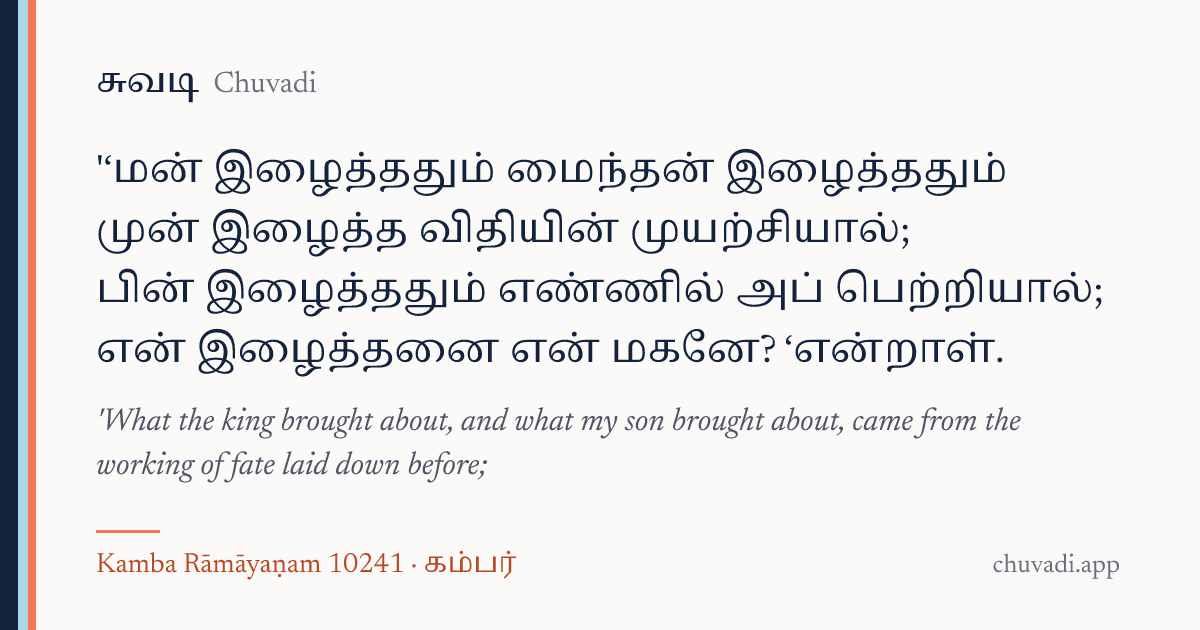
கம்பராமாயணம் 10241 · யுத்த 37.228
பாடல் · The poem
Tap a word to see its gloss in the commentary and where else it occurs.
பொருள் · Meaning in Tamil
மன் இழைத்ததும் - தயரதன் இறந்ததும்; மைந்தன் இழைத்ததும் - இராமன் காடு போயதும்; முன் இழைத்த விதியின் முயற்சியால் - முன்னால் செய்தமைத்த வினையாகிய விதியின் விளைவால் நடந்தவையாகும்; பின் இழைத்ததும் - பின் குறித்த காலத்தில் வாராமையும்; எண்ணில் - யோசித்தால்; அப்பெற்றியால் - அதுபோல விதியின் விளைவே, என் மகனே! - என் மகனாகிய பரதனே (விதியாலன்றி) என் இழைத்தனை - நீயாக என்ன செய்யத் துணிந்தாய்? என்றாள். தாமாக இயல்பாக நடப்பனவற்றை விதியின் விளைவு என்றும் நாமாக வலிந்து மேற்கொண்டு செய்வனவற்றை வினை என்றும் வேறு பிரித்துணரலாம்.
ஆங்கிலம் · English translationAI
Translation
- 'What the king brought about, and what my son brought about,
- came from the working of fate laid down before;
- what has happened since, if you think, is of that nature too;
- what have you resolved to do, my son?' she said.
What the poem says
Kōcalai reasons with Paratan. Tacarataṉ's death and Irāmaṉ's exile were both the work of destiny shaped by past deeds, and so is Irāmaṉ's failure to arrive on time.
But Paratan's decision to die is his own act, not fate, and she asks him what he thinks he is doing. The commentary distinguishes events that happen of themselves, which are fate, from acts we deliberately choose, which are our own deeds.