



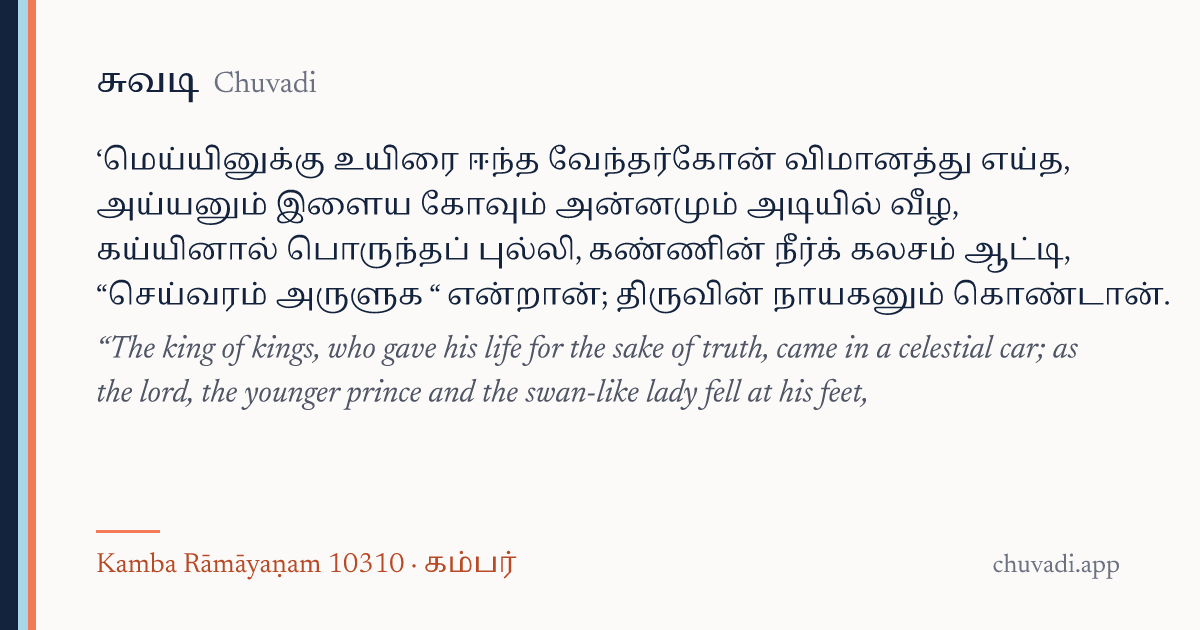
கம்பராமாயணம் 10310 · யுத்த 37.297
பாடல் · The poem
Tap a word to see its gloss in the commentary and where else it occurs.
பொருள் · Meaning in Tamil
மெய்யினுக்கு உயிரை ஈந்த வேந்தர் கோன் - சத்தியத்தைக் காக்க உயிரை விட்ட தயரதன்; விமானத்து எய்த - விண்ணுலகிலிருந்து விமானத்தில் வர; அய்யனும் இளைய கோவும் - இராமனும் இலக்குவனும்; அன்னமும் அடியில் வீழ - சீதையும் விழுந்து வணங்க, கையினால் பொருந்தப் புல்லி - தயரதன் தன் கைகளால் அவர்களை நன்கு தழுவி; கண்ணின் நீர்க் கலசம் ஆட்டி - கண்களாகிய கலசத்தால் நீராட்டி; செய்வரம் அருளுக என்றான் - நான் செய்யக்கூடிய வரம் கேட்பாயாக என்று சொன்னான்; திருவின் நாயகனும் கொண்டான் - சீதை கேள்வனாகிய இராமனும் அவன்பால் பின்கூறும் வரம் கொண்டான்.
"செய்யவட்கு அருளுக" என்றான் என்ற பாடம் சீதை காரணமாகத் தயரதன் சொன்னதைக் குறிப்பிடும். 'வரம் அருளுக' என்றல் தயரதனாகிய தந்தை முறை உடையான் மைந்தனிடம் கூறும் முறையாக இல்லையாதலின் 'கேட்க' என்ற பொதுப்பொருளில் கோடல் சால்புடைத்து.
ஆங்கிலம் · English translationAI
Translation
- “The king of kings, who gave his life for the sake of truth, came in a celestial car;
- as the lord, the younger prince and the swan-like lady fell at his feet,
- he held them close in his arms, bathed them from the pitchers of his eyes,
- and said, ‘Ask the boon I can grant’; and the lord of Tiru took one.”
What the poem says
Aṉumaṉ continues. Tacarataṉ, who died rather than break his word, came down from heaven in a celestial car. Irāmaṉ, Ilakkuvaṉ and Cītai fell at his feet; he embraced them and his tears poured over them like water from a pitcher. He told his son to name a boon, and Irāmaṉ, Lakṣmī's lord, asked for one.
Since a father does not normally "grant" a son's request in such terms, the phrase is taken in the general sense "ask". A variant reading has Tacarataṉ addressing the words to Cītai.