



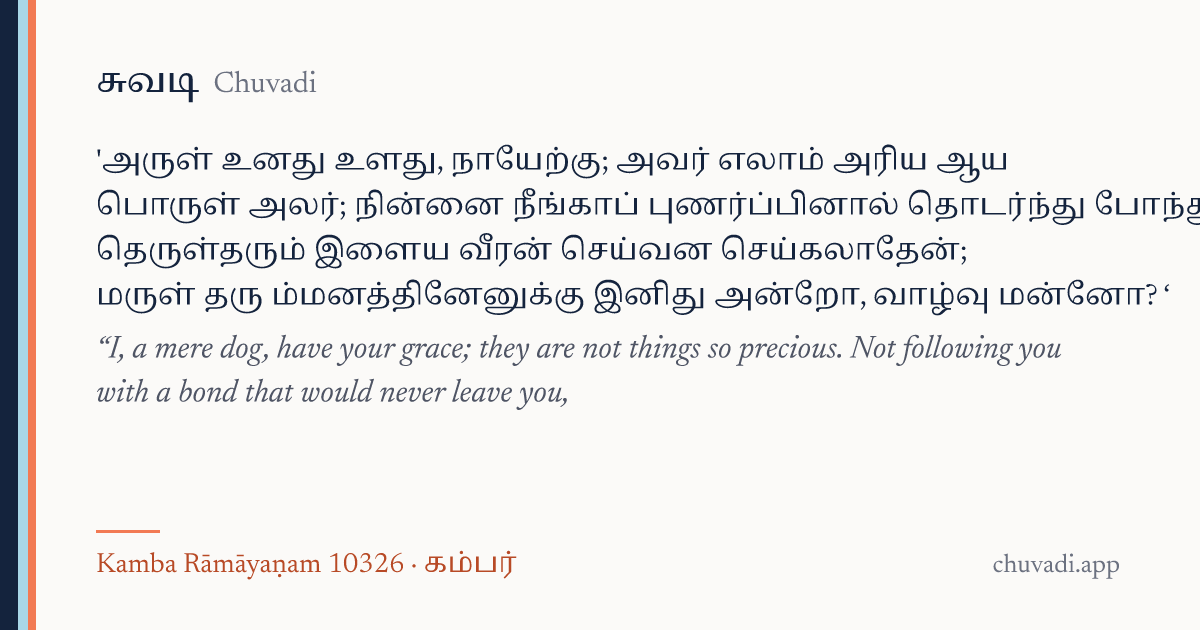
கம்பராமாயணம் 10326 · யுத்த 37.313
பாடல் · The poem
Tap a word to see its gloss in the commentary and where else it occurs.
பொருள் · Meaning in Tamil
நாயேற்கு உனது அருள் உளது - அடியேனுக்குப் (பெறற்கரிய) உனது பெருங்கருணை உள்ளது; அவர் எலாம் அரிய ஆய பொருள் அலர் - மக்களும் மனையும் ஆய அவர்கள் எல்லாம் அருமையான பொருளாக மாட்டார் அது நிற்க; நின்னை நீங்காப் புணர்ப்பினால் தொடர்ந்து போந்து - உன்னை விட்டுப் பிரியாத மனப் பிணிப்புடனே பின்பற்றி வந்து; தெருள் தரும் இளைய வீரன் - மெய்யுணர்வு பெற்ற இலக்குவன்; செய்வன செய்கலாதேன் - செய்த திருத்தொண்டுகளைச் செய்ய இயலாதவனாகிய; மருள்தரும் மனத்தினேனுக்கு வாழ்வு இனிது அன்றோ - மயக்கமுற்ற மனம் உடைய எனக்கு வாழ்வு சுவையானது அல்லவா? (மிக நன்றாயிருந்தது)
தன்னைத் தானே நொந்து உரைக்கின்றான் குகன் ஆதலின் இவ்வாறு கூறினான். இராமபிரான் உடனேயே இருந்து தொண்டு செய்யும் அவாவினன் என்பதை முன்னும் (1990 - 1993) காண்க. மன் ஓ - கழிவிரக்கத்தின்கண் வந்தது.
ஆங்கிலம் · English translationAI
Translation
- “I, a mere dog, have your grace; they are not things
- so precious. Not following you with a bond that would never leave you,
- I failed to do what the clear-minded younger hero did;
- for me, with my bewildered mind, how sweet indeed my life has been!”
What the poem says
Kukaṉ replies that Irāmaṉ's grace matters more to him than wife and children. He reproaches himself bitterly: Ilakkuvaṉ followed Irāmaṉ into exile and served him throughout, while Kukaṉ stayed home. "How sweet my life has been" is said in self-reproach. Earlier in the epic Kukaṉ had begged to go with Irāmaṉ into the forest and was asked to stay behind.