



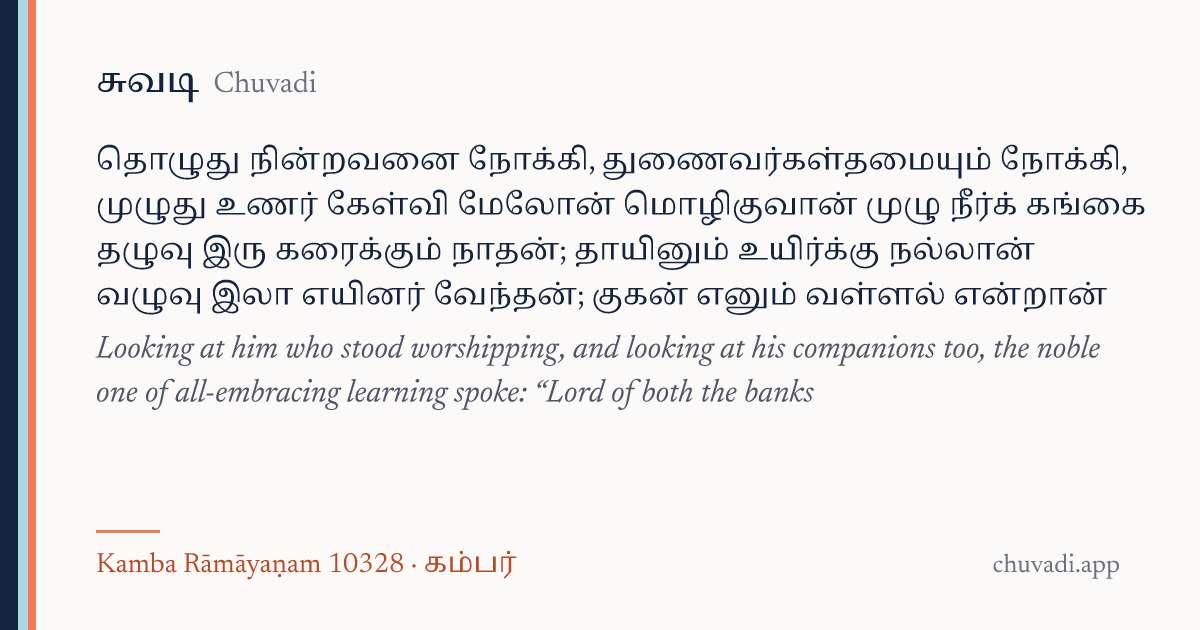
கம்பராமாயணம் 10328 · யுத்த 37.315
பாடல் · The poem
Tap a word to see its gloss in the commentary and where else it occurs.
பாட வேறுபாடு · Project Madurai reads
பொருள் · Meaning in Tamil
முழுது உணர் கேள்வி மேலோன் - முற்ற நன்குணர்ந்த கேள்வி ஞானத்தினால் நிரம்பப் பெற்ற பெரியோனாகிய இராமபிரான்; தொழுது நின்றவனை நோக்கி துணைவர்கள் தமையும் நோக்கி மொழிகுவான் - வணங்கி நின்ற குகனைப் பார்த்து; சுக்ரீவ வீடணாதி துணைவர்களையும் பார்த்துச் சொல்கின்றான்; முழு நீர்க்கங்கை தழுவு இரு கரைக்கும் நாதன் - (இவண்) நிரம்பிய நீரை உடைய கங்கையைத் தழுவியுள்ள இரு கரைப் பகுதி நாடுகளுக்கும் தலைவன்; உயிர்க்கு தாயினும் நல்லான் - உயிர்களுக்குத் தாயைக் காட்டிலும் மிகவும் நல்லவன்; வழுவு இலா எயினர் வேந்தன் - குற்றமற்ற வேடர் அரசன்; குகன் எனும் வள்ளல் - குகன் என்னும் பெயருடைய பெரியோன்; என்றான்
வேடராஜன், குகன் என்பதைப்பின் தள்ளி, கங்கையிருகரை உடையான் தாயினும் நல்லான் என்பவற்றைத் துணைவர்களுக்கு முன் வைத்து அறிமுகம் செய்த அருமை அறிந்து இன்புறுக.
ஆங்கிலம் · English translationAI
Translation
- Looking at him who stood worshipping, and looking at his companions too,
- the noble one of all-embracing learning spoke: “Lord of both the banks
- embraced by the brimming Kaṅkai; kinder to living beings than a mother;
- the faultless king of the hunters; the generous one named Kukaṉ,” he said.
What the poem says
Irāmaṉ introduces Kukaṉ to Cukkirīvaṉ, Vīṭaṇaṉ and his other allies. He puts first that Kukaṉ is lord of both banks of the Gaṅgā and kinder than a mother, and only then that he is king of the hunters and named Kukaṉ. Leading with his greatness rather than his low birth is a mark of Irāmaṉ's tact and affection.