



கம்பராமாயணம் 10355 · யுத்த 37.342
பாடல் · The poem
Tap a word to see its gloss in the commentary and where else it occurs.
பாட வேறுபாடு · Project Madurai reads
பொருள் · Meaning in Tamil
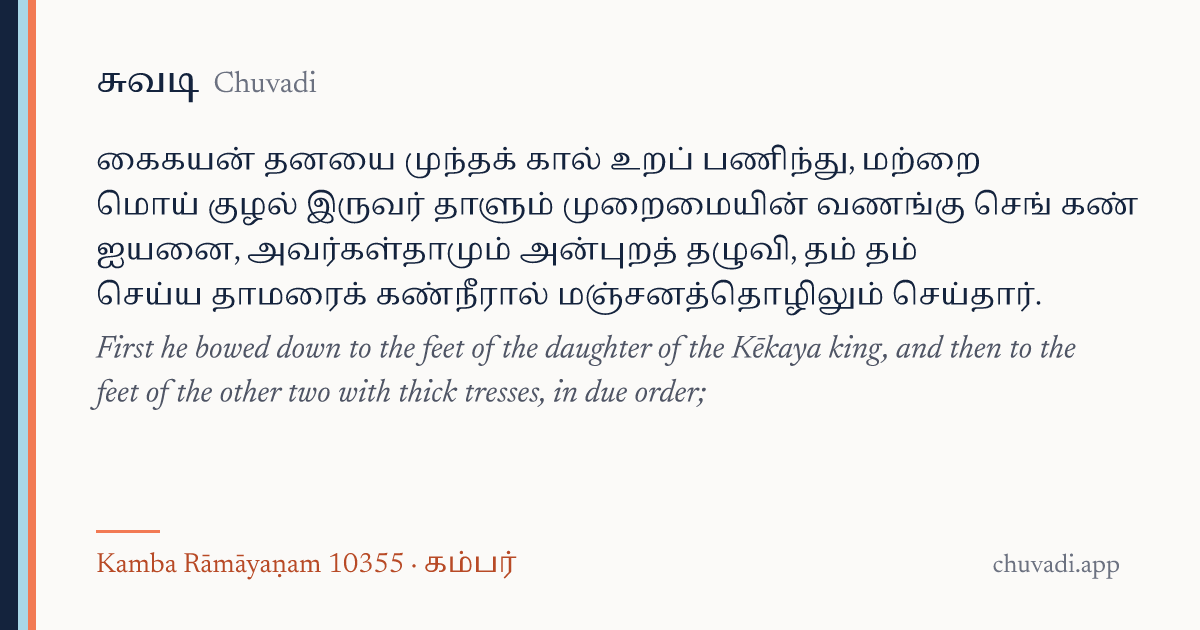
முந்த - முற்பட; கைகயன் தனயை கால் உறப் பணிந்து - கேகயத்தரசன் மகளாகிய கைகேயித் தாயின் திருவடிகளில் நன்கு வணங்கி; மற்றை மொய்குழல் இருவர் தாளும் முறைமையின் வணங்கு - ஏனை நெருங்கிய கூந்தலை உடைய கோசலை, சுமித்திரை ஆகிய இருவர் திருவடிகளையும் முறையாக வணங்குகின்ற; செங்கண் ஐயனை - சிவந்த கண்களை உடைய இராகவனை: அவர்கள் தாமும் அன்புறத் தழுவி - அத்தாய்மார்களும் அன்பினால் அணைத்து; தம் தம் செய்ய தாமரைக் கண் நீரால் மஞ்சனத் தொழிலும் செய்தார் - தம்முடைய சிவந்த தாமரை மலர் போன்ற கண்களிலிருந்து வருகின்ற கண்ணீரினாலே நீராட்டும் தொழிலையும் செய்தார்கள்.
அன்பினால் உண்டாகிய கண்ணீர்ப் பெருக்கால் முழுக்காட்டினர் என்க. கைகேயி அன்னையை முந்துறப் பணிந்தது அவள் சாபம் நீக்குதற்கு என்க. பலராலும் பாதிக்கப்பட்டவள் அவள் ஆதலின் அவள் துன்பம் பெரிதாயிற்று பெரிய பெருமாளுக்கு.
ஆங்கிலம் · English translationAI
Translation
- First he bowed down to the feet of the daughter of the Kēkaya king, and then
- to the feet of the other two with thick tresses, in due order;
- and they too embraced the red-eyed lord with love,
- and with tears from their own red lotus eyes performed the rite of bathing him.
What the poem says
Irāmaṉ bows first to Kaikēyi, the mother whose demand sent him into exile, then to Kōcalai and Cumittirai. He honours her first to free her from the blame that had fallen on her: she had been condemned by everyone, and her suffering weighed most on his heart. The three queens embrace him and bathe him in their tears, as if in a ceremonial bath.