



கம்பராமாயணம் 10360 · யுத்த 37.347
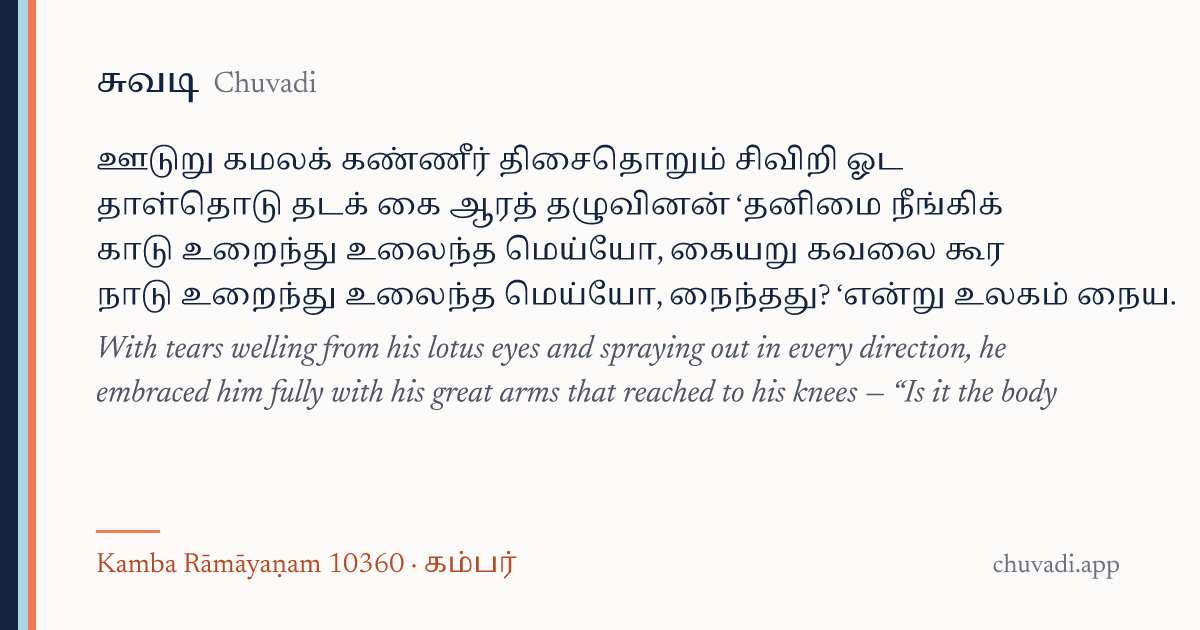
பாடல் · The poem
Tap a word to see its gloss in the commentary and where else it occurs.
பொருள் · Meaning in Tamil
(பரதன், அவனை) ஊடுறு கமலக் கண்ணீர் திசைதொறும் சிவிறி ஓட - தாமரை போன்ற கண்களின் உள்ளே இருந்து பெருகுகின்ற கண்ணீரானது நாலா பக்கங்களிலும் பரந்து சிதறி ஓட; தனிமை நீங்கி காடு உறைந்து உலைந்த மெய்யோ? - இராமனைப் பிரிந்த தனிமையிலிருந்து விடுபட்டு அவனுடனே சென்று காட்டின்கண் அவனோடு தங்கி வருந்திய இலக்குவனது உடம்பே; கையறு கவலை கூர நாடு உறைந்து உலைந்த மெய்யோ - செயலற்ற பிரிவுத்துன்பம் மேலும் மேலும் மிகுதலால் அயோத்தி நாட்டு நந்திக் கிராமத்தில் தங்கி உண்பதும் உறங்குவதும் இன்றி வருந்திய பரதனது உடம்போ; நைந்தது? - எது மிகவும் வருந்தியது; என்று உலகம் நைய - என்று உலகம் இருவரையும் ஒருசேரப் பார்த்து வருந்தும்படி: தாள் தொடு தடக்கை ஆரத் தழுவினன் - முழந்தாள் அளவு நீண்ட தன் கைகளால் நன்றாகத் தழுவிக் கொண்டான்.
பரதன் இலக்குவனைத் தழுவி நின்ற காட்சி கண்டு உலகம் வருந்தியபடி.
ஆங்கிலம் · English translationAI
Translation
- With tears welling from his lotus eyes and spraying out in every direction,
- he embraced him fully with his great arms that reached to his knees — “Is it the body
- that escaped loneliness, lived in the forest and was worn down, or the body
- that stayed in the land and was worn down by helpless grief, that has suffered more?” — so the world grieved.
What the poem says
Paratan, weeping, embraces Ilakkuvaṉ with his long arms. Onlookers, seeing the two thin, worn brothers side by side, cannot decide who has suffered more: Ilakkuvaṉ, who escaped separation from Irāmaṉ but endured fourteen years in the forest, or Paratan, who stayed home in Nandigrāma tormented by helpless grief. Arms reaching to the knees are a classical sign of greatness.