



கம்பராமாயணம் 10372 · யுத்த 38.2
பாடல் · The poem
Tap a word to see its gloss in the commentary and where else it occurs.
பாட வேறுபாடு · Project Madurai reads
பொருள் · Meaning in Tamil
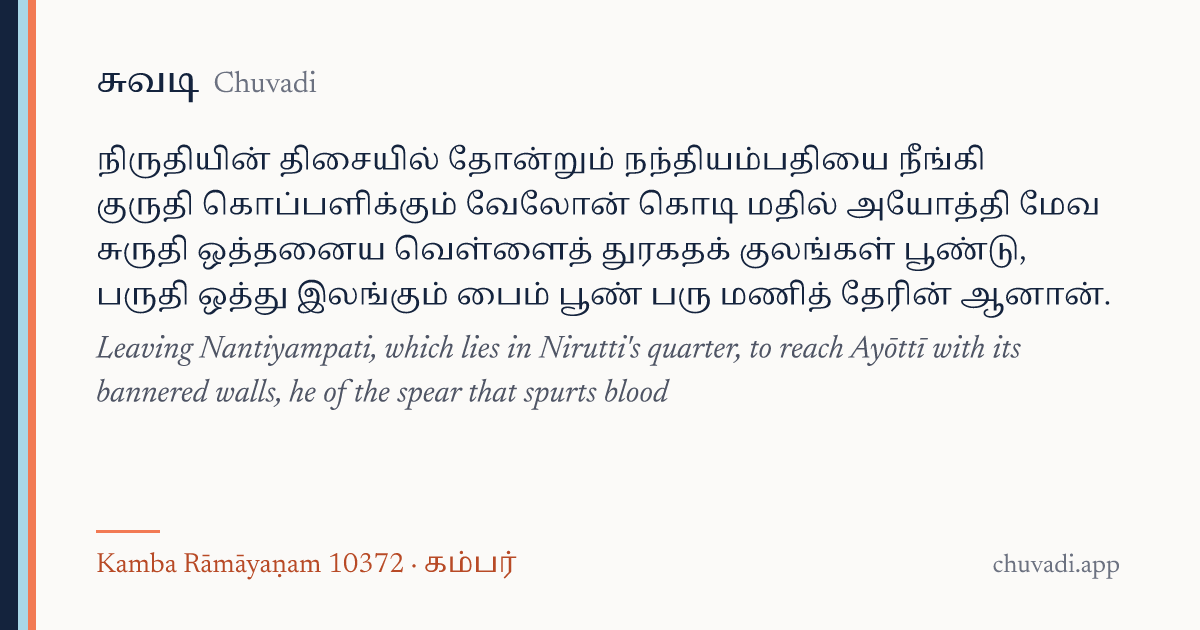
குருதி கொப்பளிக்கும் வேலோன் - இரத்தம் பொழியும் வேற்படையாளனாகிய இராமன்; நிருதியின் திசையில் தோன்றும் - தென் மேற்கு திசையில் தோன்றுகின்ற; நந்தியம்பதியை நீங்கி - நந்திக் கிராமத்தினின்றும் புறப்பட்டு; கொடி மதில் அயோத்தி மேவ - கொடிகளால் அழகு பெற்றிருக்கும் மதில் சூழ்ந்த அயோத்தி நகரை அடையும் பொருட்டு; சுருதி ஒத்தனைய - வேதங்களுக்கு நிகரான; வெள்ளைத் துரகதக் குலங்கள் பூண்டு - வெண்ணிறப் புரவிகள் பூட்டப் பெற்ற; பருதி ஒத்து இலங்கும் - கதிரவனைப் போல் ஒளி வீசும், பைம்பூண் பருமணித் தேரின் ஆனான் - பசும்பொன்னால் புனையப் பெற்ற பெருமணிகளால் அலங்கரிக்கப்பட்ட தேரின் மீது ஏறினான்.
நிருதி - தென்மேற்குத் திசைக் காவலன்.
சத்துவம் நிறைந்தவை வேதங்கள். சத்துவம் வெண்ணிறம் என்பர். வெள்ளைப் புரவிகட்கு அதனால் வேதங்களை ஒப்பிட்டார்.
ஆங்கிலம் · English translationAI
Translation
- Leaving Nantiyampati, which lies in Nirutti's quarter,
- to reach Ayōttī with its bannered walls, he of the spear that spurts blood
- mounted a chariot of great gems and fresh gold ornaments, shining like the sun,
- yoked with teams of white horses that were like the Vedas.
What the poem says
Irāmaṉ sets out from Nandigrāma, which lies to the south-west of Ayōttī (the quarter guarded by Nirutti), in a sun-bright jewelled chariot drawn by white horses. The horses are likened to the Vedas because the Vedas are full of sattva, the quality of purity, which is traditionally white.