



கம்பராமாயணம் 10379 · யுத்த 38.9
பாடல் · The poem
Tap a word to see its gloss in the commentary and where else it occurs.
பாட வேறுபாடு · Project Madurai reads
பொருள் · Meaning in Tamil
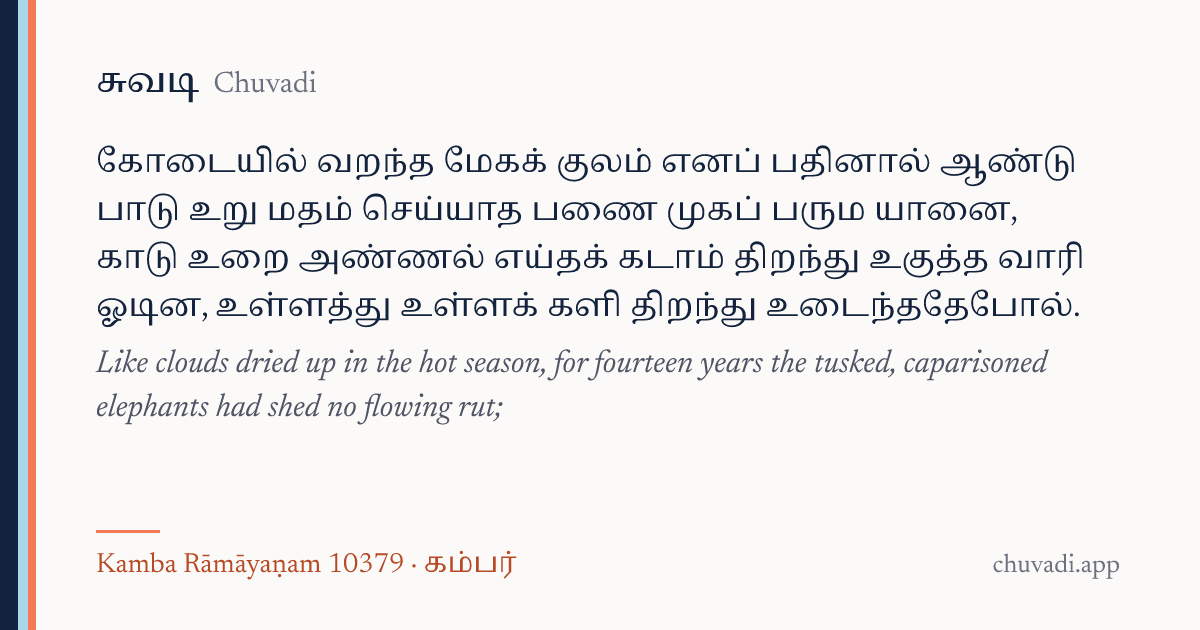
கோடையில் - முதுவேனிற் காலத்தில்; வறந்த - நீர் வறண்ட; மேகக் குலம் என - முகிற் கூட்டம் போன்று; பதினால் ஆண்டு - (நீண்ட) பதினான்கு ஆண்டுக்காலம்; பாடு உறு மதம் செய்யாத - வெளிப்படுத்துகின்ற மதத்தைப் பொழியாமலிருந்த; பணைமுகப் பரும யானை - கொம்புகளை முகத்தில் பெற்ற சேணமமைந்த களிறுகள்; காடு உறை அண்ணல் எய்த - வனவாசம் முடித்த இராமபிரான் திரும்பி வந்தமையால்; கடாம் திறந்து உகுத்த வாரி - கன்னம் திறந்து பொழிந்த மதநீர்; உள்ளத்து உள்ளக் களி திறந்து உடைந்ததே போல் - (அவற்றின்) மனத்துக்குள் அடக்கி வைத்திருந்த களிப்பு உடைந்து வெளிப்பட்டது போல்; ஓடின - பெருகி ஓடலாயிற்று.
முன்னர் நகர் நீங்கு படலத்துள், தான யானையும் களி துறந்தன (கம்ப. 1800) என்றவர் இங்கு களிபெருகின என்றார்.
ஆங்கிலம் · English translationAI
Translation
- Like clouds dried up in the hot season, for fourteen years
- the tusked, caparisoned elephants had shed no flowing rut;
- now that the lord who had dwelt in the forest had come, the streams poured from their opened temples
- and ran, as though the joy held within their hearts had burst open.
What the poem says
For the fourteen years of exile even the elephants of Ayōttī were joyless and produced no musth, like rainless clouds in summer. Now, with Irāmaṉ's return, their temples burst open and pour with it, as though their pent-up joy were overflowing. When Irāmaṉ left the city, the poet had said the elephants gave up their joy; here it returns.