



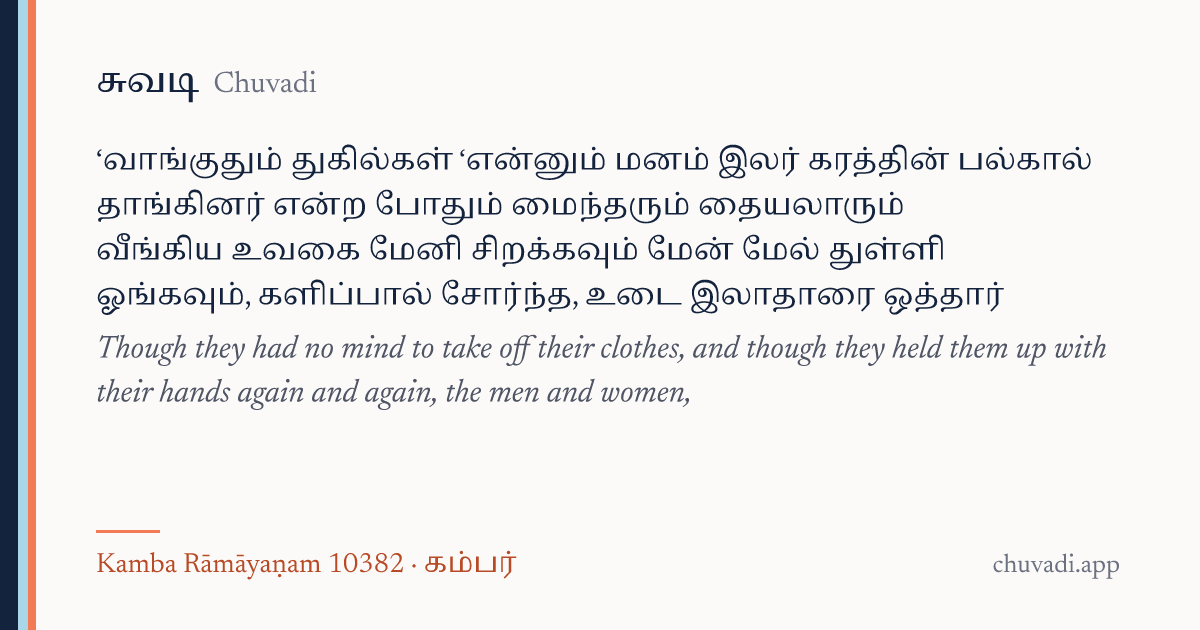
கம்பராமாயணம் 10382 · யுத்த 38.12
பாடல் · The poem
Tap a word to see its gloss in the commentary and where else it occurs.
பாட வேறுபாடு · Project Madurai reads
பொருள் · Meaning in Tamil
துகில்கள் வாங்குதும் என்னும் - ஆடைகளைக் களைந்து விட வேண்டும் என்னும்; மனம் இலர் - எண்ணமில்லாதவரான; மைந்தரும் தையலாரும் - (அயோத்தி நகர்) ஆண்களும் பெண்களும்; களிப்பால் - இராமனைக் கண்ட மகிழ்ச்சியால் (தளர்கின்ற ஆடையை); கரத்தின் - தம் கரங்களால், பல்கால் தாங்கினர் என்ற போதும் - பன்முறையும் தாங்கி நின்றார்கள் என்ற போதிலும்; வீங்கிய உவகை - பெருகிய மகிழ்ச்சியால்; மேனி சிறக்கவும் - உடல் பூரித்தலால்; மேன்மேல் துள்ளி ஓங்கவும் - மேலும் மேலும் துள்ளிப் பாய்தலாலும் சோர்ந்த உடை இலாதாரை ஒத்தார் - நெகிழ்ந்த ஆடையற்ற திகம்பரரை ஒத்திருந்தார்கள்.
சமணரில் திகம்பரர் ஆடை அணியாதவர் ஆவர்.
ஆங்கிலம் · English translationAI
Translation
- Though they had no mind to take off their clothes, and though
- they held them up with their hands again and again, the men and women,
- as their bodies swelled with surging joy and they leapt higher and higher,
- in their rapture looked like people who wear no clothes, their garments slipping away.
What the poem says
A humorous picture of the crowd. The citizens are so swollen with joy and jump about so much that their clothes keep slipping off, however often they clutch at them, until they look like Digambara Jain monks, who go unclothed.