



கம்பராமாயணம் 10425 · யுத்த 39.13
பாடல் · The poem
Tap a word to see its gloss in the commentary and where else it occurs.
பொருள் · Meaning in Tamil
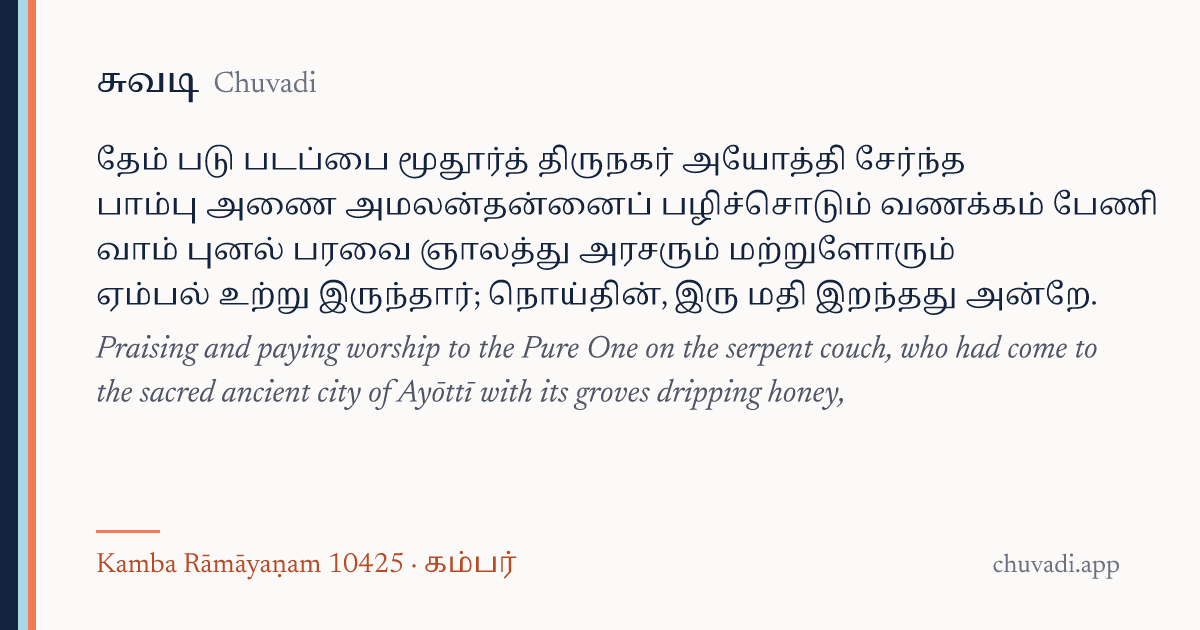
தேம்படு படப்பை மூதூர்த் திருநகர் அயோத்தி சேர்ந்த பாம்பணை அமலன் தன்னைப் பழிச்சொடு வணக்கம் பேணி - தேன் சிந்துகின்ற சோலைகள் சூழ்ந்த பழமையான ஊராகிய அயோத்தி என்னும் திருநகரை வந்தடைந்த ஆதிசேஷ சயனனாகிய பெரிய பெருமாளைத் தோத்திரம் செய்து வணங்க; வாம்புனல் பரவை ஞாலத்து அரசரும் மற்றுளோரும் - தரைமேல் வாவுகின்ற நீரை உடைய கடலாற் சூழப் பெற்ற இவ்வுலகத்து அரசர்களும் மற்றும் உள்ளவர்களும்; ஏம்பல் உற்று இருந்தார் - மகிழ்ச்சி அடைந்து இருந்தார்கள் (இவ்வாறு); நொய்தின் - இலேசாக; இருமதி இறந்தது - இரண்டு திங்கள் சென்றது.
'பாம்பணை அமலன் இட்சுவாகு குலதனமாகிய ஸ்ரீரங்கநாதன் என்னும் பெரிய பெருமாளாகும். திருமாலின் அவதாரமாகிய ஸ்ரீராமன் என்றுரைப்பாரும் உளர் அது முன்னும் இப்படலத்துப் பல இடங்களிலும் வந்துள்ளமையின் பெரிய பெருமாள் என்பதே இங்குச் சிறப்புடைத்து. அன்று, ஏ - அசைகள்.
ஆங்கிலம் · English translationAI
Translation
- Praising and paying worship to the Pure One on the serpent couch,
- who had come to the sacred ancient city of Ayōttī with its groves dripping honey,
- the kings of the earth girdled by the leaping sea, and all the others,
- stayed on in joy; and lightly, two months passed.
What the poem says
The kings and other visitors stay on in Ayōttī, worshipping the Lord who reclines on the serpent Ādiśēṣa, and two months slip easily by. The commentary takes this Lord to be Śrī Raṅganātha, the reclining Viṣṇu worshipped as the family deity of the Ikṣvāku line, though some take it to mean Irāmaṉ himself.