



கம்பராமாயணம் 1050 · பால 17.15
பாடல் · The poem
Tap a word to see its gloss in the commentary and where else it occurs.
பொருள் · Meaning in Tamil
ஆற்றில் சுழி ஒன்றி நின்றது அன்ன உந்தியாள் ஒருத்தி - ஆற்று வெள்ளத்தில் உண்டாகின்ற நீர்ச்சுழியானது, ஓரிடத்தில் நிலைத்து நிற்பதைப் போன்ற கொப்பூழையுடையாள் ஒருத்தி; செந்தேன் பொழிகின்ற பூவின் வேய்ந்த பந்தரை - செந்நிறத்தேனைப் பொழியும் பூக்களால் வேயப்பெற்றுள்ள பந்தரை; புரைத்துக் கீழ்வந்து இழிகின்ற கொழுநிலாவை - துளைத்துக் கொண்டு கீழே இறங்குகின்ற செழுமை மிக்க நிலவொளியை; அழிகின்ற அறிவினாலோ பேதைமை யாலோ - (மதுவுண்டதால்) அறிவு அழிந்ததாலோ அன்றி (மகளிர்க்குரிய) பேதைமைக் குணத்தினாலோ; நறவு என வள்ளத்து ஏற்றாள் - மது வென்று (மயங்கி) (மதுக்) கிண்ணத்தில் பிடிக்க முயன்றாள்.
மது வுண்டதால் அறிவு அழியும் எனத் தெளிவித்தவாறு. ஆற்றின் சுழியைக் கொப்பூழ் ஆகிய உந்திக்கு உவமித்தல் மரபு. வெள்ளை நிலவொளியை வெள்ளை மதுவாய் எண்ணிப் பூம்பந்தலைப் பொத்துக் கொண்டு வீணே ஒழுகுவதாக எண்ணி, கிண்ணத்தில் ஏந்தித் தன் மது வெறியை வெளிப்படுத்தினாள் ஒருத்தி என்க. வெட்கமுறத் தக்க செயல்களை, வெட்கமுறாது செய்வது மது வெறியின் இலக்கணமே என்றவாறு.
ஆங்கிலம் · English translationAI
Translation
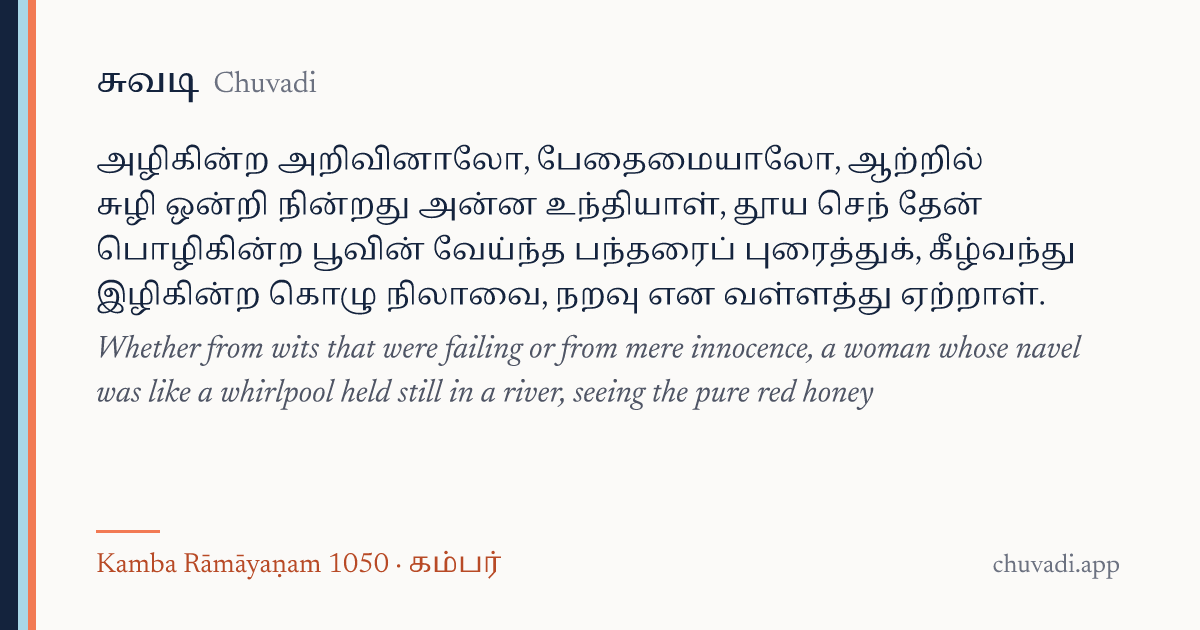
- Whether from wits that were failing or from mere innocence, a woman whose navel was like a whirlpool
- held still in a river, seeing the pure red honey
- drip from the flowers that thatched the bower and the moonlight pierce it and come
- streaming richly down, caught that moonlight in her cup as toddy.
What the poem says
Moonlight streams through gaps in a bower roofed with flowers. A woman, her navel deep as a whirlpool in a river, the usual comparison, thinks the white light is white toddy leaking through the roof and going to waste. She holds out her cup to catch it.
The poet cannot decide whether drink has robbed her of her wits or whether she is simply innocent. Either way, doing shameful things without feeling ashamed is the mark of drunkenness.