



கம்பராமாயணம் 1064 · பால 17.28
பாடல் · The poem
Tap a word to see its gloss in the commentary and where else it occurs.
பொருள் · Meaning in Tamil
கொழுநன் இளையவள் பெயரினைத் தனக்கு ஈதலும் - (தன்) கணவன், (தனக்கு) இளையாளாய் வந்தாள் பெயரை (மது மயக்கால்) தனக்கு இட்டு அழைத்தலும்; வளை பயில் முன்கை மயில் அனாள் - வளைகள் நெருங்கிய கைகளையுடைய மயில்போன்ற ஒருத்திக்கு; முளை எயிறு இலங்கிட முறுவல் வந்தது - (தன் கணவனின் சொற்சோர்வுகண்டு) முல்லை மொக்குகளைப் போன்ற பற்கள் ஒளிருமாறு (முதலில் அவளுக்குப்) புன்னகை வந்தது; கயற்கண் ஆலி களகள வென உதிர்ந்தது - பின்பு, தன் கணவன் (இளையாள்மாட்டு தன் மாட்டுக் கொண்டிருப்பதைவிடப் பேரன்பு கொண்டு அவள் பேர் மொழிகிறான் என்னும் நினைவு வந்தவுடன்) அவள் கயல்போன்ற கண்களிலிருந்து களகளவென்று கண்ணீர்த் துளிகள் சிந்தின.
கணவன் அன்பு பங்கப் பெறுதலைப் பொறாத காரிகையர் மன இயல்பு விளக்கியவாறு. களகள விரைவும் மிகுதியும் குறித்த இரட்டைக் கிளவி. மது மயக்கால் விளைந்த சொற்சோர்வு என்ற நினைப்பில் முதலில் நகையும், இளையாள் மாட்டு அன்புடையான் என அறிந்த நினைப்பில் அழுகையும் சேர விளைந்தன.
ஆங்கிலம் · English translationAI
Translation
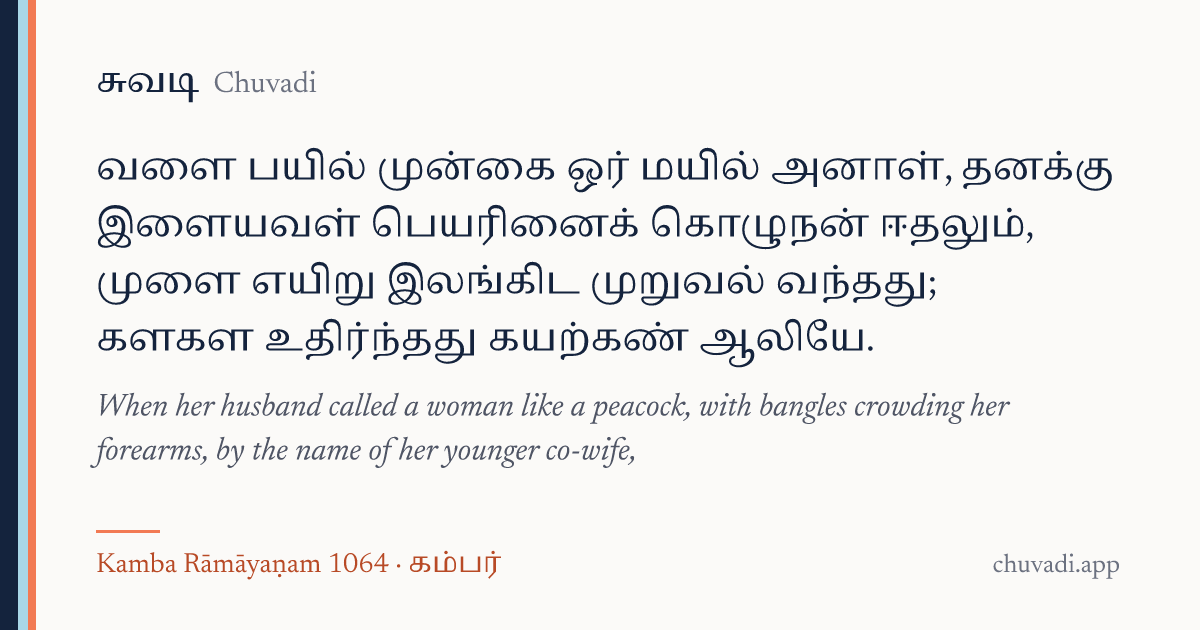
- When her husband called a woman like a peacock, with bangles crowding her forearms,
- by the name of her younger co-wife,
- a smile came first, making her budding teeth gleam;
- then the tears fell thick and fast from her kayal-fish eyes.
What the poem says
In his drunken state a husband calls his senior wife by the name of his younger wife. At first she smiles, taking it for a slip of the tongue caused by the wine.
Then it sinks in that the younger wife must be the one always on his mind, and the tears come pouring down. The poet shows how a wife cannot bear to share her husband's love. The doubled word in the last line catches the tears falling thick and fast.