



கம்பராமாயணம் 1066 · பால 17.30
பாடல் · The poem
Tap a word to see its gloss in the commentary and where else it occurs.
பொருள் · Meaning in Tamil
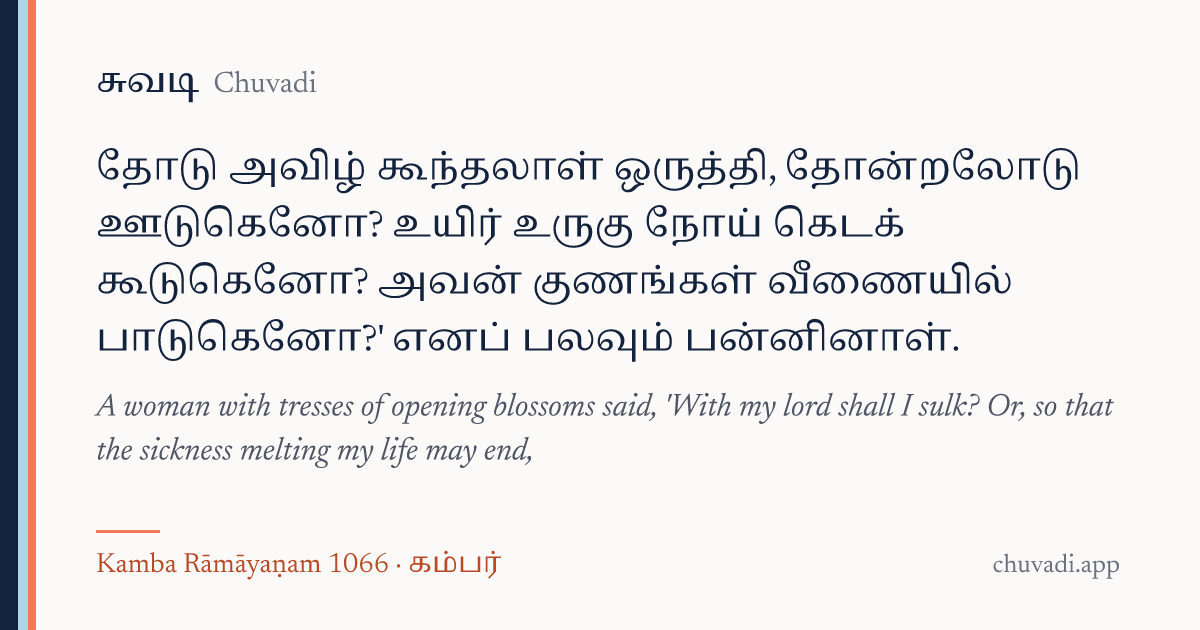
தோடு அவிழ் கூந்தலாள் ஒருத்தி - மலர் இதழ்கள் மலரப்பெற்ற கூந்தலையுடையாள் ஒரு மங்கை; தோன்றலோடு ஊடுகெனோ? - (பிரிந்துள்ள என் கணவன் வரப்பெற்றால்) அவனோடு நான் (பிரிவுத் துயர் தந்ததற்காக) ஊடல் கொள்வேனோ;; உயிர் உருகும் நோய்கெடக் கூடு கெனோ? - என் உயிரை உருக்கிக் கொண்டுள்ள காமநோயைத் தீர்த்துக் கொள்ள (உடனே) அவனைக் கூடுவேனோ?; அவன் குணங்கள் வீணையில் பாடுகெனோ? - (அவனுக்கு உவகை மிகுமாறு) அவன் குணங்களை வீணையில் இசைத்துப் பாடுவேனோ? என்று பலவும் பன்னினாள் - (அவன் வந்தவுடன் செய்ய வேண்டியவை எவை எவை) என்று (இவ்வாறு) பலவழிகளை (மனத்துள்) ஆராய்ந்து கொண்டிருந்தாள்! கொண்டானை மகிழ்விக்கத் திட்டமிடத் திண்டாடும் மகளிர் உயர் பண்பு கூறியபடி. “புலப்பன் கொல்; புல்லுவேன் கொல்லோ; கலப்பென் கொல்; கண்அன்ன கேளிர்வரின்” (திருக்குறள் 1267).
ஆங்கிலம் · English translationAI
Translation
- A woman with tresses of opening blossoms said, 'With my lord
- shall I sulk? Or, so that the sickness melting my life may end,
- shall I make love with him at once? Or shall I sing his virtues
- on the vīṇai?', and turned over many such thoughts.
What the poem says
A woman waits for her absent husband and plans what she will do when he arrives. Should she sulk to punish him for staying away? Should she give in at once and end the longing that is wasting her? Or should she play the vīṇai and sing his praises to please him?
The poet admires the trouble she takes over how best to please him. A woman in the Tirukkuṟaḷ asks herself the same questions.