



கம்பராமாயணம் 1070 · பால 17.34
பாடல் · The poem
Tap a word to see its gloss in the commentary and where else it occurs.
பொருள் · Meaning in Tamil
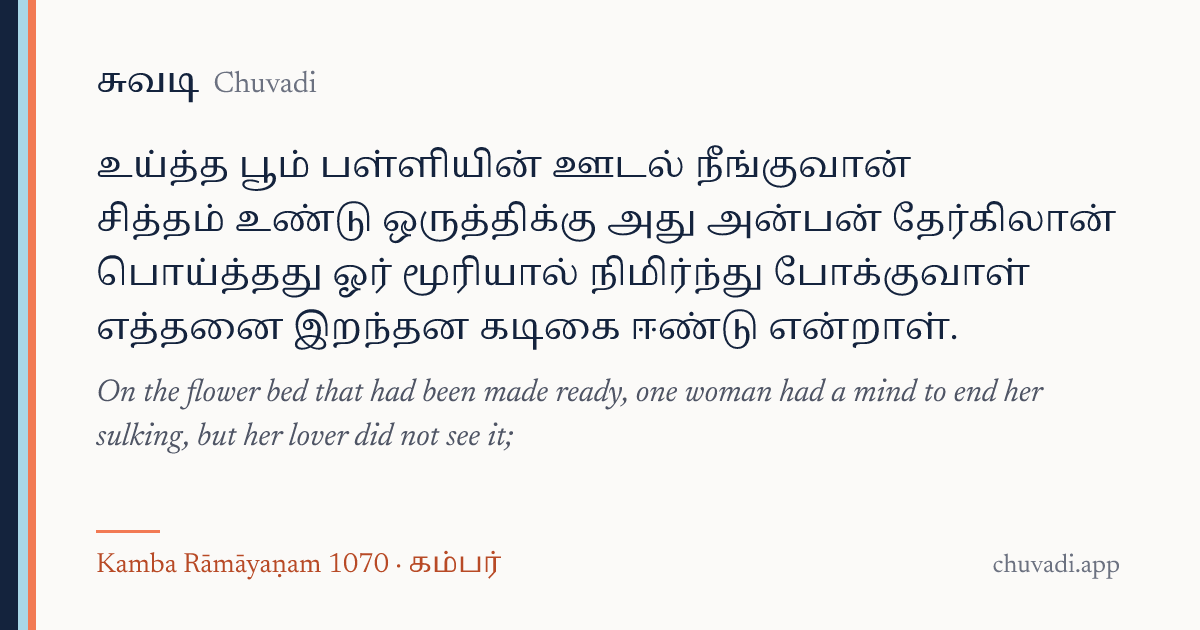
உய்த்த பூம்பள்ளியின் ஊடல் நீங்குவான் - (தோழி) அமைத்திருந்த மலர்ப்படுக்கையில், (தான் கணவனிடம் கொண்ட) ஊடலை முடித்துக்கொள்ள; ஒருத்திக்குச் சித்தம் உண்டு - அவளுக்கு எண்ணம் உண்டு; அது, அன்பன் தேர்கிலன் - அந்த எண்ணத்தை அவள் கணவன் அறியாதவனாக இருந்தான்; பொய்த்ததோர் மூரியால் நிமிர்ந்து போக்கினாள் - (அப்போது, ஒரு தூக்கம் தூங்கியெழுந்தவள் போலப்) பொய்யாகக் (கைகால்களை அவன் மேல் படும்படியாகச்) சோம்பல் முறித்தாளாய்; எத்தனை இறந்தன கடிகை ஈண்டு என்றாள் - 'இப்பொழுது, எத்தனை நாழிகைகள் கழிந்துள்ளன?' என்று (தூக்கத்தில் அனைத்தும் மறந்தவள் போல்) கேட்டாள். தன் பெருமையும் மதிப்பும் இழவாமல், பெண்மை ஊடலை, முடித்துக் கொள்ளும் நுட்பம் சுட்டியபடி. “ஊடல், உணர்தல், புணர்தல் இவை காமம் கூடியார் பெற்ற பயன்” (திருக். 1109) என்பது வள்ளுவ வாசகம். நீங்குவான் - நீங்க; வினை எச்சம். தூக்கத்தில் காலம் உணர இயலாது ஆதலின், “எத்தனை இறந்தன கடிகை?” என்று வினாவினாள்.
ஆங்கிலம் · English translationAI
Translation
- On the flower bed that had been made ready, one woman had a mind
- to end her sulking, but her lover did not see it;
- so, stretching herself in a feigned yawn,
- she asked, 'How many hours have passed here?'
What the poem says
A wife has been sulking in bed and now wants to make up, but her husband does not realise it, and her pride will not let her say so outright.
So she pretends to wake from sleep, stretches so that her arms and legs touch him, and asks sleepily what time it is, as if she had forgotten the quarrel. The poet admires this neat way of ending a quarrel without losing face. The Tirukkuṟaḷ calls sulking, making up and union the fruits of love.