



கம்பராமாயணம் 1072 · பால 17.36
பாடல் · The poem
Tap a word to see its gloss in the commentary and where else it occurs.
பாட வேறுபாடு · Project Madurai reads
பொருள் · Meaning in Tamil
மாற்றுவேந்தரை நலிந்த வாள் உழவன் - பகை மன்னர்களை வருத்திய வாட்படையையுடைய வீரன் ஒருவன்; ஓர் நங்கை கொங்கை போய் மெலிந்தவா நோக்கி - கொங்கைகள் (தன் பிரிவினால்) மெலிந்து போய் இருப்பதைப் பார்த்து; பொங்கி, தன்னையும் மலிந்த பேர் உவகையன் - (தன் மேல் அவள் வைத்துள்ள காதலின் அளவை அம்மெலிவால் கண்டு) (மனம்) பொங்கி, தன்னையும் மிஞ்சிய பேருவகையடைந்தவனாய்; புயங்கள் வீங்கினான் - தன் தோள்கள் பூரித்து நின்றான்.
பிரிவில், கற்புடையாள் மெலிவு, கணவன் பூரிப்புக்குக் காரணமாம் என்றபடி. மாற்று வேந்தரை நலியும் வாள் உழவன் பெருமை முழுவதும் இவள் மெலிவுக்குள் அடங்கிற்று என்றபடி.
ஆங்கிலம் · English translationAI
Translation
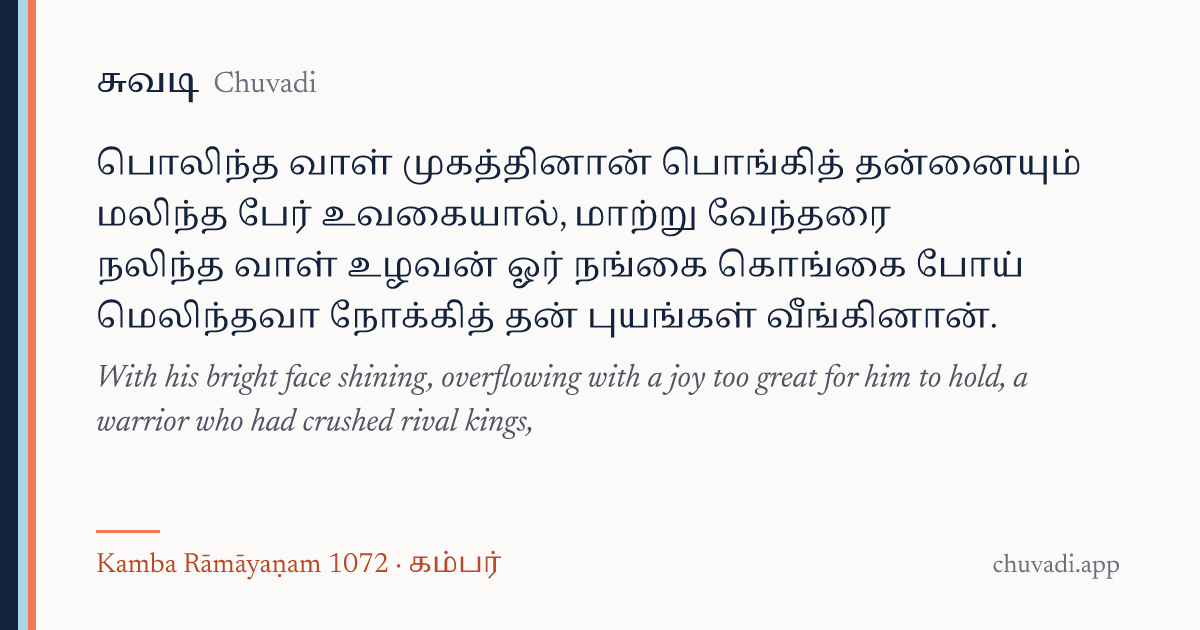
- With his bright face shining, overflowing with a joy too great
- for him to hold, a warrior who had crushed rival kings,
- a ploughman of the sword, seeing how a lady's breasts
- had wasted away, felt his own shoulders swell.
What the poem says
A warrior returns to his wife and sees how thin she has grown while he was away. Instead of grieving, he swells with pride and joy, because her wasting shows how much she loves him.
The poet plays on a contrast familiar in Tamil love poetry: in separation the lover's body wastes, and in union it swells. All the glory of this man who has humbled enemy kings, the commentary says, rests on the thinness of one faithful woman.