



கம்பராமாயணம் 1103 · பால 18.1
பாடல் · The poem
Tap a word to see its gloss in the commentary and where else it occurs.
பாட வேறுபாடு · Project Madurai reads
பொருள் · Meaning in Tamil
அருமறை அடா நெறி யறைதல்செல்லா - செல்லத் தகாதவை யென்று அரிய மறைகள் சொன்ன நெறிகளில் செல்லாது; நீதி அறைந்த நெறி விடா புலமை - (இவ்விவ் வழிகள்) நீதி அமைந்தவை யென்று மறைகள் சொன்ன வழிகளை விடாமற்சென்று பின்பற்றும் (உயர்) ஞானத்தினையும்; செங்கோல் வெண்குடை வேந்தர் வேந்தன் - செங்கோலினையும், வெண் (கொற்றக்) குடையினையும் (தரித்த) வேந்தர்க்கு எல்லாம் வேந்தனாகிய தசரதச் சக்கரவர்த்தி; முக படாம் மலையில் தோன்றும் - முக படாத்தினையுடைய மலை போன்ற யானைகளிடத்திலிருந்தும் உண்டாக; பருவம் ஒத்து அருவி பல்கும் - பருவகாலத்துக் கேற்ப அருவிகளாகப் பெருகுகின்ற; கடாம் நிறை ஆறு பாயும் - மத நீர் ஓடும் ஆறுகள் (தன்னிடத்தே) வந்து பாய்கின்ற; கடலொடும் கங்கை சேர்ந்தான் - (சேனையெனும்) சமுத்திரத்துடனே கங்கையாற்றின் கரையினை யடைந்தான்.
வேதம் செல்லத்தக்க நெறிகளை யுணர்த்துவது; அதுகாட்டும் செந்நெறியிலேயே சென்றவன் தயரதன் என்பதாம். கங்கை கடலைச் சேரும்; இங்கே, கடல் கங்கையைச் சேர்ந்தது என்பது ஒரு நயம். முதல் இரண்டடிகளிலும் வேதம் இன்னது என்பதும், அதனை விடாமல் பின் பற்றியதால், தசரதன் வெண்குடையும் செங்கோலும் ஞானமும் சிறந்து வேந்தர் வேந்தன் ஆயினான் என்பது சுருங்கச் சொல்லி விளங்க வைத்தார். பாயா வேங்கை, பறவாக் கொக்கு என்பது போல, யானையை முகபடாம்மலை என்றார். குறிப்புப் பொருள்.
ஆங்கிலம் · English translationAI
Translation
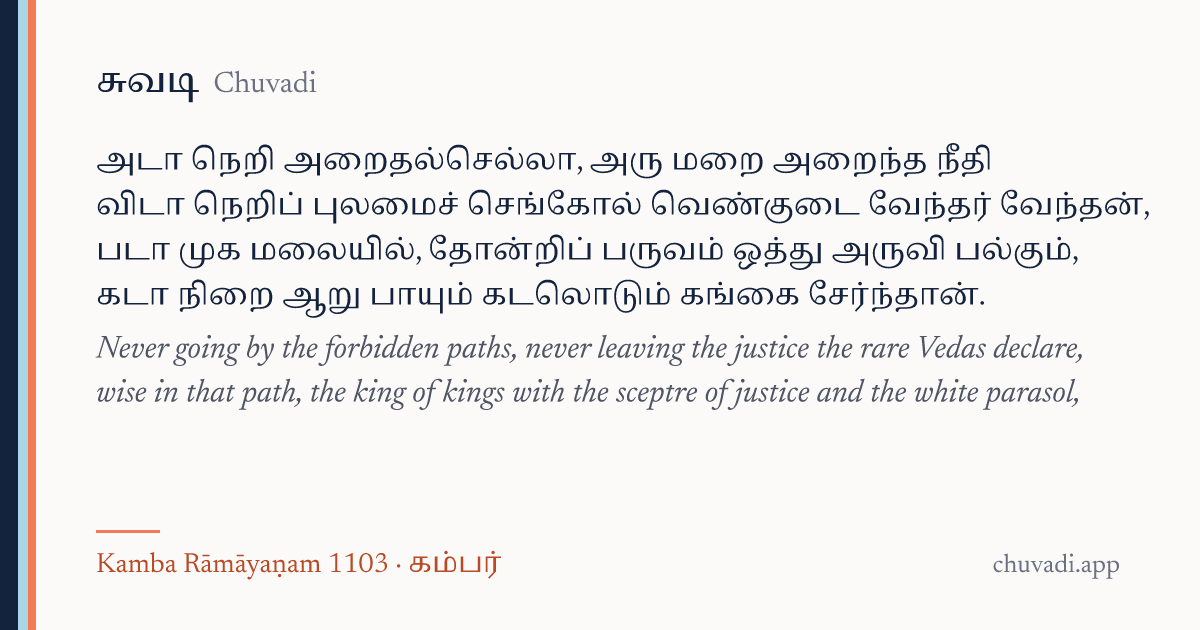
- Never going by the forbidden paths, never leaving the justice the rare Vedas declare,
- wise in that path, the king of kings with the sceptre of justice and the white parasol,
- with an army like a sea, into which pour rivers welling from mountains with face-cloths, swelling in season like waterfalls,
- rivers brimming with must, reached the Gaṅgā.
What the poem says
A new canto begins, describing how King Caṉakaṉ of Mithilā comes out to welcome Tacarataṉ, who is on his way to the wedding of his son Irāmaṉ and Cītai.
Tacarataṉ is praised as a king of kings who never strays from the path the Vedas lay down. He reaches the river Gaṅgā with his huge army. His elephants, wearing ornamental face-cloths, are like mountains, and their streaming must flows like waterfalls into rivers that run into the sea of his army. Usually the Gaṅgā runs into the sea; here the poet has the sea come to the Gaṅgā.