



கம்பராமாயணம் 1105 · பால 18.3
பாடல் · The poem
Tap a word to see its gloss in the commentary and where else it occurs.
பாட வேறுபாடு · Project Madurai reads
பொருள் · Meaning in Tamil
இருநிலக் கிழவன் ஆண்டு நின்று எழுந்து போகி - பெரிய நிலத்துக்குரியவனான தசரதன், அக் கங்கை நதியைக் கடந்து சென்று; அகன்பணை மிதிலை என்னும் - அகன்ற வயல்கள் சூழ்ந்த மிதிலை யெனும் பெயருடைய; ஈண்டு நீர் நகரின் பாங்கர் எய்த - நீர்வளம் மிக்க நகரத்தின் அருகில் சேர்ந்த அளவில்; தாண்டும்மா புரவித்தானை - பாய்வதில் பெருமையுடைய குதிரைப்படைகளையும்; தண்ணளிச் சனகன் என்னும் - (நெஞ்சில்) கருணையையும் உடைய சனகன் என்னும் பெயரிய; தூண்தரு வயிரத் தோளான் - தூண்களைப் போன்ற உறுதிமிக்க தோள்களையுடையவன்; செய்தது சொல்லல் உற்றாம் - செய்த செயல்களைச் சொல்லத் தொடங்குகிறோம்.
கவிக்கூற்று. வெளியே படைகளும், உள்ளே கருணையும் நிறைந்தான் எனச் சனகனின் வீரமும் ஈரமும் ஒரு சேரக் கூறியவாறு.
ஆங்கிலம் · English translationAI
Translation
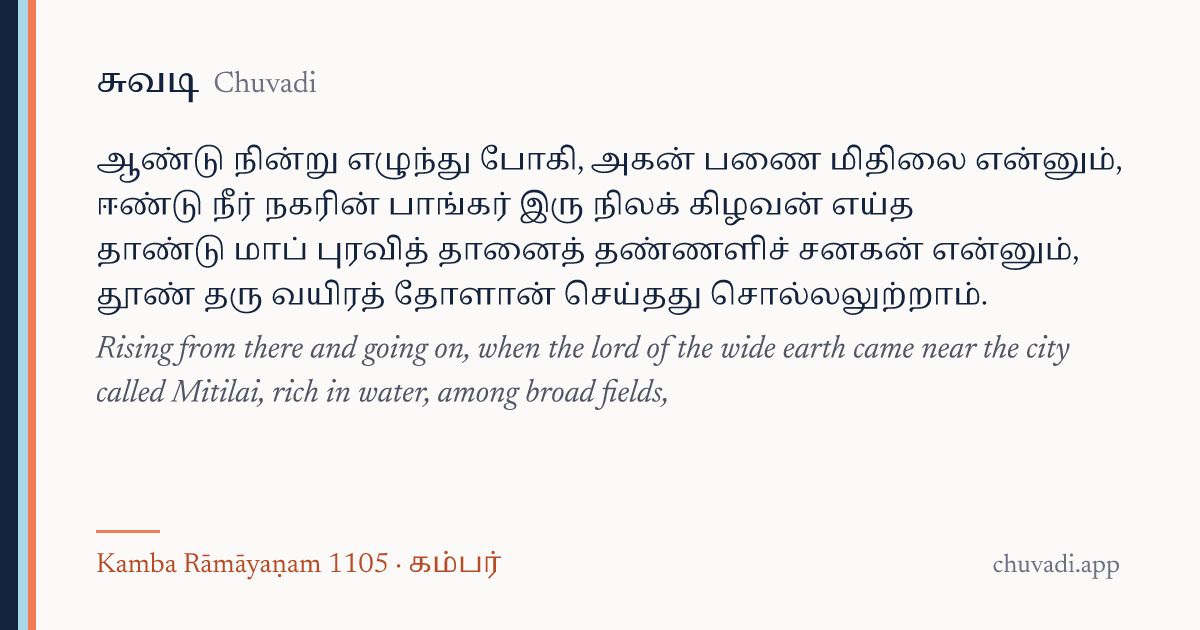
- Rising from there and going on, when the lord of the wide earth came near
- the city called Mitilai, rich in water, among broad fields,
- we now begin to tell what was done by Caṉakaṉ of cool kindness,
- whose army had great leaping horses, whose shoulders were hard as diamond, like pillars.
What the poem says
Tacarataṉ crosses the Gaṅgā and draws near Mitilai, the city of King Caṉakaṉ, surrounded by broad, well-watered fields.
Here the poet steps forward in his own voice and announces that he will now tell what Caṉakaṉ did. In one line he gives both sides of that king: outwardly a warrior with a fine cavalry and pillar-like shoulders, inwardly full of gentle kindness.