



கம்பராமாயணம் 1111 · பால 18.9
பாடல் · The poem
Tap a word to see its gloss in the commentary and where else it occurs.
பொருள் · Meaning in Tamil
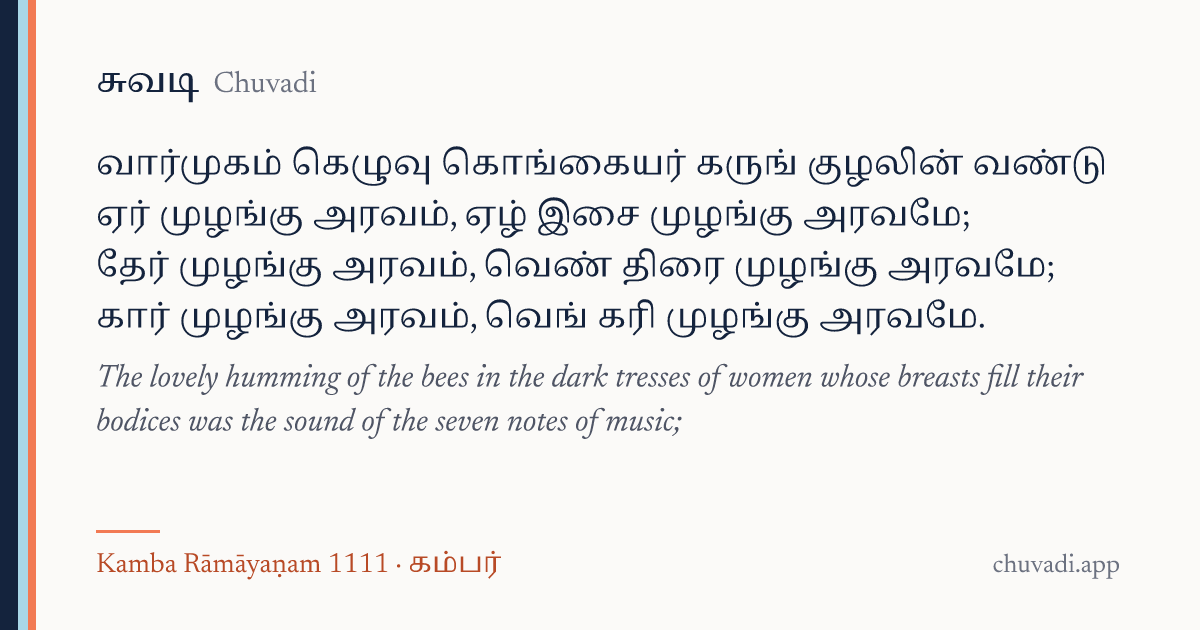
வார்முகம் கெழுவு கொங்கையர் கருங்குழலின் - கச்சில் நிறைந்து வழியும் கொங்கைகளையுடைய மகளிரின் கரிய கூந்தலில் மொய்க்கும்; வண்டு ஏர் முழங்கு அரவம் - வண்டுகள் அழகாக ஒலிக்கும் ஓசை; ஏழ் இசை முழங்கு அரவமே - ஏழ்வகைச் சுரங்கள் ஒலிக்கின்ற இசையேயாகும்; தேர் முழங்கு அரவம் - (அச்சேனையில்) தேர்கள் ஒலிக்கின்ற ஓசை; வெண்திரை முழங்கு அரவமே - வெண்ணிறக் கடல் அலைகள் ஒலிக்கும் ஓசையே யாகும்; வெங்கரி முழங்கு அரவம் - வலிய யானைகள் பிளிறும் ஓசை; கார் முழங்கு அரவமே - கார்காலத்து (மேகங்கள் ஒலிக்கும் இடி) முழங்கும் முழக்கமே யாகும்.
“படை யியங்கு அரவம்” (தொல். புறத். 3) எனும் புறப் பொருளை நினைவில் கொண்டு, தசரத வேந்தன் படையில் இயங்கும் அரவங்களைப் பல்வகையாக ஒப்பிட்டு மகிழ்ந்தவாறு. மகளிரின் பெருந்தொகுதியும், யானை தேர்ப்படைகளின்
ஆங்கிலம் · English translationAI
Translation
- The lovely humming of the bees in the dark tresses of women whose breasts fill their bodices
- was the sound of the seven notes of music;
- the rumbling of the chariots was the roar of white-capped waves;
- the trumpeting of the fierce elephants was the thundering of the clouds.
What the poem says
The poet describes the noise of Tacarataṉ's moving army, a subject the old Tamil grammar of war poetry sets out. Each sound is matched with a grander one.
The bees humming in the women's hair sound like music played in all seven notes. The rumbling chariots sound like breakers on the sea. The trumpeting elephants sound like the thunder of monsoon clouds.