



கம்பராமாயணம் 1114 · பால 18.12
பாடல் · The poem
Tap a word to see its gloss in the commentary and where else it occurs.
பொருள் · Meaning in Tamil
தாஇல் மன்னவர் பிரான் வர - குற்றமில்லாத மன்னர்க்கு மன்னனான தசரதச் சக்கரவர்த்தி, தனது நகரத்திற்கு வருகைபுரிகையில்; முரண் சனகனாம் ஏவரும் சிலையினான் - வலிமை மிகும் சனகனாகிய அரிய அம்புகள் தொடுக்கவல்ல வில் வீரனாகிய அரசன்; எதிர்வரும் நெறிஎலாம் - எதிர் கொண்டு அழைத்துவர உள்ள வழிகள் முழுவதும்; தூவுதண் சுண்ணமும் கனக நுண் தூளியும் - மங்கல நிகழ்ச்சிகளில் மேலே தூவப்படுகிற குளிர்ச்சி தரும் வாசனைப் பொடிகளும் (அணிகளின் உராய்வினால் சிந்துகின்ற) பொன்னாபரணங்களின் நுட்பமான பொற் பொடிகளும்; பூவின் மென்தாது உகும் பொடியுமே - மலர்களிலிருந்து சிந்துகிற மெல்லிய மகரந்தப் பொடிகளும் ஆகிய இவையே; பொடி எலாம் - (அங்குச் சிந்திய) பல்வகைத் தூசுகள் ஆகும்.
உலகில், எளியவையே தூசு எனப்பட, அங்கு மதிப்பு மிக்கவையே தூசுகள் ஆயின என்க. தா இல் - குற்றமற்ற; கேடு அற்ற எனினுமாம். “தாவா விழுப்புகழ்ப் பூவை நிலையும்” (தொல். புறத். 5). இரப்போர் கடலை ஈந்தே கடந்து (கம்ப. 172), மண்ணின்மேல் வான் புகழ் நாட்டான் ஆதலின், தசரதனை, “தா இல் மன்னவர் பிரான் வர” என்றார்.
ஆங்கிலம் · English translationAI
Translation
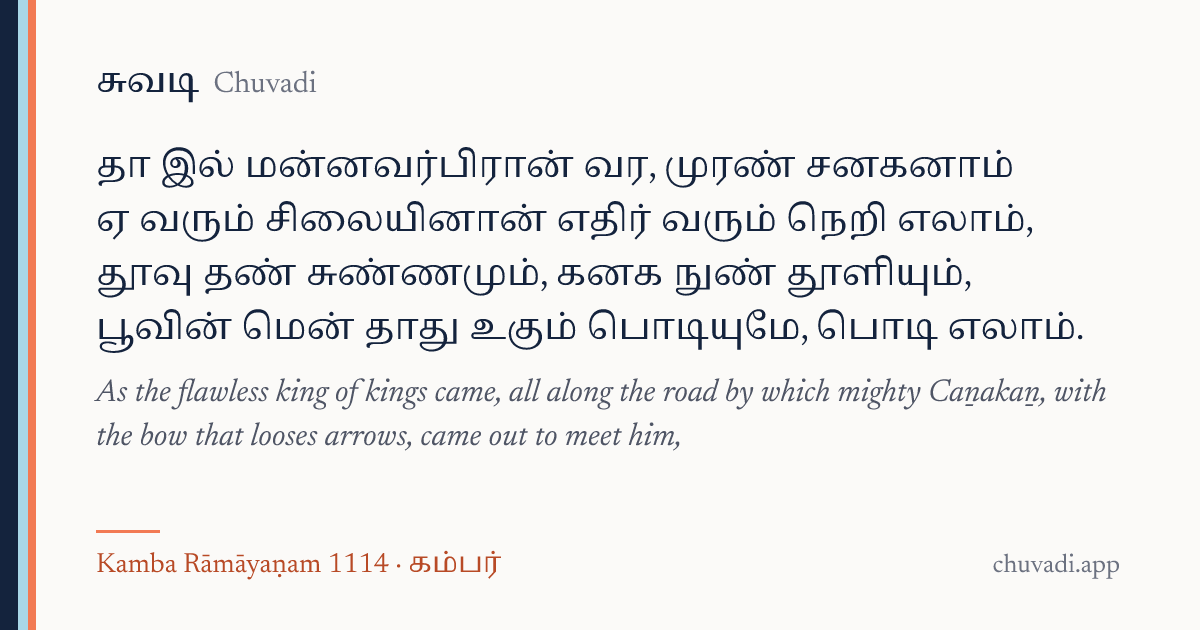
- As the flawless king of kings came, all along the road by which
- mighty Caṉakaṉ, with the bow that looses arrows, came out to meet him,
- the cool scented powder strewn about, the fine dust of gold,
- and the soft pollen falling from the flowers: these were all the dust there was.
What the poem says
Caṉakaṉ rides out along the road to meet Tacarataṉ, the faultless king of kings. Wherever dust would normally rise from a road, the only dust here is precious.
There is scented powder strewn for the festive occasion, gold dust rubbed off the jewellery of the crowds, and pollen from the flowers. The poet turns the commonplace dust of a road into a sign of wealth and celebration.