



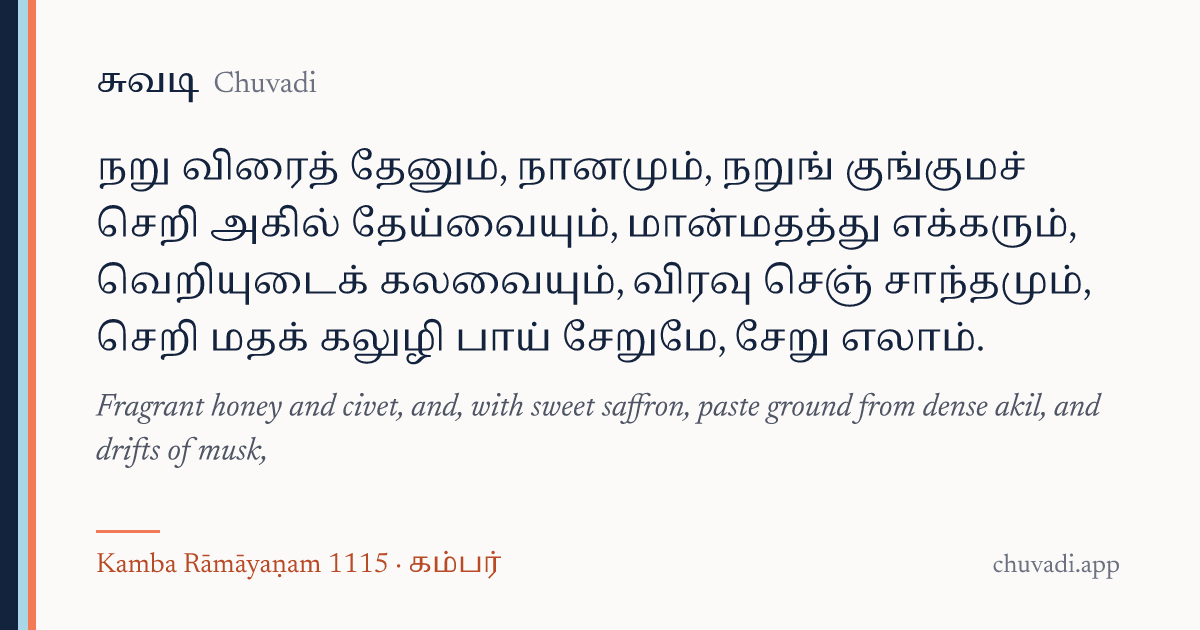
கம்பராமாயணம் 1115 · பால 18.13
பாடல் · The poem
Tap a word to see its gloss in the commentary and where else it occurs.
பொருள் · Meaning in Tamil
நறுவிரைத் தேனும் நானமும் - நறுமணமுடைய தேனும், (கூந்தலில் கலந்தொழுகும்) புனுகும்; நறுங்குங்குமச் செறிஅகில் தேய்வையும் - நல்ல வாசனையுடைய குங்குமப் பூவோடு சேர்ந்த திண்ணிய அகிற்கட்டைத் தேய்வினால் ஆகிய குழம்பும்; மான்மதத்து எக்கரும் - மான்மதமாகிய கத்தூரியின் மிகுதியும்; வெறியுடைக் கலவையும் - பரிமளமுடைய பல்வேறு வாசனைப் பொருள்களின் சேர்க்கையும்; செஞ்சாந்தமும் - செந்நிறச் சந்தனமும்; விரவு செறி மதக் கலுழி பாய் சேறுமே - சேர்தலால் உண்டான சேறுகளுடனே, மிகுந்த யானைகளின் திரள்களில் உண்டான மதநீர் பாய்கின்ற சேறுகளும்; சேறு எலாம் - (சேர்ந்த கலவையே படைசெல்லும் வழியில் உள்ள) சேறுகள் யாவும்.
இழிகுணச் சேறின்றி, நறுமணச் சேறே வழியெங்கும் என்று கற்பித்து, செல்வ வளமும், நாகரிகச் செழுமையும் சுட்டியவாறு. கலுழி - வெள்ளம்.
ஆங்கிலம் · English translationAI
Translation
- Fragrant honey and civet, and, with sweet saffron,
- paste ground from dense akil, and drifts of musk,
- heady blends of perfume and red sandal paste, all mingling,
- and the mire where floods of must ran from the crowded elephants: these were all the mud there was.
What the poem says
A companion to the verse about the dust. Along the road where the two royal hosts meet there is mud, but no ordinary mud.
It is made of fragrant honey, civet, saffron and akil paste, musk, perfumes and red sandal, all trodden together with the must streaming from the elephants. The poet uses even the mire underfoot to show how rich and refined the procession is.