



கம்பராமாயணம் 1122 · பால 18.20
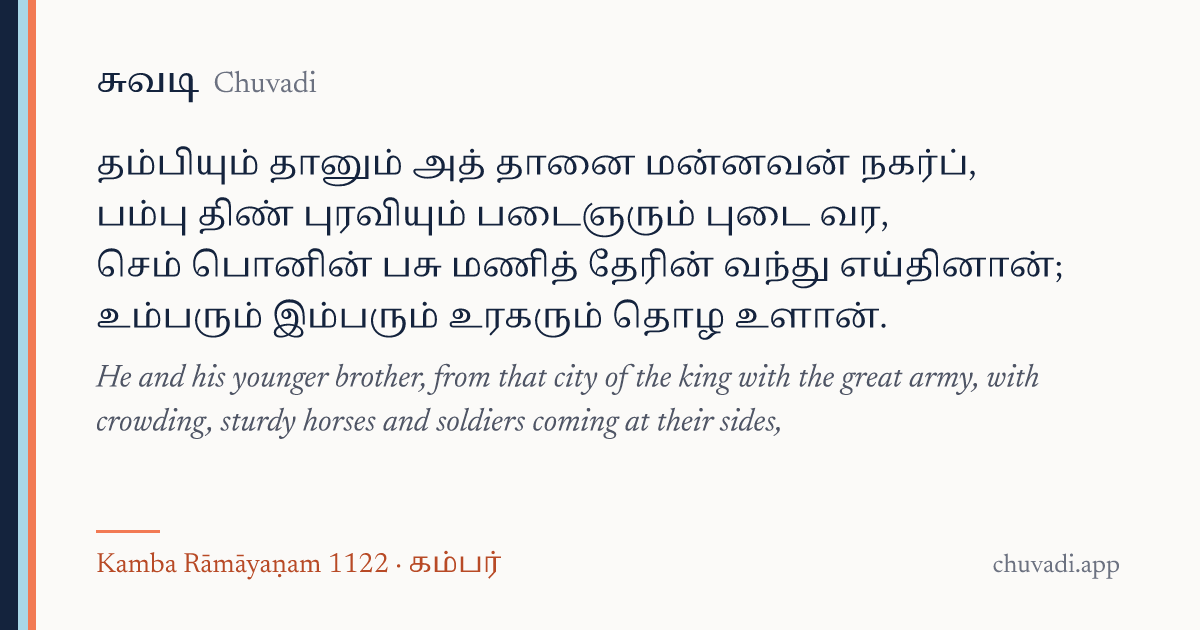
பாடல் · The poem
Tap a word to see its gloss in the commentary and where else it occurs.
பொருள் · Meaning in Tamil
உம்பரும் இம்பரும் உரகரும் தொழ உளான் - மேலுலகத் தேவர்களும், இவ்வுலக மனிதர்களும், கீழ் உலக நாகர்களும் (என மூவுலகத்து உயிர்களும்) வணங்கி மகிழ உள்ளவனாகிய இராமபிரான்; பம்புதிண் புரவியும், படைஞரும் புடை வர - நெருங்கிய வலிமைமிக்க குதிரைகளும், படை வீரர்களும் சூழ்ந்து வர; அத்தானைமன்னவன்நகர் - படைப்பெருமை மிக்க சனக மன்னருடைய அந்நகரத்தினின்றும்; செம்பொனின் பசுமணித் தேரின் வந்து எய்தினான் - சிவந்த பொன்னால் செய்யப் பெற்று, பச்சை மணிகள் பதிக்கப் பெற்ற தேரில் ஏறி, (தன் தந்தையை) எதிர் கொள்ள வந்தடைந்தான்.
“மூவுலகும் தொழ உள்ளான்” தந்தையைத் தொழ உள்ளான் என்றபடி. இராமனுடன் வரும் சேனை, சனகன் சேனையே. சேனையின்றி அரச குலத்தார் சிறப்பு நிகழ்ச்சிகளில் வாரார் எனும் மரபு தெரிவித்தவாறு. மூவுலகத்தாரும் வணங்கவுள்ள பெருமான், ஓருலகத்தில் ஒரு பகுதியை ஆள்கின்ற தசரதனைத் தொழ வருகிறான் என்று அவதாரத்தின் எளிவந்த கருணைத்திறமாகிய (சௌலப்பியம்) நீர்மை சுட்டியவாறு.
ஆங்கிலம் · English translationAI
Translation
- He and his younger brother, from that city of the king with the great army,
- with crowding, sturdy horses and soldiers coming at their sides,
- arrived in a chariot of red gold set with green gems:
- he who is there to be worshipped by those above, those here, and the serpents below.
What the poem says
Irāmaṉ and his brother Ilakkuvaṉ ride out of Mithilā in a gold chariot studded with emeralds, with Caṉakaṉ's horsemen and soldiers around them, since royalty did not appear on great occasions without an escort.
The poet stresses the paradox: the one whom gods, men and the serpent-folk of the underworld all worship comes to bow before Tacarataṉ, a king of one part of one world. This is the gracious accessibility of God in his incarnation.