



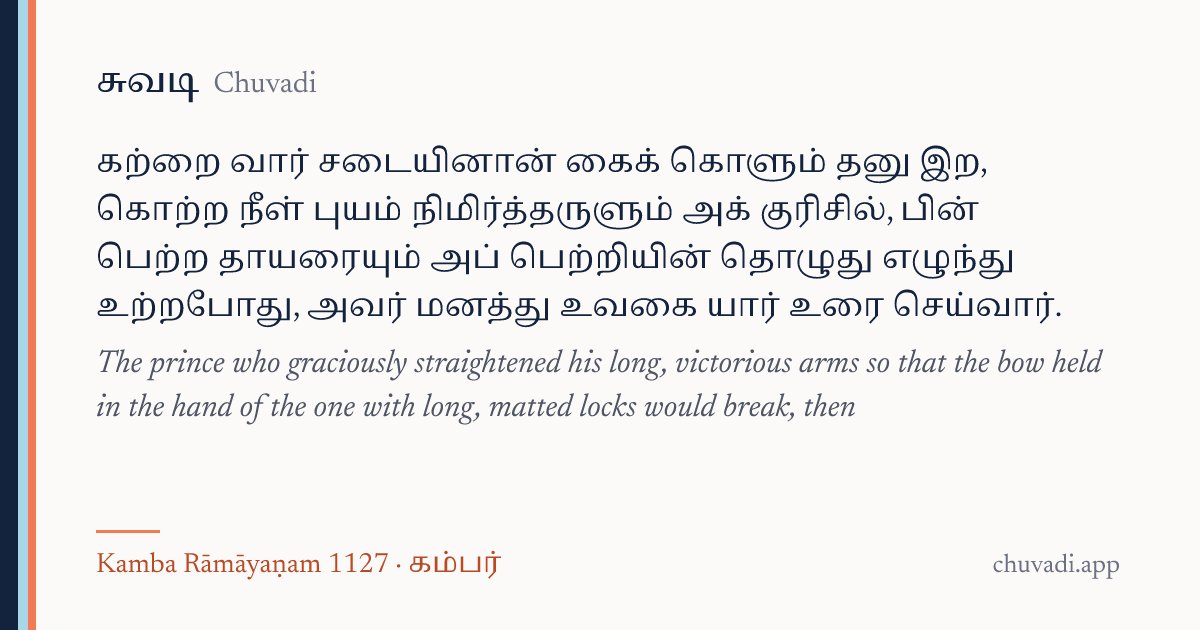
கம்பராமாயணம் 1127 · பால 18.25
பாடல் · The poem
Tap a word to see its gloss in the commentary and where else it occurs.
பொருள் · Meaning in Tamil
கற்றைவார் சடையினான் கைக்கொளும் தனு இற - (தொகுதி) தொகுதியாக நீண்ட சடைகளையுடையவனான சிவபெருமான் கையில் தரித்த வில்லை முறியும்படி செய்த; கொற்ற நீள் புயம்நிமிர்த்து அருளும் அக்குரிசில்பின் - வெற்றியினை யுடைய நீண்ட தோள்களை நிமிர்த்தி நடந்தருளும் அந்த இராமபிரான், பின்பு; பெற்ற தாயரையும் அப்பெற்றியின் தொழுது எழுந்து உற்றபோது - தன்னை ஈன்றதாயர் ஆகிய கௌசலை, கையேயி, சுமித்திரை ஆகிய மூவரையும், முன்பு தசரதனைத் தொழுது முறைமையிலேயே பணிந்து எழுந்து, அவர்கள் அருகினில் அடைந்தபோது; அவர் மனத்து உவகை யார் உரைசெய்வார்? - அம் மூவர் மனங்களிலும் உண்டான மகிழ்ச்சிப் பெருக்கினை, (அளவிட்டு) உரைப்பார் யார் உளர்?
தாடகையை வதைத்து, வேள்வியைக் காத்து, சிவதனுசை ஒடித்த “சான்றோன் எனக்கேட்ட தாயர்” (குறள். 69) ஆதலின், அவர்தம் உவகைப் பெருக்கினை உரையிட முடியாது என்றார். தசரதனை வணங்கியபோது, இராமன் புயவலிமையைப் போற்றியது போலவே, தாயரை வணங்கியபோதும் புயவலியே புகழப் பெற்றமை காண்க. மக்கள் பூத உடலிலும், புகழ்உடலே, தாயர்க்கு ஈன்ற ஞான்றினும் பெரிது உவக்கச் (புறம் 278) செய்யும்.
ஆங்கிலம் · English translationAI
Translation
- The prince who graciously straightened his long, victorious arms
- so that the bow held in the hand of the one with long, matted locks would break, then
- bowed in the same manner to the mothers who bore him, rose,
- and came to them: who could describe the joy in their hearts?
What the poem says
After his father, Irāmaṉ bows in the same way to the three queens, Kōcalai, Kaikēyi and Cumittirai, whom he counts alike as his mothers.
Their joy is beyond words because they are hearing their son praised as a hero: he has killed Tāṭakai, guarded the sage's sacrifice and broken Civaṉ's bow. The commentary recalls the old saying that a mother rejoices more on hearing her son called a man of worth than on the day she bore him.