



கம்பராமாயணம் 1182 · பால 19.46
பாடல் · The poem
Tap a word to see its gloss in the commentary and where else it occurs.
பொருள் · Meaning in Tamil
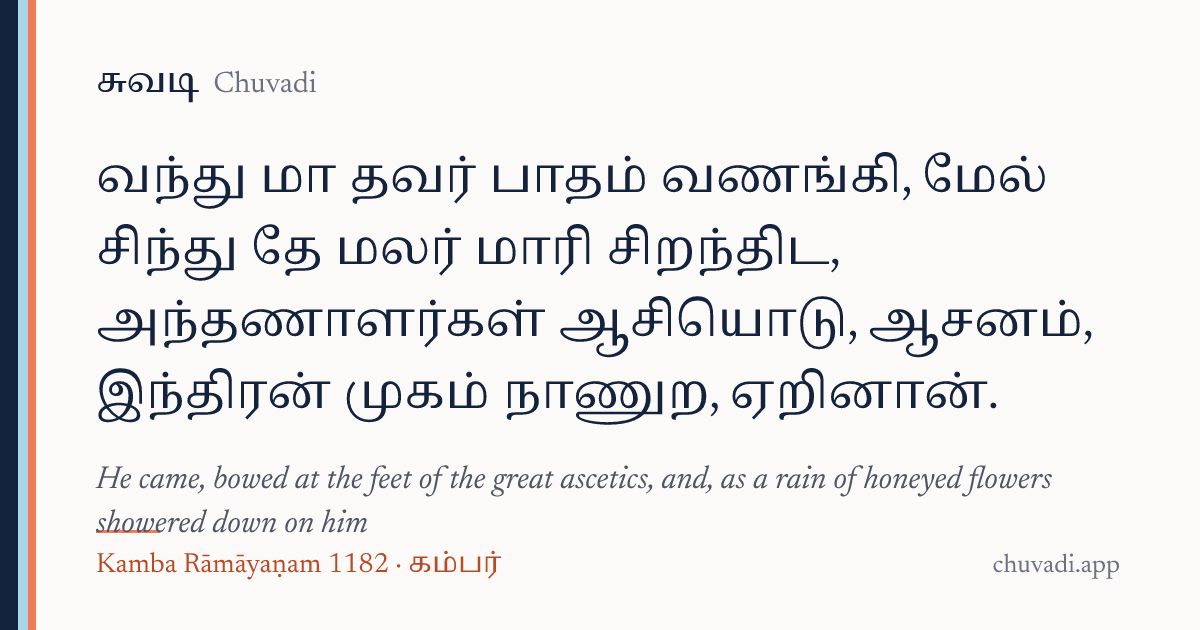
வந்து மாதவர் பாதம் வணங்கி - (தசரத சக்கரவர்த்தி அவ்வாறு) வந்து பெருந்தவத்தினராகிய வசிட்டரையும் விசுவாமித்திரரையும் (அடியுறத் தொழுது); சிந்து தேமலர் மாரி சிறந்திட - (தன்மேல் அங்குள்ளோர் பலராலும்) சொரியப்படுகின்ற தேன் நிறைந்த மலர்கள் மழைபோல் நிறைய; அந்தணாளர்கள் ஆசியொடு - (அறவோர் ஆகிய) அந்தணர்கள் வாழ்த்துரைக்க; இந்திரன் முகம் நாணுற ஏறினான் - (தேவர்கள் தலைவனாகிய) இந்திரனும், (இவனுக்கு வாய்த்துள்ள பேறு தனக்கில்லையே யென்று) முகங்கவிழ்ந்து வெட்கமுறுமாறு (ஆதனத்தில்) ஏறி வீற்றிருந்தான்.
இராமனாகிய மகப்பேறும், சீதையாகிய மருமகட்பேறும் இந்திரனுக்கில்லை யாதலால் இந்திரன் முகம் நாணினான் என்க. முன்பு கோசிக முனிவனைப் பணிய அயோத்தியில் எழுந்தபோது தசரதனை, “இந்திரன் எனக்கடிது எழுந்து அடிபணிந்தான்” (கம்ப. 3/8) எனத் தசரதனை இந்திரனோடு ஒப்பிட்ட கவிஞர்பிரான், இங்கு இந்திரன் நாண எழுந்து பணிந்தான் என்றதன் காரணம், இந்திரனுக்குத் திருமகளை மருமகளாகப் பெறும் வாய்ப்பு இன்மையால் என்க.
ஆங்கிலம் · English translationAI
Translation
- He came, bowed at the feet of the great ascetics, and, as a rain
- of honeyed flowers showered down on him
- and the brahmins gave their blessings, he mounted his seat
- so that even Intiraṉ's face was put to shame.
What the poem says
Tacarataṉ enters, bows to the sages, and takes his seat amid a shower of flowers and the blessings of the priests.
Earlier the poet compared Tacarataṉ to Intiraṉ, king of the gods. Now he outshines him: Intiraṉ blushes for envy, because he has no son like Irāmaṉ and will never have the goddess of fortune herself, born as Cītai, for a daughter-in-law.