



கம்பராமாயணம் 1230 · பால 20.40
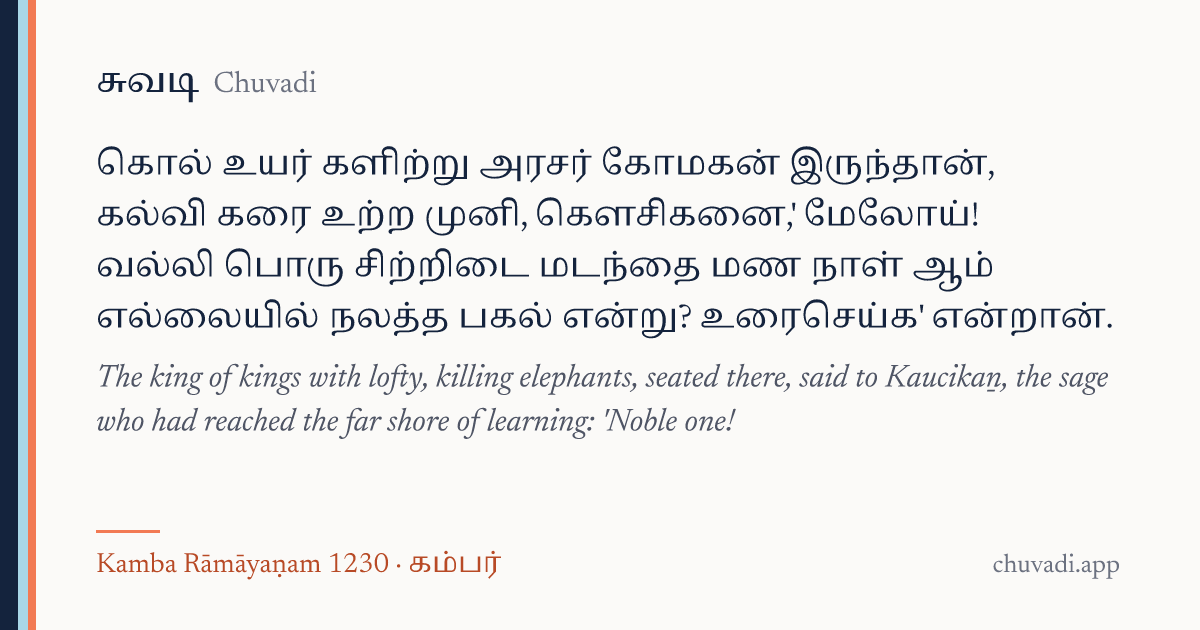
பாடல் · The poem
Tap a word to see its gloss in the commentary and where else it occurs.
பொருள் · Meaning in Tamil
கொல்உயர் களிற்று அரசர் கோமகன் - வருத்தும் பெரியயானைப் படையினையுடைய தசரதச் சக்கரவர்த்தி; இருந்தான் கல்விகரை உற்ற முனி கௌசிகனை - அங்கு ஆதனத்தில் வீற்றிருந்தவனாகிய கல்விக் கடலின் கரை கண்டவனாம் விசுவாமித்திர முனிவரை நோக்கி; மேலோய் - மேன்மைக்குணம் வாய்ந்தோய்; வல்லி பொருசிற்றிடை மடந்தை - மலர்க்கொடியனைய சிற்றிடையையுடைய சீதையின்; மண நாளாம் எல்லையில் நலத்த பகல் என்று? - திருமண நாளாகும் பேறுபெற்ற, அளவற்ற புண்ணியம் படைத்த அந்நாள் எந்நாள் என்று; உரைசெய்க என்றான் - கூறியருளுக என்று வேண்டினான்.
நாள்களால் நலமுறுவார் பலர். சிலரால் நாள்கள் நலம்பெறும். ஆதலால், சீதை மணத்தால் புனிதம் பெறும் அந்நாள் எந்நாள் என்று தயரதன் வினவினன் என்க. அந்நாள் பங்குனி உத்தரம் என்று முதல்நூலாகிய வான்மீகத்தால் அறியப்படும். உலகின் துயர் நீங்க இராவண வதம் நிகழ, இம்மண நாள் மூலவித்து ஆவதும் தோன்ற “எல்லையில் நலத்த பகல்” என்றார்.
ஆங்கிலம் · English translationAI
Translation
- The king of kings with lofty, killing elephants, seated there,
- said to Kaucikaṉ, the sage who had reached the far shore of learning: 'Noble one!
- When is the day of boundless good that shall be the wedding day
- of the maiden whose slender waist rivals a creeper? Tell me.'
What the poem says
Tacarataṉ has arrived in Mitilai for the wedding. Seated in the assembly, he turns to Vicuvāmittiraṉ (called Kaucikaṉ, of the Kuśika line), the sage who has crossed the whole ocean of learning, and asks him to name the wedding day.
He calls it a day of 'boundless good': many people are blessed by auspicious days, but some people bless the days themselves, and this day will be sanctified by Cītai's marriage. Vālmīki gives the date as the Uttara asterism in the month of Paṅkuṉi. The phrase also hints that this wedding is the seed from which Irāvaṇaṉ's death, and the end of the world's suffering, will grow.