



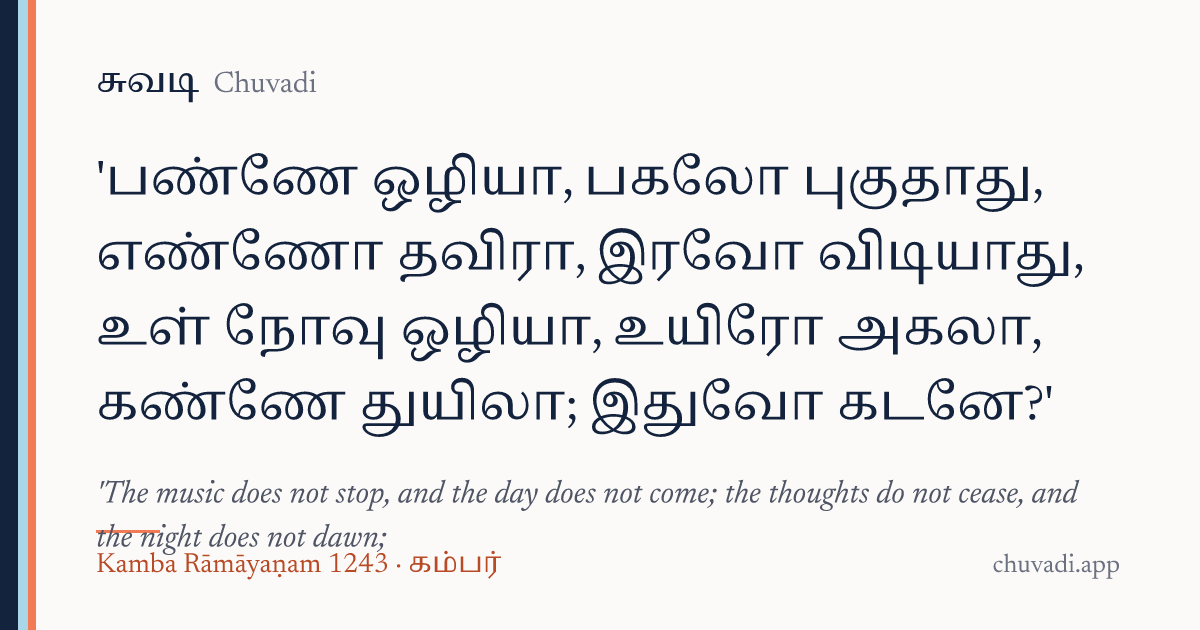
கம்பராமாயணம் 1243 · பால 21.10
பாடல் · The poem
Tap a word to see its gloss in the commentary and where else it occurs.
பாட வேறுபாடு · Project Madurai reads
பொருள் · Meaning in Tamil
பண்ணோ ஒழியா - (நகரின்) இசைகளோ அடங்குவதாக இல்லை; பகலோ புகுதாது - பகற்பொழுதோ வந்தடைவதாக இல்லை; எண்ணோ தவிரா - (இராமனைப் பற்றிய) எண்ணங்களோ நீங்குவதாக இல்லை; இரவோ விடியாது - (இந்தக் கொடிய) இரவுப் பொழுதோ விடிவதாக இல்லை; உள் நோவு ஒழியா - (என்) உள்ளத்துத் துன்பங்களோ ஒழிவதாக இல்லை; உயிரோ அகலா - என் உயிரும் உடம்பை விட்டு அகலுவதாகவும் இல்லை; கண்ணோ துயிலா - என் கண்களும் உறங்குவதாகவும் இல்லை; இதுவோ கடனே? - இங்ஙனம் வருந்தித் தவிப்பதோ பெண்ணாய்ப் பிறந்த எனது கடமையானது?
“உயிரோ அகலாது” எனற்பாலது - “உயிரோ அகலா” என வந்தது செய்யுள் ஆதலின் வந்த ஒருமை பன்மை மயக்கம். துயரங்கள் அடுக்கடுக்காக வருவதைப் போல் வாக்கியங்களையும் அடுக்கடுக்காக அடுக்கிக் காட்டுகிறார். “பஞ்சப்பிராணன்” என்பதனால் “உயிரோ ஒழியா” எனப் பன்மையால் கூறினார் எனவுமாம்.
ஆங்கிலம் · English translationAI
Translation
- 'The music does not stop, and the day does not come;
- the thoughts do not cease, and the night does not dawn;
- the pain within does not end, and life does not depart;
- the eyes will not sleep. Is this what I am bound to bear?'
What the poem says
A breathless list of everything that will not end. The music of the festive city goes on, daylight will not come, her thoughts of Irāmaṉ will not stop, the night will not break, the ache in her heart will not go, yet her life will not leave her body either, and her eyes will not close.
The poet piles clause on clause, two to a line, just as her troubles pile up one on another. Is this suffering, she asks, the duty she was born to as a woman?