



கம்பராமாயணம் 1244 · பால 21.11
பாடல் · The poem
Tap a word to see its gloss in the commentary and where else it occurs.
பாட வேறுபாடு · Project Madurai reads
பொருள் · Meaning in Tamil
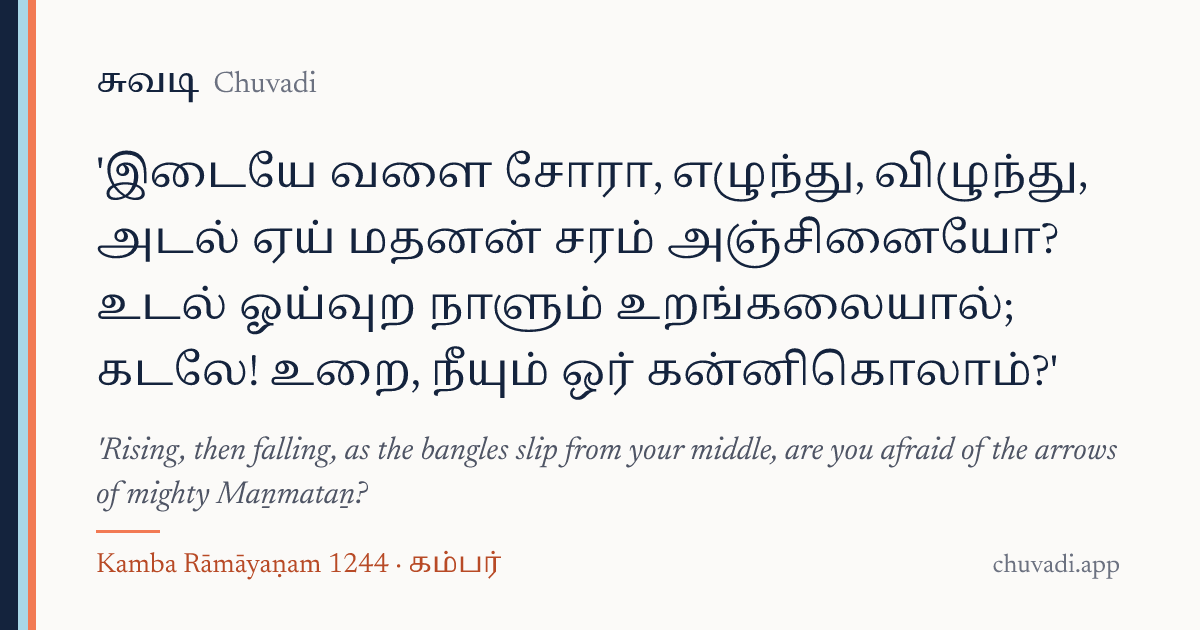
கடலே! - சமுத்திரமே!; இடையே வளை சோர எழுந்து விழுந்து - உன் இடத்திலிருக்கும் வளைகள் (சங்குகள்) விழும்படி எழுந்திருந்து, (நிற்க ஆற்றலின்றி) உடனே கீழே விழுந்து; உடல் ஓய்வு உற நாளும் உறங்கலையால் - உடல், செயலின்றிச் சோர்வுமுற்ற, நாள்தோறும் (இரவிலும் கூட) என்னைப் போலத் தூங்குகிறாய் இல்லை; ஆதலால் நீயும் ஓர் கன்னி கொல் ஆம் - நீயும் (என்னைப் போலவே) மணமாகாத ஒரு மங்கையா?; அடல் ஏய் மதனன் சரம் அஞ்சினையோ? உரை - (என் போலவே) நீயும் ஆற்றல் மிக்க மன்மதனின் அம்புகளுக்கு அஞ்சித் தவிக்கின்றாயோ? (எனக்கு) உரைப்பாயாக.
“காமுற்ற கையறவோடு எல்லே இராப்பகல், நீ முற்றக்கண் துயிலாய், நெஞ்சுருகி ஏங்குதியால், தீமுற்றத் தென் இலங்கையூட்டினான் தாள் நயந்த, நாம் உற்றது உற்றாயோ வாழி கனை கடலே” எனும் நம்மாழ்வாரின் திருவாய்மொழிப் (2:2:3) பாசுரத்தை அடியொற்றியுள்ளது இப்பாடல். உடல் மெலிதலும், வளை சோர்தலும், எழுதலும், வீழ்தலும், உறங்காமையும் சீதைக்கும் கடலுக்கும் பொதுவாதல் காண்க. சிலேடையணி. நீயும் - இறந்தது தழீஇய எச்ச உம்மை.
ஆங்கிலம் · English translationAI
Translation
- 'Rising, then falling, as the bangles slip from your middle,
- are you afraid of the arrows of mighty Maṉmataṉ?
- You do not sleep, day after day, though your body is worn out;
- O Sea! Tell me: are you too a young unmarried girl?'
What the poem says
Cītai speaks to the sea, and finds in it a fellow sufferer. Its waves rise and fall, just as she keeps getting up and collapsing again; its conches (valai) slip away from it, just as her bangles (also valai) slip from her wasted wrists; and it never sleeps, night or day.
So is the sea also a girl in love, she asks, terrified of the arrows of the love god? The verse is built on a pun, since every term fits both the sea and the lovesick girl. It closely follows a hymn of Nammāḻvār in the Tiruvāymoḻi, in which a woman in love asks the roaring sea whether it suffers as she does.