



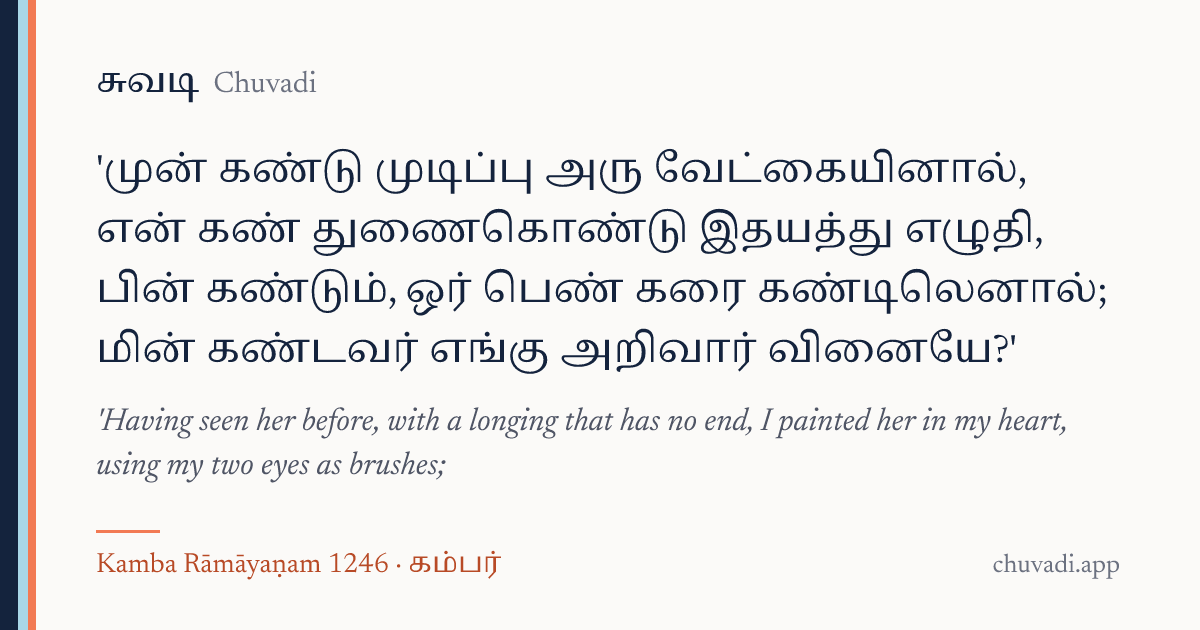
கம்பராமாயணம் 1246 · பால 21.13
பாடல் · The poem
Tap a word to see its gloss in the commentary and where else it occurs.
பொருள் · Meaning in Tamil
முன் கண்டு முடிப்பரு வேட்கையினால் - முன்பே (அப்பெண்ணை) கன்னிமாடத்தில் கண்டு முடிவற்ற பெருங்காதலினால்; என் கண்துணை கொண்டு - என்னுடைய இரண்டு கண்கள் என்னும் தூரிகைகளைக் கொண்டு; இதயத்து எழுதி - என் இதயம் என்னும் திரையிலே (ஓவியமாக) எழுதி வைத்துக் கொண்டு; பின் கண்டும் - பின்பு (இன்று) நேரிலே பார்த்தும்; ஓர் பெண் கரை கண்டிலென் - அப்பெண்ணின் அழகு (ஓவியத்துக்கும் அடங்காது; கண்களுக்கும் அடங்காது) அது (எல்லையற்ற) கரை காணாப் பேர் அழகு என்பதனைக் கண்டு கொண்டேன்; மின் கண்டவர் எங்கு அறிவார் வினையே? - மின்னலின் ஒளியை நேரே பார்த்தவர்கள் (கண் ஒளி மங்கித் திகைப்பதேயன்றி) அவ்வொளிமயத்தை எங்ஙனம் வரைந்து காட்ட இயலும்.
சீதையின் அழகு வெளிச்சம் அடித்தவுடனே கண்கள் ஒளியிழந்து போகின்றன. ஆதலால் அவள் அழகு காண முடியாத கடல் எல்லை போன்றாயிற்று என்க. பெண் - ஆகு பெயராய் அழகைக் குறித்து நின்றது. இறுதியடி, மின் ஒளியை நேரே பார்த்தவர்கள் கண் ஒளி மங்கிவிடுவதனால் அம்மின் ஒளியின் முழுத் தன்மையைத் தெரிந்திருப்பாய்; கூறுக என்றால் எங்ஙனம் கூற இயலும்? எனினுமாம். சீதையின் சமுதாய சோபை அழகால், அவயவ அழகைத் தனித்தனியாய்ப் பார்த்து முடிக்க இயலவில்லையென்று பெருமான் இரங்கினான் எனினுமாம். முன் கன்னிமாடத்தில் கண்டு மனத்தில் எழுதிக்கொண்ட ஓவியத்தை, பின் மணமண்டபத்தில் கண்ட உருவோடு ஒப்பிட்டுப் பார்க்கையில் கடல் அளவு அவள் அழகில் வேற்றுமை கண்டதனால் இவள் அழகு கரை காணாக் கடற் பேரழகு எனத் துணிந்தான் எனினுமாம். இதனைப் “பின் கண்டும் ஓர் பெண் (அழகு) கரை கண்டிலெனால்” என்றார் என்பதாம் - எடுத்துக்காட்டுவமையணி.
ஆங்கிலம் · English translationAI
Translation
- 'Having seen her before, with a longing that has no end,
- I painted her in my heart, using my two eyes as brushes;
- and though I have seen her again since, I have found no shore to this one woman.
- How can those who have looked at lightning know how to draw it?'
What the poem says
Irāmaṉ, alone in his palace, speaks first. When he first saw Cītai on her balcony, he painted her portrait on his heart with his eyes as brushes. Today he has seen her again in person, and he finds her beauty has no shore: it is far more than his portrait, and more than his eyes can take in.
The last line explains why: someone who looks straight at lightning is dazzled and cannot afterwards describe or draw it. Cītai's beauty is so bright that it blinds the eye that tries to hold it.