



கம்பராமாயணம் 1247 · பால 21.14
பாடல் · The poem
Tap a word to see its gloss in the commentary and where else it occurs.
பாட வேறுபாடு · Project Madurai reads
பொருள் · Meaning in Tamil
திருவே அனையாள் முகமே - திருமகள் போன்ற சீதையின் முகமண்டலம் போன்றவனே; மதியே தெரியின் கருவே, கனியே விளைகாம விதைக்கு எருவே - சந்திரனே! ஆராய்ந்தால் காய்களையும் கனிகளையும் உண்டாக்கிக் காமம் என்னும் விதை வளர எருவாக விளங்குகின்றாயே; இது என் செய்தவா? - இது என்ன காரியம் நீ செய்தது; ஒருவேனொடு நீ உறவு ஆகலையோ? - (காதலித்தவளைக் கூடாது) தனித்திருக்கும் என்னோடு நீ நண்பனாக மாட்டாயோ? (பகைப்பதென்று முடிவோ?)
பிரிந்திருப்பார்க்குச் சந்திரன் பகைவன் என்பது இறுதியடியிற் கூறப்பட்டது. “முகமே தெரியின்” என்பது மோனை சிறத்தலால் அப்பாடமே கொள்ளப்பட்டது. உயிரின் எனும் பாடத்திற்கு உயிர்களின் தோற்றத்திற்கு மூல காரணமானவனே! என்பது பொருளாகும். உணவுக்குரிய பயிர்கள் முதலியன விளைவதற்குச் சந்திரன் ஒளியே மூலம் என்பர். கரு: காய். “காமம் கனியும் கருக்காயும் அற்று” (குறள். ) என்ப. திங்கள், காமத்தை மிகுவிக்கும் பொருள்களுள் மிகச் சிறந்த ஒன்றாதலின், “விளை காம விதைக்கு எருவே, கருவே, கனியே” என்றார். காலை அரும்பிப் பகல் எல்லாம் போதாகி, மாலை மலர்ந்து (குறள். 1227) நிலவொளியில் கனியாகக் காமம் கனிந்து உயிர்த் தோற்றத்துக்கு உதவுவது என்றவாறு. கருவே கனியே என்பதற்கு கருக்காயாகிய துனியையும், கனியான புலவியையும் விளைக்கும் காமமாகிய விதைக்கு எருவே எனப் பொருள் கொள்ளலும் ஆகும். “துனியும் புலவியும் இல்லாயின் காமம் கனியும் கருக்காயும் அற்று” (திருக். 1306) என்பார் வள்ளுவனாரும்.
ஆங்கிலம் · English translationAI
Translation
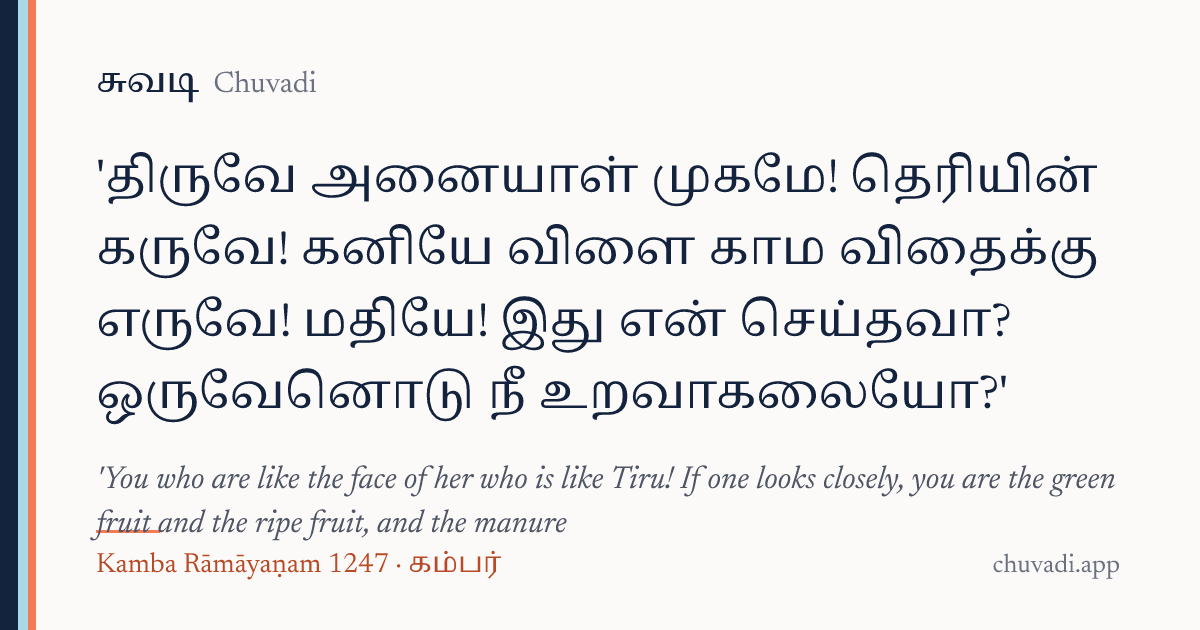
- 'You who are like the face of her who is like Tiru! If one looks closely,
- you are the green fruit and the ripe fruit, and the manure
- for the seed of growing desire. O Moon! What is this you have done?
- Will you not be a friend to me, who am all alone?'
What the poem says
Irāmaṉ now addresses the moon. It resembles Cītai's face, and she in turn is like Tiru, the goddess Lakṣmī. Yet the moon is no friend to a lover apart from his beloved: it is the manure that makes the seed of desire sprout and grow into unripe and then ripe fruit. Why has it done this to him? Will it not be kind to someone who is alone?
The commentary links the image of ripening love to Tirukkuṟaḷ, where desire buds at dawn, opens through the day and flowers at evening, and where lovers' quarrels, small and great, are compared to unripe and over-ripe fruit.