



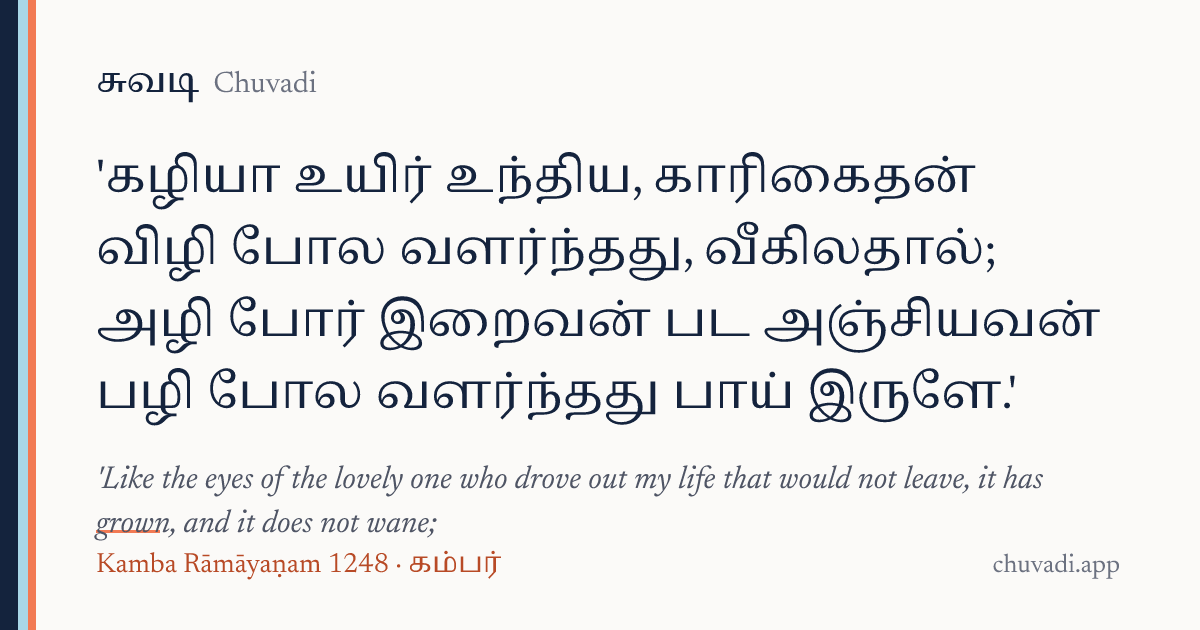
கம்பராமாயணம் 1248 · பால 21.15
பாடல் · The poem
Tap a word to see its gloss in the commentary and where else it occurs.
பொருள் · Meaning in Tamil
பாய் இருள் - எங்கும் பரவியுள்ள இருளானது; கழியா உயிர் உந்திய காரிகை தன் விழிபோல வளர்ந்தது; வீகிலதால் - என் உடலினின்றும் நீங்காத உயிரை வெளியே உந்தித் தள்ளும் சீதையின் விழியின் கருமை போல வளர்ந்து நின்றது; குறையும் பாட்டைக் காணோம்; இறைவன் அழிபோர் பட அஞ்சியவன் பழி போல வளர்ந்தது - (தன்னைக் காத்த) மன்னன் அழிகின்ற போரில் பகைவரால் மரணம் உற, தன் உயிருக்கு அஞ்சி (அவனைப் பாதுகாவாமல் கைவிட்டோடிய) ஒரு படை வீரனின் பழி வளர்வது போல் (மேன்மேலும்) வளர்ந்தது. “புரந்தார் கண் நீர் மல்கச் சாக” (குறள். 780) வேண்டியவன், ஊறு வந்தபோது தலைவனைக் கைவிட்டு, உயிர் கொண்டோடிய பழி, உலகம் உள்ளளவும் தேயாது வளரும் எனும் நீதியுரைத்தவாறு. “அமர் அகத்து ஆற்று அறுக்கும் கல்லாமா அன்னார் தமரில் தனிமை தலை” (814) என்னும் திருக்குறள். போரில் தலைவனுக்காக உயிர் தருபவன் நடுக்கல்லாய்க் காலத்தை வென்று நிற்பான்; கைவிட்டோடியவன் படுபழியாய்க் காலம் உள்ளளவும் நிற்பான்; காலம் செல்லச் செல்ல அவன் பழி வளரும் என்றவாறு. பருகிய நோக்கு எனும் பாசத்தால் (கம்ப. ) பிராட்டி பிணித்து, கண்ணொடு கண்ணிணை கவ்வி நோக்கிய நோக்கு எனும் நுதிகொள் வேல் இணையால் (கம்ப. 515) பிராட்டி பெருமானைத் தாக்கித் துயருறுத்தி உள்ளாள் ஆதலால், “கழியா உயிர் உந்திய காரிகை” என்றான். அவள் விழி நடத்திய போராட்டம் நெஞ்சில் நிலைத்திருப்பதனால், உயிர் உந்திய காரிகை தன் விழி போல் இருள் வளர்ந்தது என்றான். “கடலினும் பெரிய கண்கள்” (கம்ப. 3130) அவட்கு அன்றோ? - உவமையணி.
ஆங்கிலம் · English translationAI
Translation
- 'Like the eyes of the lovely one who drove out my life that would not leave,
- it has grown, and it does not wane;
- like the infamy of the man who, fearing for himself, let his king fall in a losing battle,
- it has grown and grown, this spreading darkness.'
What the poem says
Irāmaṉ speaks of the night. The darkness keeps growing like Cītai's dark eyes, which have all but driven his life out of his body, and it never shrinks.
It also grows like the shame of a soldier who ran away to save his own skin while his king was killed in a losing battle. Such a man's disgrace only increases as time passes, while a soldier who dies for his lord lives on as a memorial stone. The commentary cites Tirukkuṟaḷ on the duty of dying for the one who has protected you, and recalls the earlier scene in which the lovers' eyes met and wounded each other like spears.