



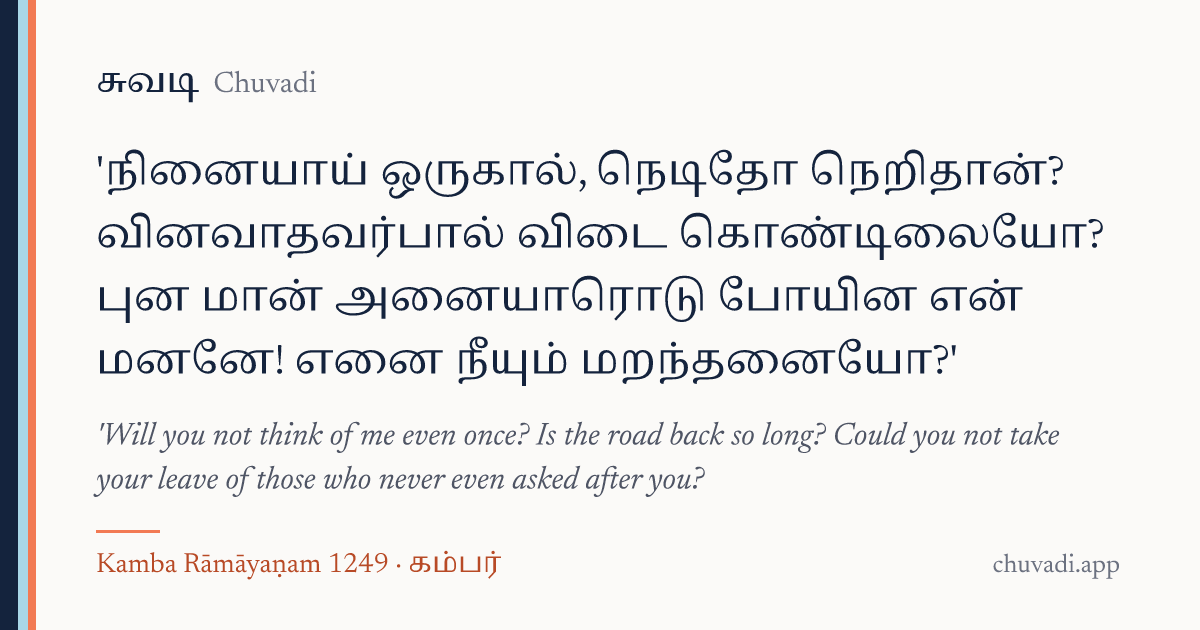
கம்பராமாயணம் 1249 · பால 21.16
பாடல் · The poem
Tap a word to see its gloss in the commentary and where else it occurs.
பொருள் · Meaning in Tamil
புன மான் அனையாரொடு போயின என் மனனே! - வனத்தில் வாழும் மானைப் போன்ற பார்வையினையுடைய சீதையோடு உடன் சென்றுவிட்ட என் மனமே! ஒருகால் நினையாய் - என்னை ஒரு முறையேனும் நினைக்க எண்ணாயோ?; நெறி தான் நெடிதோ? - திரும்பி வரும் வழி மிகு தொலைவோ?; வினவாதவர் பால் விடை கொண்டிலையோ? - (நீ யார்? வந்தது எதற்கு?) என்று கூட உன்னைக் கேளாதவரிடமிருந்து உடனே விடை கொண்டு வந்துவிட வேண்டும் (எனும் அறிவும் உனக்கு) இல்லையாய் விட்டதோ; எனை நீயும் மறந்தனையோ? - (அல்லது) என்னை அறவே (அவளைப் போல) மறந்தே போனாயோ?
மதியாதவர் இல்லம் மிதியாமை சிறப்பாயிருக்க இன்னும் ஏன் நீ அங்குக் கிடந்து தவிக்கின்றாய்? உடனே திரும்பிவிட வேண்டியதுதானே? என்பான், “வினவாதவர் பால் விடை கொண்டிலையோ?” என்றான். “பிரிந்தவர் நல்கார் என்று ஏங்கிப் பரிந்து அவர் பின் செல்லும் என் பேதை நெஞ்சு” (குறள். 1248) என்று வள்ளுவக் காதலனும் ஏங்குவான். “நீயும் மறந்தனையோ?” என்பதில் உள்ள உம்மை அவளேயன்றி நீயும் என்னும் பொருள் தந்து நின்றது. இறந்தது தழீஇய எச்ச உம்மை. கணப்பொழுதும் என்னை விட்டு நீங்கா நீயும் - என்னும் உயர்வு சிறப்புப் பொருளும் உடன் தந்து நின்றது. வாயு வேகத்திலும் விரைவாகச் செல்லவல்லது மனவேகம் என்பார்கள். அத்தகைய என் மனமாகிய உனக்கு, அடுத்திருக்கிற அரண்மனையைத் தாண்டி என்னிடம் வந்து சேர நெடுந்தொலைவாகிவிட்டதோ? என்பான், “நெடிதோ நெறிதான்?” என்றான். மனத்திற்கு இன்றியமையாப்பண்பு, செய்ந்நன்றி மறவாமையாயிருக்க, இத்துணை நாள், நான் வளர்த்த நீ, அந்நன்றி துறந்து என்னை மறந்து அவளை நினைந்து என்னை ஒரு முறை கூட நினையா நிலை பெற்றனையே என ஏங்குவான், “நினையாய் ஒருகால்” என்றான். பலகால் வேண்டா; ஒருகால் நினைத்திருக்கலாம் என்பான், “ஒருகால்” என்றான். வினவாதவர் எனப் பிராட்டியைப் பலர்பாலாற் கூறுவது உலகப் பொதுக் கருத்து உரைத்தவாறு.
ஆங்கிலம் · English translationAI
Translation
- 'Will you not think of me even once? Is the road back so long?
- Could you not take your leave of those who never even asked after you?
- My heart, you who went away with her who is like a deer of the woodland,
- have you too forgotten me?'
What the poem says
Like Cītai earlier, Irāmaṉ scolds his own heart for running off with the deer-eyed girl. Will it not think of him even once? Is the way back so long, when the mind is said to travel faster than the wind and her palace is right next door?
She has not even asked who it is or why it came, so why does it linger where it is not welcome? 'Have you too forgotten me?' implies that she has forgotten him, and now even the heart that never left him for a moment has done the same. The commentary compares a Tirukkuṟaḷ couplet in which a lover's foolish heart follows after someone who shows it no kindness.