



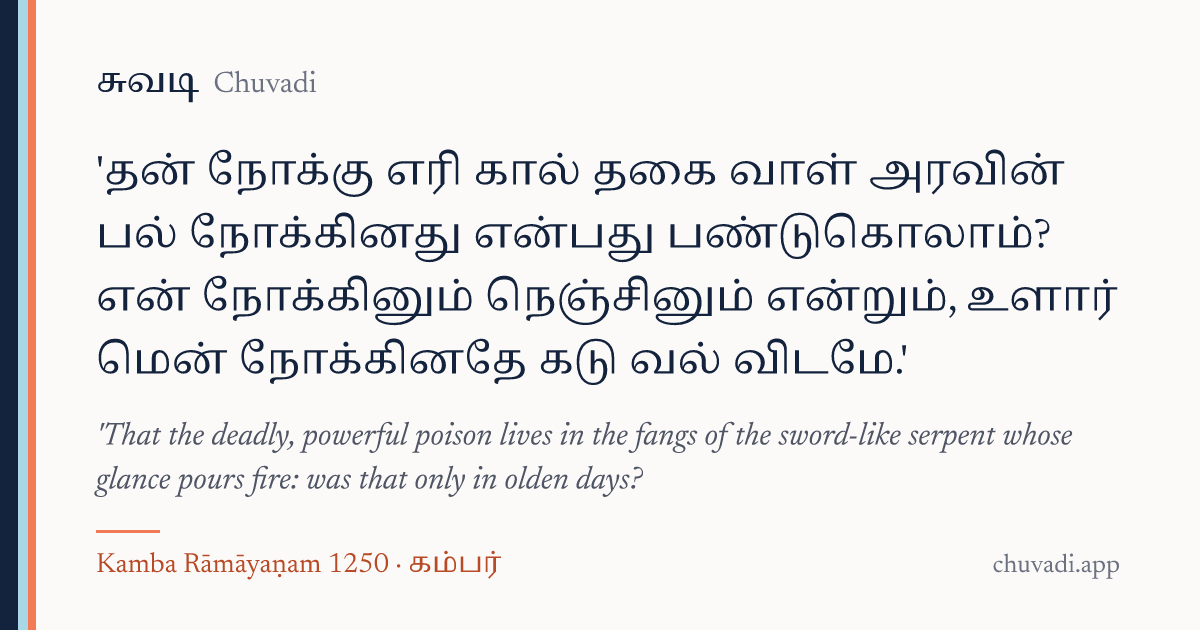
கம்பராமாயணம் 1250 · பால 21.17
பாடல் · The poem
Tap a word to see its gloss in the commentary and where else it occurs.
பொருள் · Meaning in Tamil
கடுவல்விடம் - மிகக் கொடிய வலிமை வாய்ந்த விடமானது; தன் நோக்கு எரிகால் தகைவாள் அரவின் பல் நோக்கினது - தன் கண்களினின்று தீ கக்கும் தன்மையுடைய வாள் போற் கொடிய பாம்பினது பல்லை இடமாகக் கொண்டுள்ளது; என்பது பண்டு கொல் ஆம் - என்பது பழைய செய்தி போலும்; என் நோக்கினும் நெஞ்சினும் என்றும் உளார் மெல் நோக்கினது - (இப்பொழுதோ அக்கொடிய நஞ்சு) என் விழிகளிலும் நெஞ்சினிலும் எப்போதும் நீங்காது இருப்பவராகிய அந்நங்கையரின் குளிர்ந்த பார்வையையே இடமாகக் கொண்டுள்ளது என்பது தெளிவு ஆயிற்று.
சனகியின் பார்வை காதல் நோயை மிகுவித்துப் பெருந்துன்பம் தருவது குறித்து விடமாகக் கூறப்பட்டது. “இரு நோக்கு இவள் உண்கண் உள்ளது ஒரு நோக்கு நோய் நோக்கு” (குறள். 1091) என்பர் ஆதலின் நோய் நோக்கின் வலிமை குறித்தவாறு. இராமன் நோக்கியிருத்தல் உருவெளித் தோற்றத்தில் இருத்தல்; நெஞ்சில் இருத்தல் எப்போதும் நினைவாய் இருத்தல். நோக்கில் நஞ்சு எரிகால்வது ஒன்றை விலக்கிப் பிறிதொன்றாக நிறுவுவதால் அவநுதியணி.
ஆங்கிலம் · English translationAI
Translation
- 'That the deadly, powerful poison lives in the fangs
- of the sword-like serpent whose glance pours fire: was that only in olden days?
- Now it lives in the gentle glance of the one who dwells
- always in my eyes and in my heart.'
What the poem says
Irāmaṉ reflects that people used to say the deadliest poison is found in the fangs of a cobra, whose very look spits fire. That must be old news. He now knows that the most powerful poison lives in the soft glance of the girl who never leaves his eyes or his heart.
Her look is poison because it inflames the sickness of love. The figure denies the ordinary fact and puts another in its place. The commentary cites Tirukkuṟaḷ 1091: her painted eyes hold two looks, and one of them brings the sickness of love.