



கம்பராமாயணம் 1270 · பால 21.37
பாடல் · The poem
Tap a word to see its gloss in the commentary and where else it occurs.
பாட வேறுபாடு · Project Madurai reads
பொருள் · Meaning in Tamil
விடநிகர் விழியாரும் - (விரும்பாதார்க்கு) நஞ்சினையொத்த கண்ணினரும்; அமுது எனும் மொழியாரும் - (விரும்புவார்க்கு) அமுதினை யொத்த மொழியினரும்; கிடைபுரை இதழாரும் - சிவந்த நெட்டியை யொத்த உதட்டினை யுடையாரும்; கிளர்நகை வெளியாரும் - விளங்கும் பற்களோ வெண்ணிறமாக உடையாரும்; தடமுலை பெரியாரும் - அகன்ற தனங்களின் பெருமை கொண்டவர்களும்; தனிஇடை சிறியாரும் - தனித்தன்மை வாய்ந்த மிகச்சிறிய இடையினை உடையவர்களும்; பெடை அன நடையாரும் - பெண் அன்னத்தின் நடையினை யுடையவர்களும்; பிடி என வருவாரும் - பெண்யானையைப் போல நடந்து வருபவர்களும் (ஆகிய பெண்டிர் எங்கும்) (ஆயினர்).
ஒவ்வோர் அடியிலும் முரண் தொடையிட்டுப் பெண்மையினை வர்ணித்துள்ள திறம் ஓர்க. விடம் என அவர்களை வெறுத்து விடற்கு இல்லை; அருகிலேயே அமுதனைய மொழியும் உண்டு என்பார், “விடநிகர் விழியாரும், அமுதெனும் மொழியாரும்” என்றார்.
ஆங்கிலம் · English translationAI
Translation
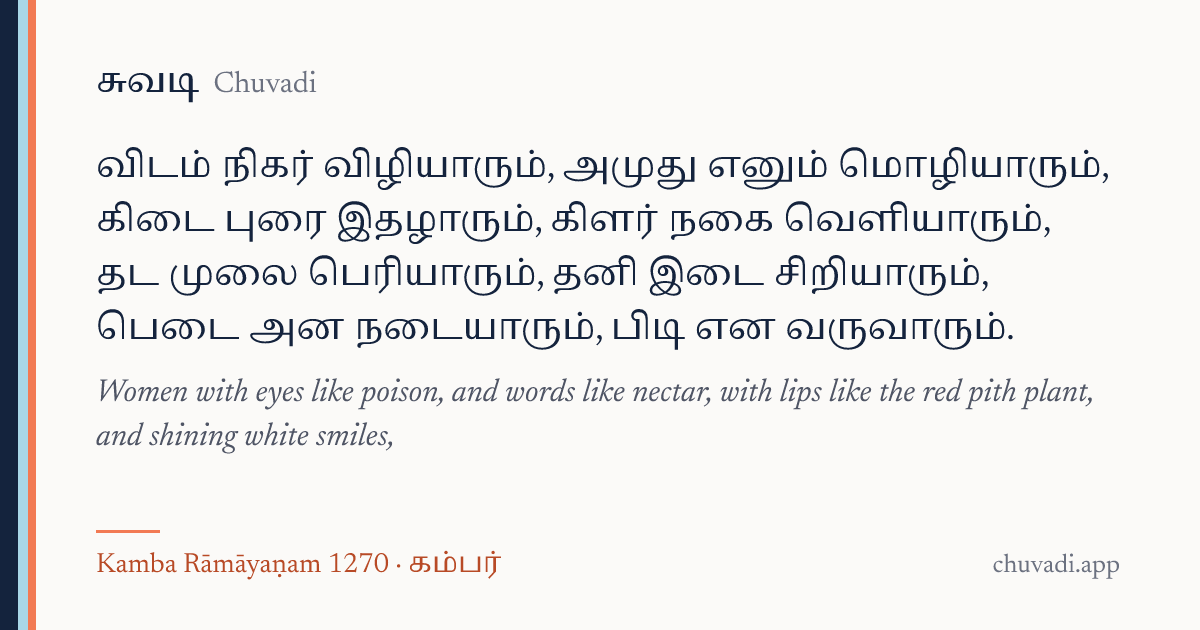
- Women with eyes like poison, and words like nectar,
- with lips like the red pith plant, and shining white smiles,
- great in their broad breasts, small in their matchless waists,
- walking like female swans, coming on like she-elephants.
What the poem says
A portrait of the women of Mitilai built on contrasts, one pair to each line: eyes like poison but speech like nectar; red lips but white teeth; large breasts but tiny waists; the light step of a swan but the stately walk of a cow elephant.
The commentary notes how each line sets opposites side by side. Their eyes may be poison to a man who resists them, but the nectar of their speech is right there to cure him.