



கம்பராமாயணம் 1275 · பால 21.42
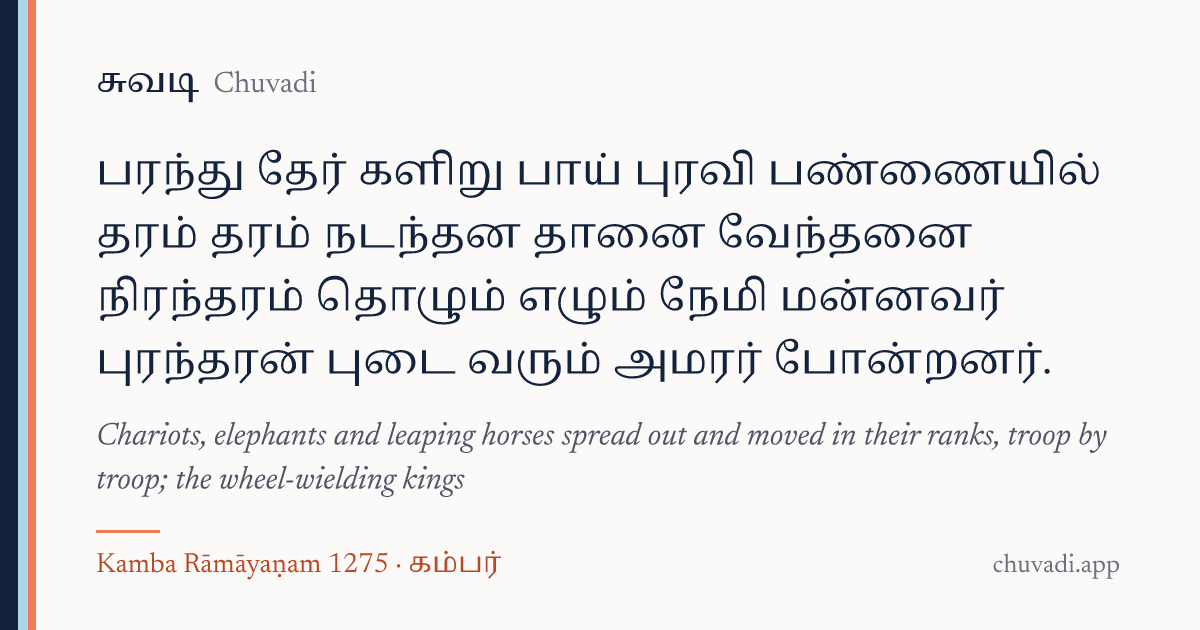
பாடல் · The poem
Tap a word to see its gloss in the commentary and where else it occurs.
பாட வேறுபாடு · Project Madurai reads
பொருள் · Meaning in Tamil
பரந்த தேர், களிறு, பாய்புரவி - பரவின தேர்களும், யானைகளும் பாய்ந்து செல்லும் திறமுடைய குதிரைகளும், பண்ணையின் தரம்தரம் நடந்தன - கூட்டம் கூட்டமாய், இனவாரியாக நடந்து சென்றன; தானை வேந்தனை நிரந்தரம் தொழுது எழும் நேமி மன்னவர் - சேனைகள் மிக்க தசரதச் சக்கரவர்த்தியை எப்போதும் (பின்பற்றித்) தொழுதெழுந்து செல்கின்ற ஆணைச் சக்கரமுடைய அரசர்கள்; புரந்தரன் புடை வரும் அமரர் போன்றனர் - இந்திரனைப் புடை சூழ வரும் தேவர்களைப் போன்று உடன் சூழ்ந்து சென்றனர்.
மேல் இந்திரன் முடிசூட்டு விழாவன்று தேவர் தலைவன் இந்திரன் தலை நகர் அமராவதி போன்றிருந்தது மிதிலை மாநகர் என்றார். இங்கு, மொய்த்துள்ள அரசர்கள் எல்லோரும் தேவர்கள் போலவும், தயரதச் சக்கரவர்த்தி தேவேந்திரன் போலவும் திகழ்ந்தனர் என்கிறார். தசரதனைத் தேவர் தலைவனுக்கு ஒப்பிட்டுப் பன்முறை மேலேயும் கூறியுள்ளார்.
ஆங்கிலம் · English translationAI
Translation
- Chariots, elephants and leaping horses spread out and moved
- in their ranks, troop by troop; the wheel-wielding kings
- who rise and worship without ceasing the king with his army
- were like the immortals who walk beside Purantaraṉ.
What the poem says
Tacarataṉ's army follows him in orderly divisions of chariots, elephants and horses. The kings who acknowledge him as overlord walk around him, saluting him again and again.
Just before, Mitilai was compared to Indra's city on his coronation day. Now the picture is completed: the kings are the gods and Tacarataṉ is Indra (Purantaraṉ, 'destroyer of forts') at their centre. The poet has compared Tacarataṉ to the king of the gods several times before.