



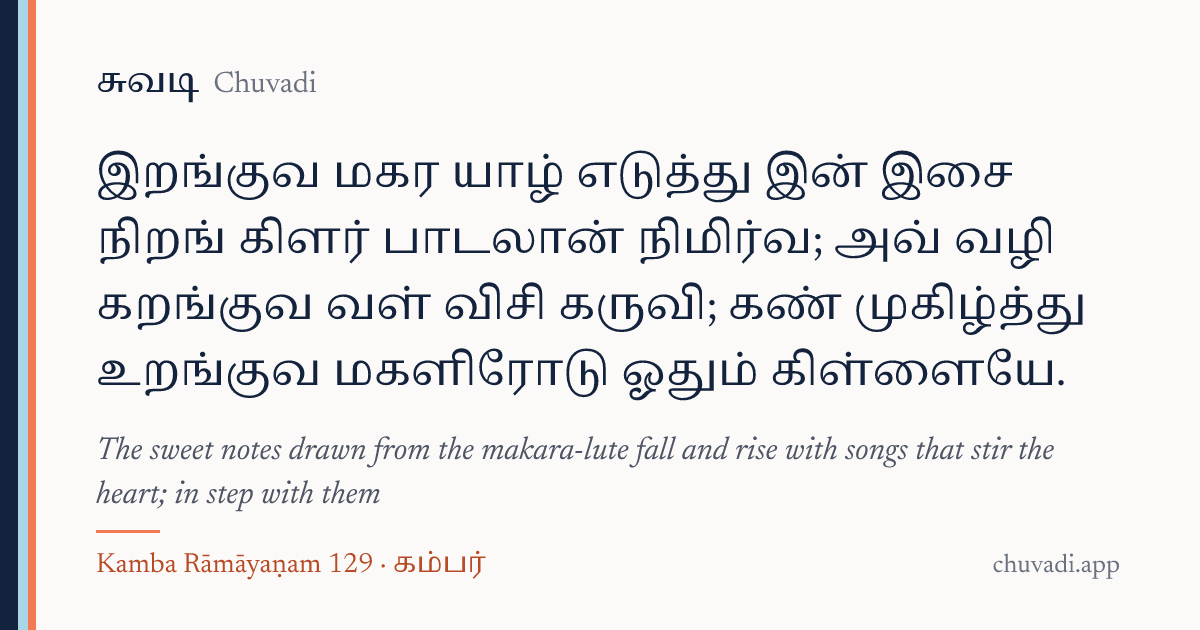
கம்பராமாயணம் 129 · பால 3.48
பாடல் · The poem
Tap a word to see its gloss in the commentary and where else it occurs.
பாட வேறுபாடு · Project Madurai reads
பொருள் · Meaning in Tamil
மகர யாழ் - மகர யாழிலே எடுத்த (விரலாலே நெருடி கவர்ந்தெடுக்கப்பட்ட); இன் இசை - இனிய இசையொலிகள்; நிறங் கிளர் - உள்ளக் கிளர்ச்சி தரும் பாடல்கள் காரணமாக வாய்ப்பாட்டோடு; இறங்குவ - யாழ் இசை நலிந்தொலிப்பன; நிமிர்வ - எடுத்தொலிப்பன; அவ்வழி - அந்த முறையில்; வள் விசி கருவி - வார் கட்டிய கருவியாகிய முழவுகள்; கறங்குவ - ஒலிப்பன (அந்த இசையைக் கேட்டு); மகளிரோடு - பெண்களோடு; ஓதும் கிள்ளைகள் - பேசும் கிளிகள்; கண்முகிழ்த்து உறங்குவ - கண்ணை மூடிக் கொண்டு உறங்குவனவாம்.
மகரயாழ் பத்தொன்பது நரம்புகள் கொண்டது. இறங்குவனவும் நிமிர்வனவுமாகிய இசையோட்டங்களை முறையே அவரோகணம், ஆரோகணம் என்பர். யாழிசைக்கு ஏற்ப முழவுகளும் முழங்குவனவாம். இசை நயத்தில் ஈடுபட்டுக் கிளிகள் உறங்குகின்றன. வள்: தோல். விசி கருவி: வினைத்தொகை.
ஆங்கிலம் · English translationAI
Translation
- The sweet notes drawn from the makara-lute fall
- and rise with songs that stir the heart; in step with them
- the drums braced with leather thongs resound; and, eyes closed,
- the parrots that talk with the women fall asleep.
What the poem says
In the houses, the lute rises and falls with the singing voices while the drums keep time.
The pet parrots, which chatter with the women of the house, are lulled into closing their eyes by the music. The commentary explains that the descending and ascending runs of notes correspond to the avarōhaṇa and ārōhaṇa of Indian music.