



கம்பராமாயணம் 1306 · பால 21.73
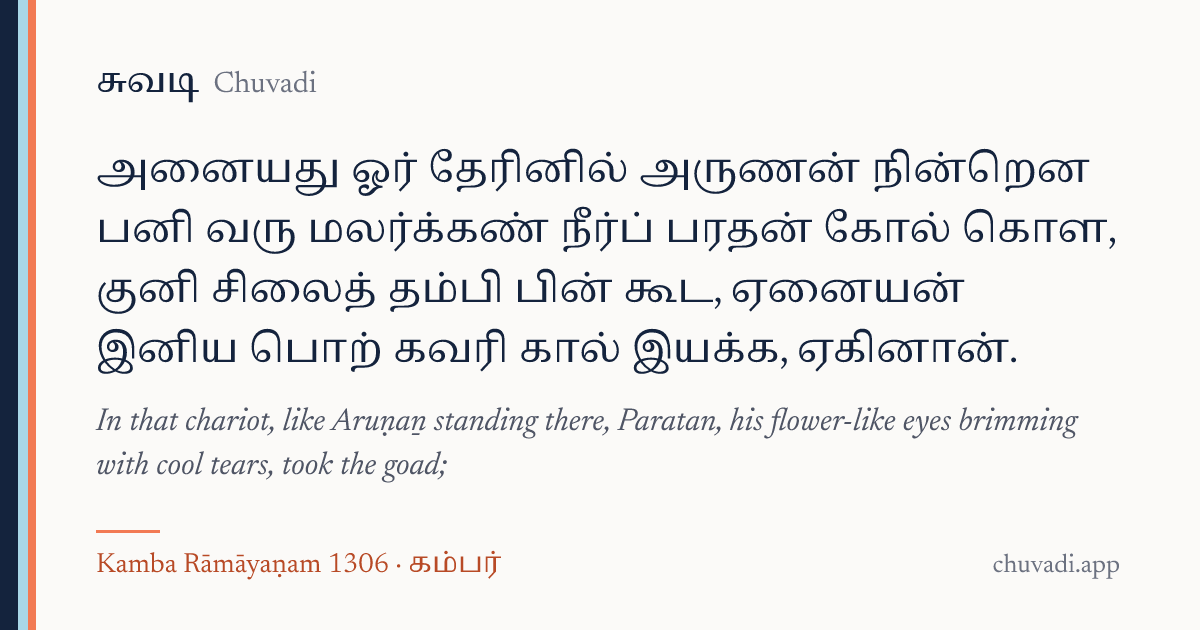
பாடல் · The poem
Tap a word to see its gloss in the commentary and where else it occurs.
பாட வேறுபாடு · Project Madurai reads
பொருள் · Meaning in Tamil
அனையதோர் தேரினில் - அத்தகையதொரு தேரில்; அருணன் நின்று என - சூரியனின் தேர்ப்பாகனாகிய அருணன் என்பவன் நின்றாற் போல; பனிவரு மலர்க்கண் நீர்ப் பரதன் கோல்கொள - இன்பக் கண்ணீர் சொரிகின்ற மலர் போன்ற கண்களையுடைய பரதன், முன்னே தேரோட்டியாய் நின்று குதிரைகளை ஓட்டும் கோலினைக்கையிற் கொள்ள; குனி சிலைத் தம்பி பின்கூட ஏனையன் - வளைத்தற்குரிய வில்லை ஏந்திய தம்பியான இலக்குவனும் அவனுடன் கூடிச் செல்ல, மற்றொரு தம்பியாகிய சத்துருக்கனும்; இனிய பொற்கவரிகால் இயக்க ஏகினான் - கண்ணுக்கினிய பொற்காம்பு அமைந்த சாமரங்களைக் காற்றுண்டாக வீசவும் இராமன் தேரில் சென்றான்.
பகைவர் இல்லாத காலத்தும் வில்லை வளைத்தவண்ணம், மெய்காப்பாளர் மேனி காவல் பணிபுரிவது மரபாதலின், “குனி சிலைத் தம்பி பின் கூட” என்றார். இராமன் நிலை கண்டு ஆனந்தக் கண்ணீரோ, அவலக்கண்ணீரோ இரண்டில் ஒன்று எப்போதும் மாறாமல் இருக்கும் கண்களையுடையவன் பரதன் என்பது உணர்த்துவார், “பனிவரும் மலர்க் கண் நீர் பரதன்” என்றார். இப்போது இராமன் மணக்கோலம் கண்டு மகிழ்ச்சிக் கண்ணீர்ப் பரதன் ஆகிறான்.
ஆங்கிலம் · English translationAI
Translation
- In that chariot, like Aruṇaṉ standing there,
- Paratan, his flower-like eyes brimming with cool tears, took the goad;
- the brother with the bent bow came behind, and the other
- waved sweet golden whisks to stir the breeze; and so he went.
What the poem says
Irāmaṉ's three brothers serve him on the way. Paratan acts as charioteer, holding the goad like Aruṇaṉ, the charioteer of the sun. Ilakkuvaṉ follows close behind with his bow bent and ready, as a royal bodyguard would even when there is no enemy. Catturukkaṉ fans Irāmaṉ with golden-handled whisks.
The commentary notes that Paratan's eyes are always wet for Irāmaṉ, with tears of joy here and, later in the story, with tears of grief.