



கம்பராமாயணம் 1307 · பால 21.74
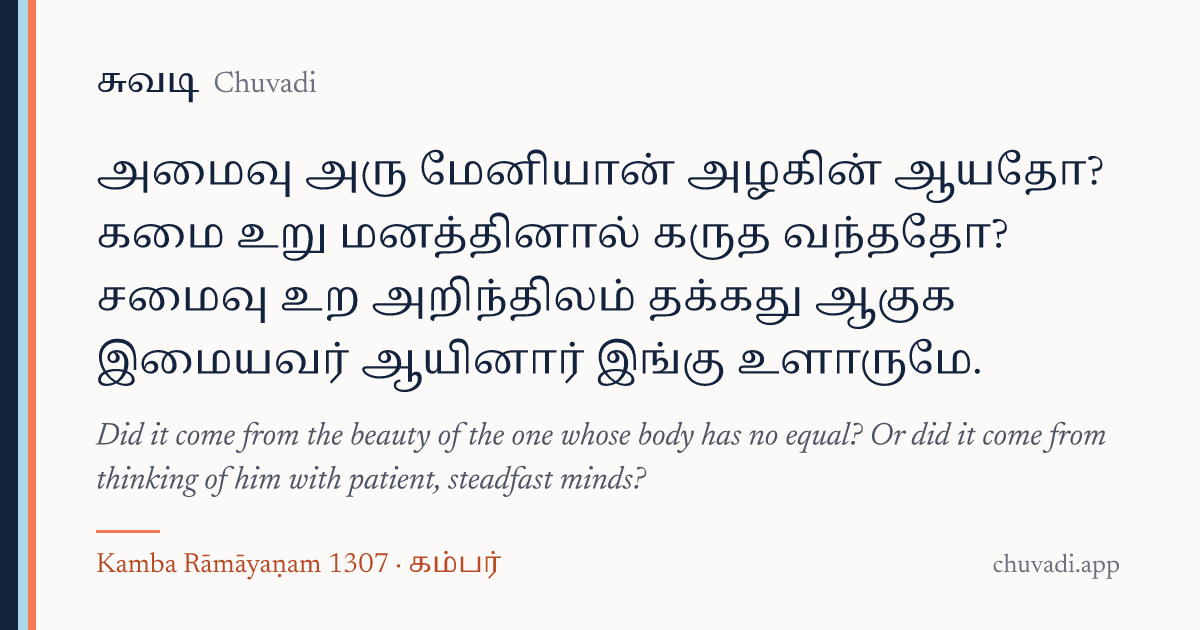
பாடல் · The poem
Tap a word to see its gloss in the commentary and where else it occurs.
பொருள் · Meaning in Tamil
அமைவு அரு மேனியான் அழகின் ஆயதோ? - (யாவர்க்கும்) அமைய இலாத சிறந்த திருமேனியையுடைய இராமபிரானின் (மிகு) அழகின் காரணமாகத் தோன்றியதோ (அல்லது); கமை உறு மனத்தினால் கருத வந்ததோ? - பொறுமை மிகும் தம் மனத்தால் இராமன் அழகையே நினைத்துக் கொண்டிருப்பதனால் வந்ததோ; சமைவு உற அறிந்திலம் - (இவ்விரண்டினுள் ஒன்றில்) எது பொருந்துவது என்று அறிந்தோம் இல்லை; தக்கது ஆகுக - (இவ்விரண்டினுள்) எது பொருந்துவதோ அக்காரணத்தை (நீங்கள்) எடுத்துக் கொள்க; இங்கு உளாருமே இமையவர் ஆயினார் - (இவ்விரண்டில் ஒரு காரணத்தால் நிகழ்ந்த காரியம் யாது எனில்) இராமனைக் கண்ட இவ்வுலக மனிதர்களும் (கண்ணிமையாதவர் ஆனமையால் கண்ணிமையாத) வான உலகத் தேவர்கள் ஆகிவிட்டனர்.
கண்ணிமையாமல் காண்பார் அனைவரும் இராமன் அழகைப் பருகினர் என்பது கருத்து. மிக அழகியவையும், ஊன்றி நோக்க உரியவையும் கண் இமைத்தலை மறக்கச் செய்துவிடல் இயல்பு. நம் நினைவின்றியே இயங்கவல்ல கண் இமைகளும் இமைக்கும் நினைவின்றி மறந்தன என இராமனின் பேரழகை வியந்தவாறு. மன ஒருமை எனும் தியானம் பொறுமையால் வந்து கூடுவதாதலின், “கமை உறு மனத்தினால் கருத வந்ததோ?” என்றார். “கரியவனைக் காணாத கண் என்ன கண்ணே! கண் இமைத்துக் காண்பார் தம் கண் என்ன கண்ணே!” (சிலம்பு. ஆய்ச்சி. 17:36) என்பது இளங்கோவடிகளின் வாக்கு. “இமையா நாட்டம் பெற்றிலம் என்பார் இரு கண்ணால் அமையாது என்பார்; அந்தர வானத்தவர் எல்லாம்” (கம்ப. 504) எனும் தொடரும் இங்கு ஒப்பு நோக்கற் பாலது. தேவர்கட்கு இமையவர் எனும் பெயர் இமைத்தலில் விசேடத் தன்மை வாய்ந்தவர் என்பதனால் வந்தது. அந்தச் சிறப்புத் தன்மையை மண்ணுலக மக்களும் இன்று பெற்று விட்டதனால், இவர்களும் தேவர்கள் ஆகிவிட்டனர் என்பதாம்.
ஆங்கிலம் · English translationAI
Translation
- Did it come from the beauty of the one whose body has no equal?
- Or did it come from thinking of him with patient, steadfast minds?
- We cannot tell for certain; take whichever is fitting:
- even those who were here on earth became Imaiyavar.
What the poem says
As Irāmaṉ rides to the hall, everyone who sees him stares without blinking. The gods are called imaiyavar, 'those who do not blink', so the poet says the people of earth have all turned into gods.
He offers two possible causes and leaves the reader to choose. Either Irāmaṉ's beauty was simply too great to look away from, or they were absorbed in steady meditation on him, which made them forget to blink. The commentary cites Iḷaṅkōvaṭikaḷ: what use are eyes that have not seen the Dark One, or eyes that blink while looking at him?