



கம்பராமாயணம் 1308 · பால 21.75
பாடல் · The poem
Tap a word to see its gloss in the commentary and where else it occurs.
பொருள் · Meaning in Tamil
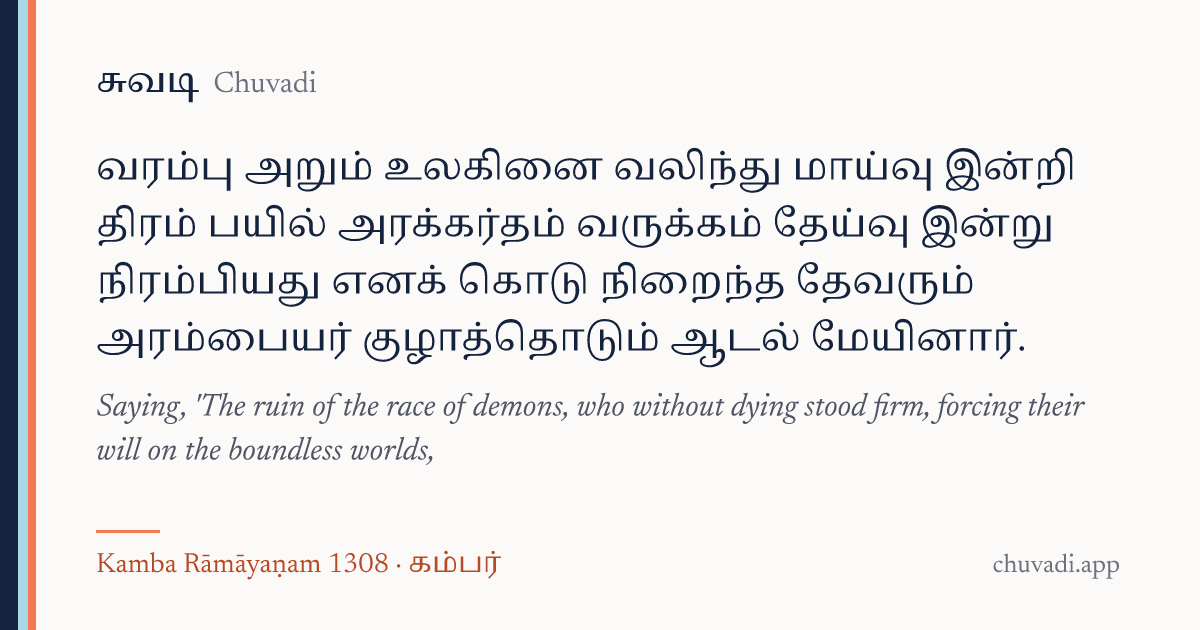
வரம்பறும் உலகினை வலிந்து - எல்லையற்ற உலகங்கள் யாவற்றையும் துன்புறுத்தி; மாய்வு இன்றித் திரம் பயில் அரக்கர் தம் வருக்கம் - தாம் அழியாமல் நிலைத்து நிற்கின்ற அரக்கரது கூட்டத்தின், தேய்வு இன்று நிரம்பியது எனக் கொடு - அழிவு இன்றோடு நிறைவேறிற்று என்று எண்ணிக் கொண்டு; நிறைந்த தேவரும், அரம்பையர் குழாத்தொடும் ஆடல் மேயினார் - (வானத்திலே வந்து) நிரம்பியிருந்த தேவர்கள் அனைவரும் அரம்பை முதலிய தேவ மாதர்கள் கூட்டத்துடனே ஆனந்த நடனம் புரியத் தொடங்கினர்.
சீதை திருமணம் அரக்கர் அழிவுக்கு இட்ட கால்கோள்; விரைவில் இனி அரக்கர் அழிவர் என்பது உறுதியானதால், தேவர்கள் ஆனந்தக் கூத்தாடினர். விரைவும் உறுதியும் பற்றி அரக்கர் தேய்வு, “இனி நிரம்பும் என்று கூற வந்தவர்கள்” இன்று நிரம்பியது எனக் கூத்தாடினர் என்க. “வாராக் காலத்தும் நிகழும் காலத்தும் ஓராங்கு வரூஉம் வினைச் சொற் கிளவி, இறந்த காலத்துக் குறிப்பொடு கிளத்தல், விரைந்த பொருள்” என்பது தொல்காப்பியம் (தொல். சொல். நூற். 44) கால வழுவமைதி. தேவரும் என்ற இறந்தது தழுவிய எச்ச உம்மையால், மண்ணுலகத்தவரும் ஆடல் மேவிக் கொண்டிருந்தனர் என்பது உணர்த்தினார்.
ஆங்கிலம் · English translationAI
Translation
- Saying, 'The ruin of the race of demons, who without dying
- stood firm, forcing their will on the boundless worlds,
- is complete today,' the gods who thronged the sky
- began to dance together with the troops of apsaras.
What the poem says
The gods fill the sky over the hall and break into a dance of joy with the celestial dancers, Rampai and the rest. To them the wedding is the foundation stone for the destruction of the demons who have long oppressed every world. They are so sure of the outcome that they speak of it as already done: 'the ruin of the demons is complete today'.
The commentary explains this as a recognised grammatical licence, noted by Tolkāppiyam, of using the past tense for something future that is certain and close at hand. The word 'too' in 'the gods too danced' implies that the people of earth were dancing as well.