



கம்பராமாயணம் 1319 · பால 21.86
பாடல் · The poem
Tap a word to see its gloss in the commentary and where else it occurs.
பொருள் · Meaning in Tamil
மன்றலின் வந்து - (நறுமணப் பொருள்களின்) திருமணத்தோடு வந்து; மணத்தவிசு ஏறி - திருமணத்துக்குரிய ஆசனங்களில் ஏறி; வென்றி நெடுந்தகை வீரனும் - வெற்றியினையும் பெருமைக் குணங்களையும் உடைய வீரனான இராம பிரானும்; ஆர்வத்து இன்துணை அன்னமும் எய்தியிருந்தார் - அந்த இராமபிரான்பால் பேரன்பினை யுடையவளாய் (அவனுக்கு) இனிய துணையாக ஆகவுள்ள அன்னம் அனைய சீதையும் நெருக்கமாக வீற்றிருந்தார்கள்; ஒன்றிய யோகமும் போகமும் ஒத்தார் - (ஒன்றோடொன்று) ஒன்றியிணைந்த பேரின்பத்தையும் (அதற்கு) உபாயமான யோக நிலையினையும் ஒத்தவர்கள் ஆனார்கள்.
இராமன் போகத்தையும், சீதை யோகத்தையும் ஒத்தனர் என்க. இறைவன் பேரின்பப் பெருவீட்டை நல்குபவன்; அதற்குப் பிராட்டி சேர்ப்பிக்கும் வாயிலாக (புருடகார பூதையாக) இயங்குவாள் என்னும் மரபு பற்றி இங்ஙனங் கூறினார். அன்பு செய்தற்கு அன்னம்: “ஆதரம் பெருகுகின்ற அன்பினால் அன்னம் ஒத்தும்” (சீவக. 189) என்னும் இடத்தும் காண்க. போகம்: அந்தமில் இன்பத்து அழிவில் வீட்டில் இறைவன் முன்னிலையில் எய்தும் நிரதிசய இன்பமாம். அப்பேரின்பப் பெருநிலையை எய்துதற்கு வாயிலாய் அமைவது போகம். “இருள் நீங்கி இன்பம் பயக்கும் மருள் நீங்கி மாசறு காட்சியவர்க்கு” (திருக். 352) என்பார் வள்ளுவனாரும். இருள் நீங்கிய இன்பம் என்பது ஒன்றிய போகம் ஆகவும் மாசறு காட்சி என்பது யோகம் ஆகவும் கூறப்பட்டிருத்தல் காணலாம். இறைவனோடு சமமாகும் நிலையுடைய முத்தியாதலின் “ஒன்றிய போகம்” என்றார். இறைவன் ஒருவனே; பிராட்டி உயிர்களின் வாயிலாய் இலங்கி உயிர்களுள் தலையாயவளாய் சாமிய நிலையையடைந்தவள் எனும் தத்துவக் கருத்தும் பிராட்டியை யோகம் எனக் குறித்ததனால் தோன்றும் என்பர். வீரனும் அன்னமும் போகமும் யோகமும் ஒத்தார். வீரன் போகம் அன்னம் யோகம் என நிரல் நிரையாகப் பொருள் கொள்க.
ஆங்கிலம் · English translationAI
Translation
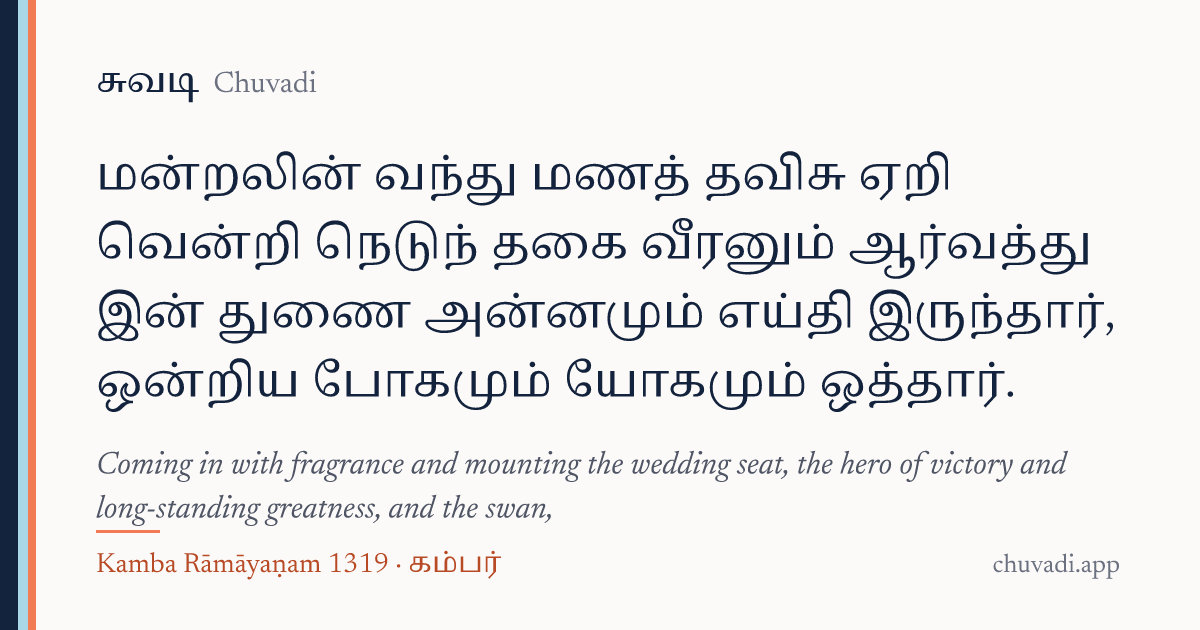
- Coming in with fragrance and mounting the wedding seat,
- the hero of victory and long-standing greatness, and the swan,
- his sweet companion full of longing, came and sat together:
- they were like bliss and yoga joined as one.
What the poem says
Irāmaṉ and Cītai, fragrant with wedding perfumes, take their places side by side on the wedding seat.
The poet compares the couple to bhōkam, the final bliss of liberation, and yōkam, the discipline that leads to it, joined together. Irāmaṉ is the bliss and Cītai the means. The commentary explains this through the Vaishnava teaching that the Lord grants liberation and the Goddess is the one who intercedes and brings souls to him. The swan is a traditional image of loving devotion.