



கம்பராமாயணம் 1338 · பால 22.1
பாடல் · The poem
Tap a word to see its gloss in the commentary and where else it occurs.
பாட வேறுபாடு · Project Madurai reads
பொருள் · Meaning in Tamil
சனகன் தரு தயலும் - சனகன் தந்த பெண்ணாகிய சீதையும்; தான் ஆவது ஒர் வகையே நனி நானா விதம் உறு போகமும் - இராமனும், எடுத்த அவதாரத்திற்கேற்ப மிகுதியான பல்வகைப் போகங்களையும்; நுகர்கின்ற அந்நாள் வாய் - அநுபவிக்கின்ற அக்காலத்திலே; முனிகோசிகன் ஆனாமறை நெறி ஆசிகள் அருளி - நெறி நன்கு உணர்ந்த விசுவாமித்திர முனிவன் அழியாத வேத ஆசிகளை (மணமக்களுக்கு) அருளிச்செய்து விட்டு; போனான் - புறப்பட்டான்; வடதிசைவாய் உயர் பொன்மால் வரை புக்கான் - வடக்குத் திசையில் சென்று உயர்ந்தோங்கிய அழகிய பெருமலையாகிய இமயமலையை (தவஞ்செய்தற் பொருட்டுச்) சென்றடைந்தான்.
இ ம.” உள்ள உம்மை தொக்குத் “தான்” என நின்றது. அது, ராமனைக் குறித்தது.
ஆங்கிலம் · English translationAI
Translation
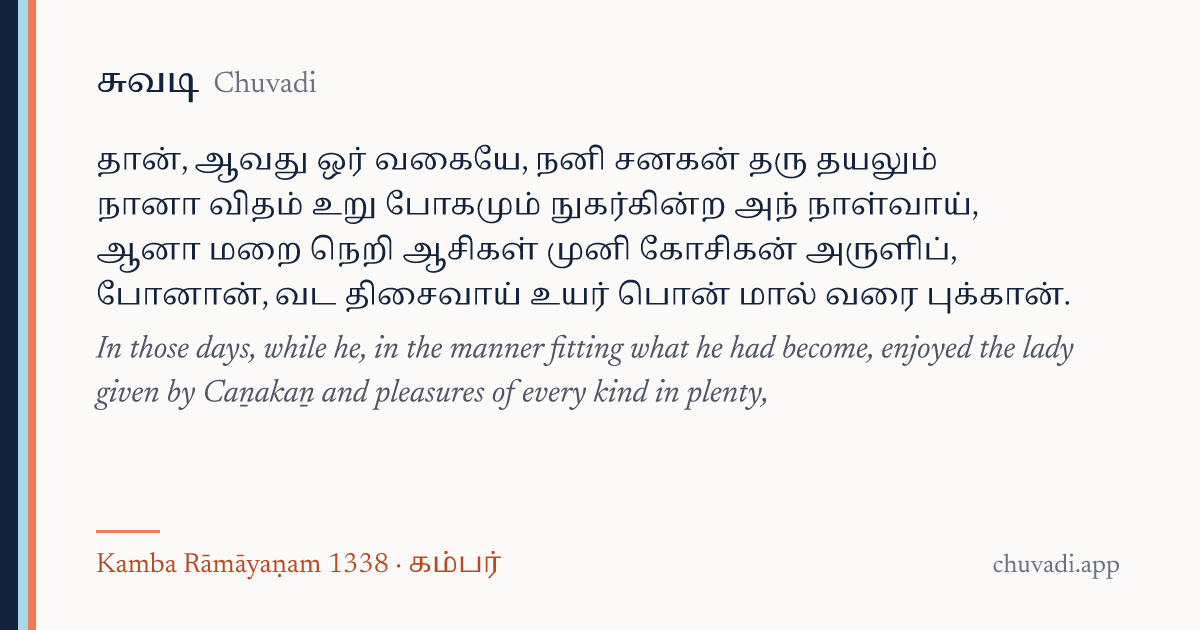
- In those days, while he, in the manner fitting what he had become, enjoyed
- the lady given by Caṉakaṉ and pleasures of every kind in plenty,
- the sage Kōcikaṉ bestowed the blessings of the unfailing Vedic way,
- and departed, and went to the high golden mountain in the north.
What the poem says
The chapter of Paracurāmaṉ begins. While Irāmaṉ and Cītai enjoy the pleasures of their new married life, in a way fitting the human form he has taken on, Vicuvāmittiraṉ (Kōcikaṉ), who brought Irāmaṉ to Mitilai, gives the couple his Vedic blessings and takes his leave.
He goes north to the great golden mountain, the Himalaya, to resume his austerities. Having guided Irāmaṉ through his first adventures and his marriage, the sage now leaves the story.