



கம்பராமாயணம் 1378 · பால 22.41
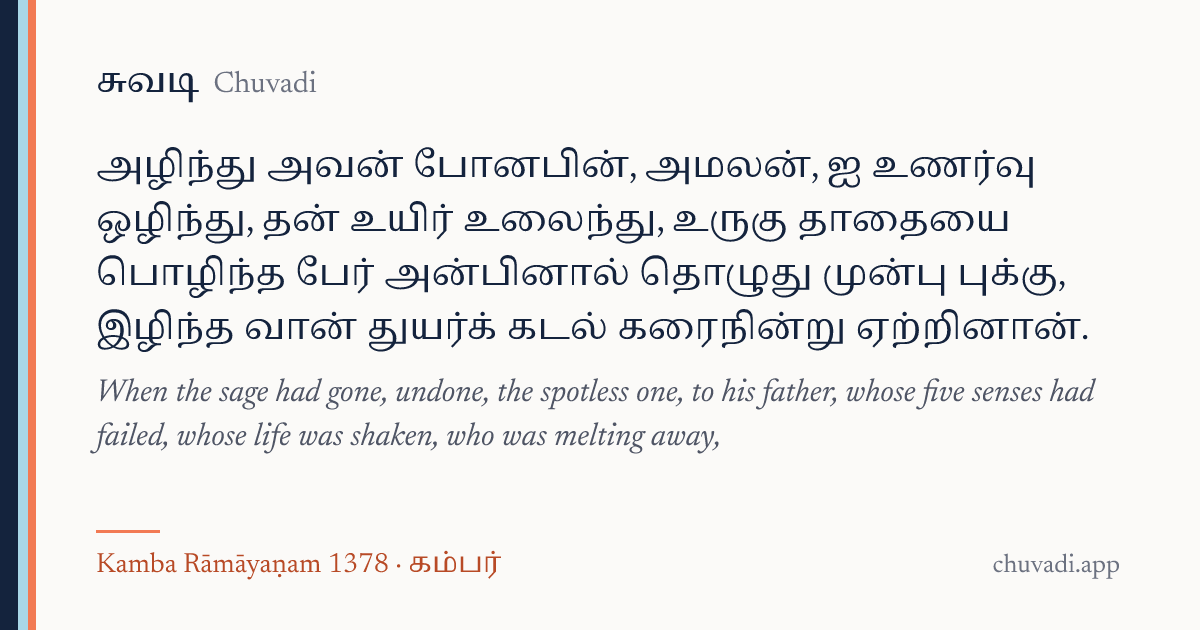
பாடல் · The poem
Tap a word to see its gloss in the commentary and where else it occurs.
பொருள் · Meaning in Tamil
அழிந்து அவன் போனபின் - அப் பரசுராமன் (தன் செருக்கும் தவமும்) சிதைந்து போன பின்பு; அமலன் - குற்றம் அற்ற இராமபிரான்; ஐ உணர்வு ஒழிந்து - ஐம்புல உணர்வும் நீங்கி; தன் உயிர் குலைந்து - தன் உயிர் நிலை குலைந்து; உருகு தாதையை - (தன்னை எண்ணி) மனம் உருகும் தந்தையாகிய தசரதனை; பொழிந்த பேரன்பினால் - பொங்கி வழிகின்ற அன்பினால்; தொழுது - வணங்கி; முன்பு புக்கு - அவன் கண் எதிரே சென்று; இழிந்த வான் துயரக் கடல் - அவன் இறங்கி அமிழ்ந்திருந்த பெரிய துயர்க்கடலிலிருந்து; கரை நின்று ஏற்றினான் - கரை ஏற்றினான்.
தசரதன் மண்ணில் கிடக்கவில்லை வரம்பற்ற துக்க வாரிதியுள் மூழ்கிக் கிடந்தான் என்பார், “இழிந்த வான் துயர்க்கடல்” என்றார். துக்கசாகரத்தில் மூழ்கிக்கிடக்கும் எண்ணற்ற உயிர்களைப் பிறவிக் கடலிலிருந்து கரையேற்ற வந்துள்ள பெருமான், தன் தந்தையையும் துயரக் கடலிலிருந்து மீட்டான் என்பார் “துயர்க் கடல் கரை நின்று ஏற்றினான்” என்றார். தனக்காக உயிர் குலைந்து, உருகிக் கிடக்கிற தந்தை நிலைகண்டு, பெருமான் தானும் உருகி, அன்பு பொங்கி வழியத் தொழுது, தந்தையைத் துக்க சாகரத்திலிருந்து கரையேற்றி ஒரு மகனுக்கு இலக்கணமாயினான் என்க.
ஆங்கிலம் · English translationAI
Translation
- When the sage had gone, undone, the spotless one, to his father,
- whose five senses had failed, whose life was shaken, who was melting away,
- with a love that poured out of him, bowed, came before him,
- and drew him up from the vast sea of grief into which he had sunk, onto the shore.
What the poem says
With Paracurāmaṉ gone, Irāmaṉ turns to Tacarataṉ, who has nearly died of fear for his son. Irāmaṉ bows to him with overflowing love and brings him back to himself.
The commentary draws out the image: Irāmaṉ has come into the world to lift countless souls out of the ocean of rebirth, and here he begins by lifting his own father out of an ocean of grief. In doing so he shows what a son should be.