



கம்பராமாயணம் 139 · பால 3.58
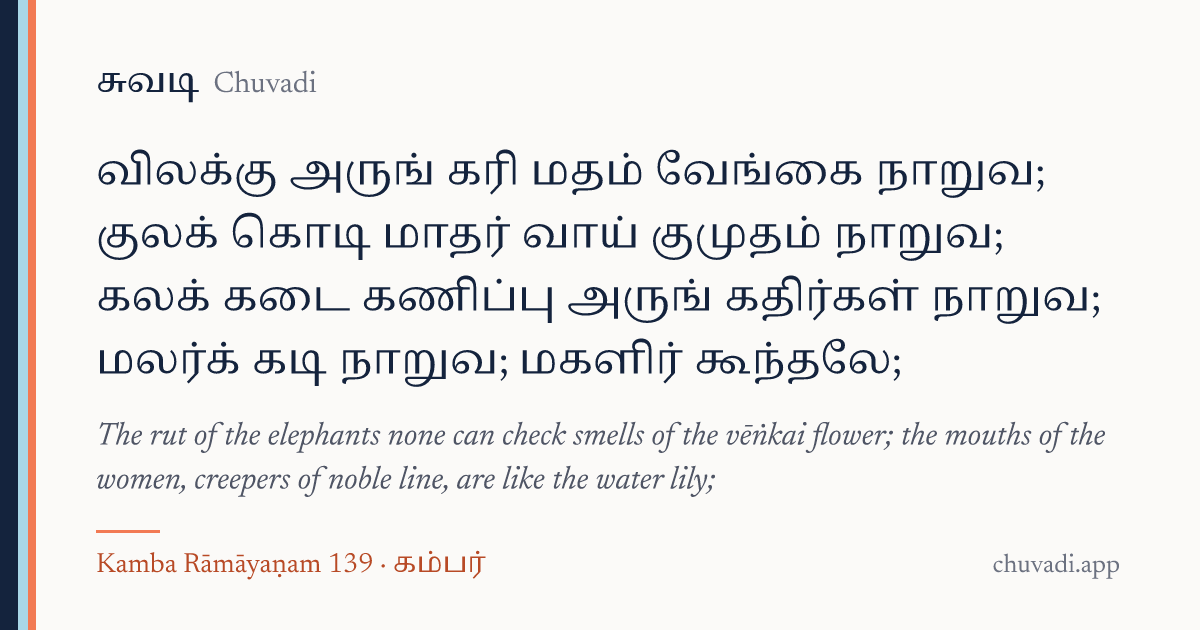
பாடல் · The poem
Tap a word to see its gloss in the commentary and where else it occurs.
பொருள் · Meaning in Tamil
விலக்கு அருங்கரி மதம் - விலக்குவதற்கு அரிய யானைகளின் மத நீர் வேங்கை நாறுவ - வேங்கை மலர்களைப் போல மணக்கிறது; குலக்கொடி மாதர்வாய் குமுதம் நாறுவ - உயர்குடியில் பிறந்த கொடியை ஒத்த மகளிரின் வாய்கள் குமுத மலர் போல் விளங்குகின்றன; கலக்கடை கணிப்பு அரும் கதிர்கள் நாறுவ - அம்மகளிரின் அணிகலன்களில் அளவிடற்கு அரிய ஒளிக் கதிர்கள் எங்கும் ஒளிர்கின்றன; மகளிர் கூந்தல் மலர்க்கடி நாறுவ - அந்த மகளிரின் கூந்தல் மலர் மணம் கமழ்கிறது.
யானைகளின் மத நீர் வேங்கை மலர் மணம் வீசுகிறது. உயர் குலப் பெண்களின் வாய் குமுத மலர்களைப் போல் விளங்குகிறது. அவர்கள் அணிந்துள்ள அணிகலன்களின் ஒளி எங்கும் ஒளிர்கின்றன. அம்மகளிரின் கூந்தல் மலர் மணம் கமழ்கிறது என்றார். வேங்கை மலர்ந்திருக்கும் போது, புலி போலத் தோன்றும். அதனைப் புலி என்று கருதி யானை அம்மரத்தைத் தாக்கும் அதனால் மலர்கள் யானைமீது சிந்த, அம்மலர் மணம் படிந்து - மத நீரை அந்த மணம் உடையதாகச் செய்யும் என்பர்.
ஆங்கிலம் · English translationAI
Translation
- The rut of the elephants none can check smells of the vēṅkai flower;
- the mouths of the women, creepers of noble line, are like the water lily;
- from their jewels pour countless rays;
- and the women's hair breathes the scent of flowers.
What the poem says
A verse of sights and scents, all built on one repeated verb. The elephants' ichor smells of vēṅkai blossom, the women's lips are as red as the water lily, their jewels shine, and their hair is fragrant with flowers.
The commentary explains the first image. The flowering vēṅkai looks like a tiger, so an elephant attacks it, and the fallen blossoms scent its ichor.