



கம்பராமாயணம் 140 · பால 3.59
பாடல் · The poem
Tap a word to see its gloss in the commentary and where else it occurs.
பொருள் · Meaning in Tamil
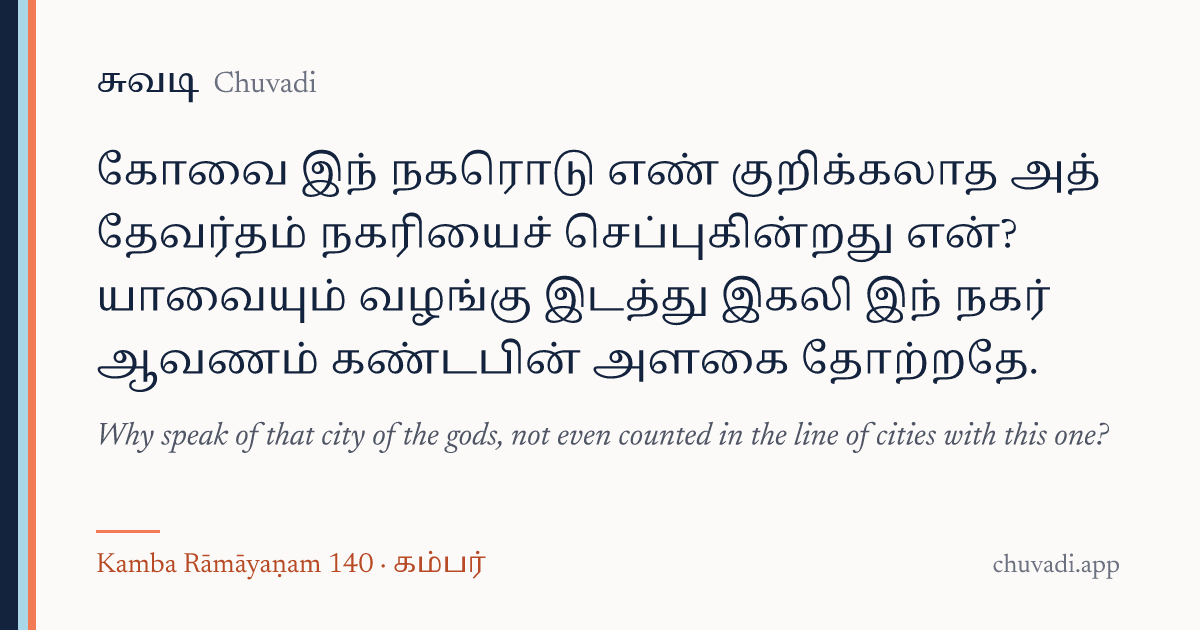
கோவை இந் நகரொடு எண் குறிக்கலாத - சிறந்த நகரங்களின் வரிசையிலே அயோத்தி நகருடன் சேர்ந்து எண்ணப்படாத; அத் தேவர்தம் நகரியைச் செப்புகின்றது என்? - அந்தத் தேவர் நகரமான அமராவதியை இந்த நகருக்கு இணையோ, அல்லவோ என்று எடுத்துச் சொல்வது எதற்கு?; யாவையும் வழங்கு இடத்து இகலி - எல்லா வளங்களையும் தரும் விதத்திலே வேறுபட்டு விளங்குவதோடு; இந்நகர் ஆவணம் கண்டபின் - இந்த நகரத்துக் கடைத் தெருவைப் பார்த்த பிறகு; அளகை தோற்றது - செல்வம் மிக்கதென்னும் அளகாபுரியே தோல்வியுற்றது.
அயோத்தி நகரின் கடைத் தெருவைப் பார்த்து, அளகாபுரியே தோற்றது என்னும் போது, சிறந்த நகரங்களின் வரிசையிலே கூறப்படாததான அமராவதியை அயோத்திக்கு ஒப்போ? அல்லவோ? என்று வினாவுவது எதற்காக? கோவை: வரிசை, நிரல். அமராவதி குறிப்பிடப்படவில்லை என்பதால் “எண் குறிக்கலா” என்றார்.
ஆங்கிலம் · English translationAI
Translation
- Why speak of that city of the gods, not even counted
- in the line of cities with this one?
- When it vied with this city in giving all things,
- Aḷakai, once it saw this city's market, was defeated.
What the poem says
Aḷakāpuri, the city of Kubera, god of wealth, is the richest of cities. Yet it admitted defeat once it saw the bazaars of Ayōttī.
So there is no point even comparing Amarāvatī, Indra's capital, with Ayōttī. It does not even make the list of rivals.