



கம்பராமாயணம் 1401 · அயோத்தியா 1.14
பாடல் · The poem
Tap a word to see its gloss in the commentary and where else it occurs.
பொருள் · Meaning in Tamil
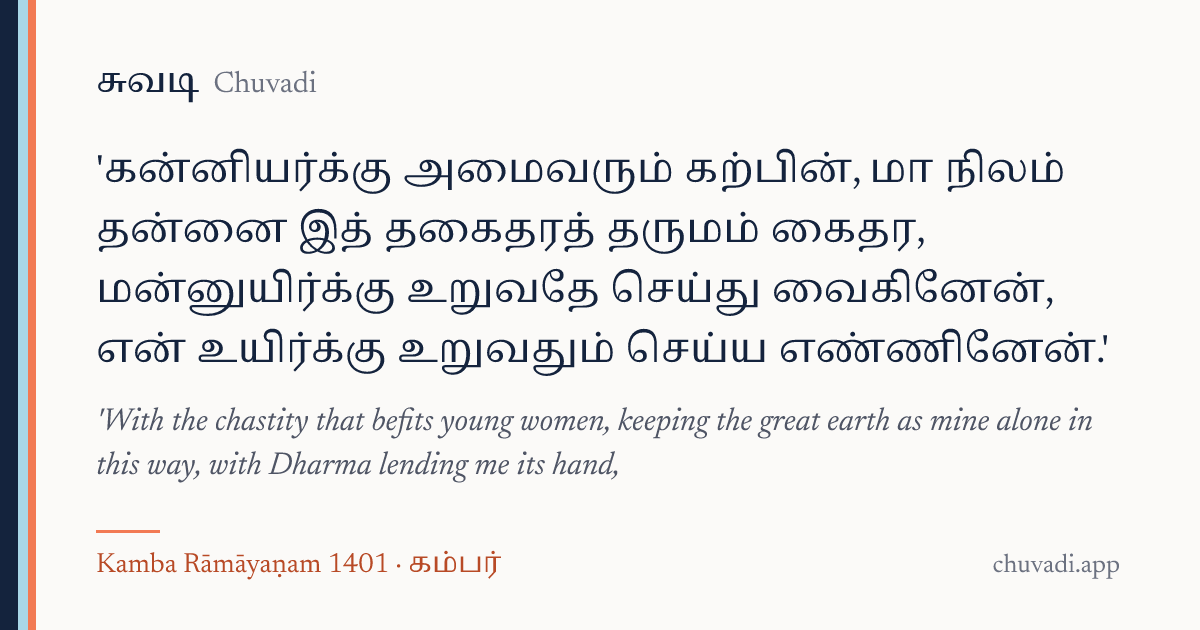
“கன்னியர்க்கு - பெண்களுக்கு; அமைவரும் - பொருந்தும்; கற்பின் - கற்பினை அவர்கள் காப்பது போல; மாநிலம் தன்னை - பெரிய உலகத்தை; இத் கைதர - அறக்கடவுள் உதவியதனால்; மன் உயிர்க்கு - நிலைபெற்ற உயிர்களுக்கு; உறுவதேசெய்து வைகினேன் - பொருந்தும் நன்மைகளையே இந்நாள்வரை செய்து வாழ்ந்தேன்; என் உயிர்க்கு உறுவதும் - இனி, என் உயிர்க்குப் பொருந்தும் நன்மையையும்; செய்ய எண்ணினேன் - புரிவதற்கு நினைந்தேன்.”
கன்னியர் - பெண்டிர் என்னும் பொருளில் வந்தது. கைப்பிடித்தான் ஒருவனுக்கே உரியராய் இருத்தல் பெண்டிர்க்குக் கற்புடைமை ஆகும். அதுபோல முடிசூடி ஆளத் தொடங்கிய தனக்கே உரியதாகப் பிறர்க்குப் பொதுவாகாது நாட்டைக் காத்தல் “கற்பின்” காத்தலாகும். கைதர - உதவ; “இச்சுமையைத் தூக்க ஒரு கைதா” என்னும் பேச்சு வழக்கிலும் இதற்கு இப்பொருள் இருத்தல் காணலாம். பின்னும், “மறுஅறுகற்பினில் வையம் யாவையும், அறுபதினாயிரம் ஆண்டும் ஆண்டவன்” (2446) என வருதல் காணலாம். என் உயிர், இராகுத்தலை என்பதுபோல ஒற்றுமைக் கிழமைப் பொருளில் வந்த ஆறாம் வேற்றுமைத்தொகை. என் உயிர்க்கு உறுவது என்றது தவத்தைக் குறித்தது; உம்மை, இறந்தது தழீஇயது.
ஆங்கிலம் · English translationAI
Translation
- 'With the chastity that befits young women, keeping the great earth
- as mine alone in this way, with Dharma lending me its hand,
- I have lived doing only what is good for the creatures of the world;
- now I mean to do what is good for my own soul as well.'
What the poem says
Tacarataṉ likens his rule to a wife's fidelity: as a chaste woman belongs to her husband alone, he has kept the earth as his alone, never letting it be shared or seized, with Dharma itself lending a hand.
Having spent his life on the welfare of his subjects, he now wants to attend to his own soul through penance.