



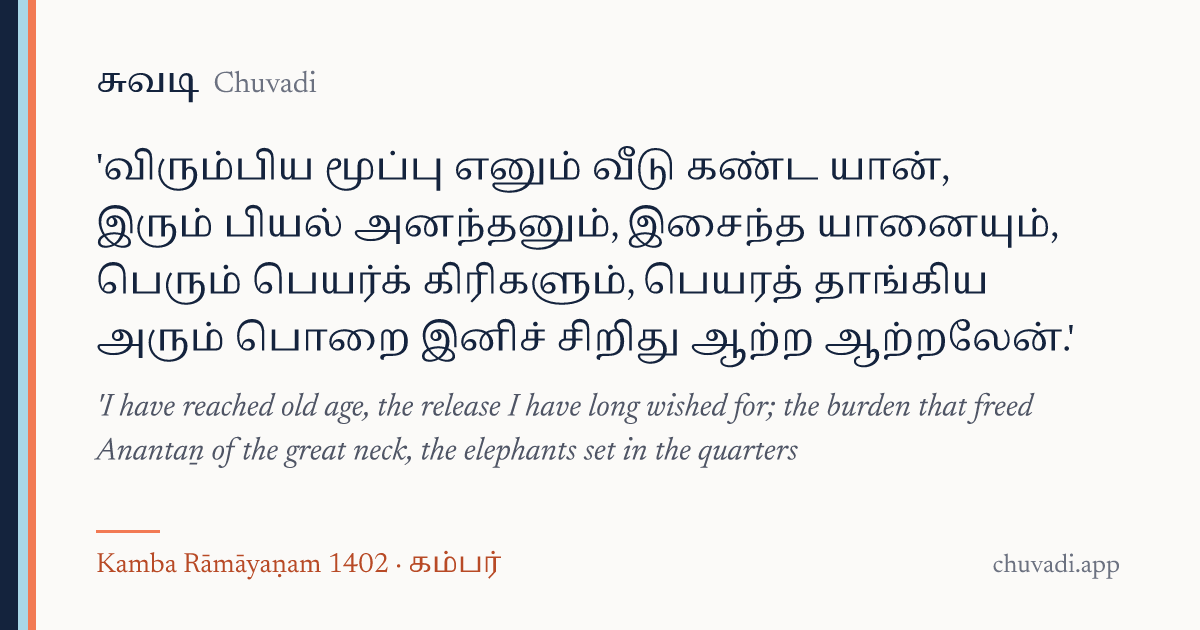
கம்பராமாயணம் 1402 · அயோத்தியா 1.15
பாடல் · The poem
Tap a word to see its gloss in the commentary and where else it occurs.
பொருள் · Meaning in Tamil
“விரும்பிய மூப்பு எனும் வீடு - நெடுங்காலமாக விரும்பியிருந்த மூப்புப் பருவமாகிய (அரச பதவியிலிருந்து) விடுதலை பெறுதற்குரிய காலத்தை; கண்ட யான் - அடைந்த யான்; இரும் பியல் அனந்தனும் - பெரிய பிடரினையுடைய ஆதிசேடனாகிய பாம்பும்; இசைந்த யானையும் - திக்குகளில் பொருந்திய யானைகளும்; பெரும் பெயர்க் கிரிகளும் - மிக்க புகழ் வாய்ந்த எட்டுக் குல மலைகளும்; பெயர - (பூமியைச் சுமக்கும் தொழிலிருந்து) நீங்க; தாங்கிய அரும் பொறை - யான் சுமந்த அரிய பாரத்தை; இனிச் சிறிது ஆற்ற ஆற்றலேன் - இனிமேல் சிறிதளவும் சுமக்க வல்லேனல்லேன்.”
இராமன் பிறந்தபின் தான் அரசாட்சியை விட்டுத் தவஞ் செய்யச் செல்ல வேண்டும் என்ற விருப்பத்தோடு இருந்தவனாதலின் “விரும்பிய மூப்பு எனும் வீடு” என்றான். பியல் - பிடரி. திசை யானைகள் - ஐராவதம், புண்டரீகம், வாமனம், குமுதம், அஞ்சனம், புட்பதந்தம், சார்வபௌமம், சுப்பிரதீபம் என்பன. எட்டுக் குலமலைகள் - இமயம், மந்தரம், கைலாசம், விந்தம், நிடதம், ஏமகூடம், நீலம், கந்தமாதனம் என்பன.
ஆங்கிலம் · English translationAI
Translation
- 'I have reached old age, the release I have long wished for;
- the burden that freed Anantaṉ of the great neck, the elephants set in the quarters
- and the mountains of great name from their task, the heavy load I have borne,
- I can no longer carry, not even a little.'
What the poem says
The earth was traditionally held up by the serpent Ātiśēṭaṉ (Anantaṉ), the eight elephants of the directions and the eight great mountains. Tacarataṉ has carried it so well that they were relieved of the task. Now he is old, and old age, which he has long wished for, means release from the burden of rule.
The commentary notes that ever since Irāmaṉ was born, Tacarataṉ had hoped to hand over the kingdom and retire to do penance.