



கம்பராமாயணம் 1403 · அயோத்தியா 1.16
பாடல் · The poem
Tap a word to see its gloss in the commentary and where else it occurs.
பொருள் · Meaning in Tamil
“நவையின் நீங்கினார் - குற்றங்களினின்று நீங்கியவர்களாகிய; நம் குலக் குரவர்கள் - எம் குலத்தில் தோன்றிய பெரியோர்கள்; தம்குலப் புதல்வரே - தம் மேலான பிள்ளைகளே; தரணி தாங்க - நிலவுலகைப் போற்றிக் காக்க; போய் - தாம் காட்டிற்குச் சென்று; வெம்குலப்புலன் கெட - கொடிய கூட்டமாகிய ஐம்புல ஆசைகள் அற்று ஒழிய; வீடு நண்ணினார் - வீடுபேறு அடைந்தவர்கள்; எங்கு உலப்பு உறுவர் என்று - எங்கு எண்ணிக்கையில் முடிவு பெறுவர் என்று; எண்ணி நோக்குகேன் - எண்ணிப் பார்க்கின்றேன்.”
எம் குலத்துப் பெரியோர்கள் குற்றத்தின் நீங்கி ஆட்சிபுரிந்து மூப்பு அடைந்த பின்னர்த் தம் பிள்ளைகள் ஆட்சிப் பொறுப்பினை ஏற்கத் தாம் தவஞ் செய்து வீடுபேறுபெற்றவர்களை எண்ணிப் பார்த்தால், அவர்கள் எண்ணிறந்த பலராய் இருக்கின்றார்கள் என்பது கருத்து. நவை - காமம், வெகுளி, மயக்கம் என்னும் குற்றங்கள். ஐம்புலன் - சுவை, ஒளி, ஊறு, ஓசை, நாற்றம் என்பன. உலப்பு - முடிவு.
ஆங்கிலம் · English translationAI
Translation
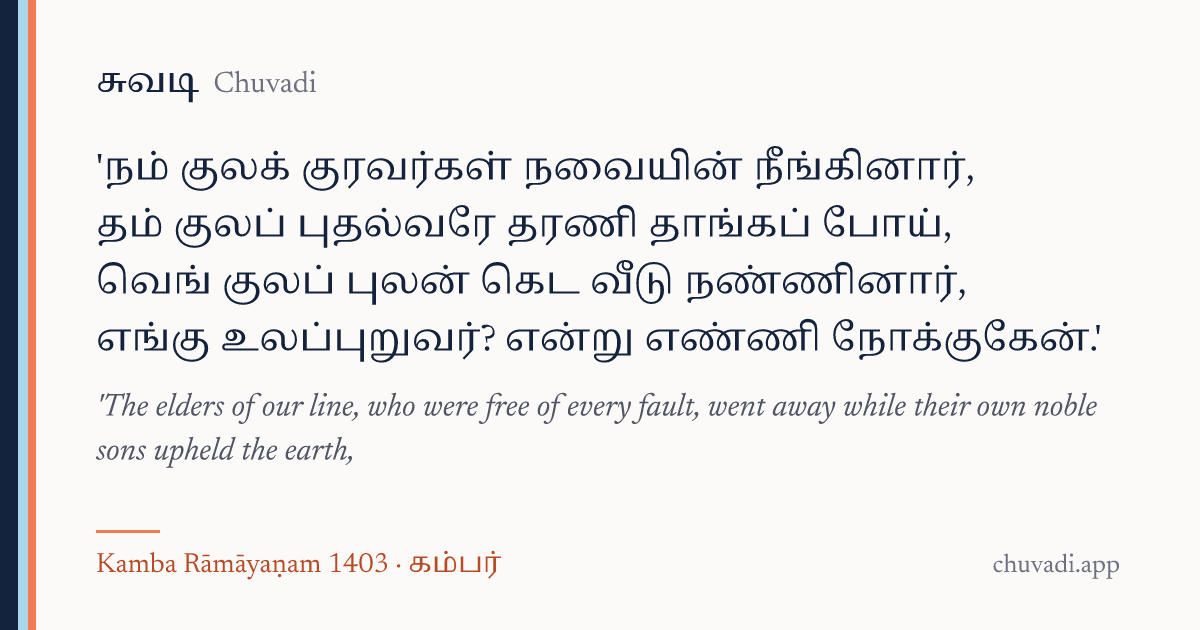
- 'The elders of our line, who were free of every fault,
- went away while their own noble sons upheld the earth,
- and with the cruel throng of the senses destroyed, they reached release;
- when I try to count them, where would the count ever end?'
What the poem says
Tacarataṉ appeals to family tradition. Countless kings of his line, after ruling without fault, handed the kingdom to their sons, withdrew to the forest, conquered the cravings of the five senses and attained liberation.
He means to follow their example.