



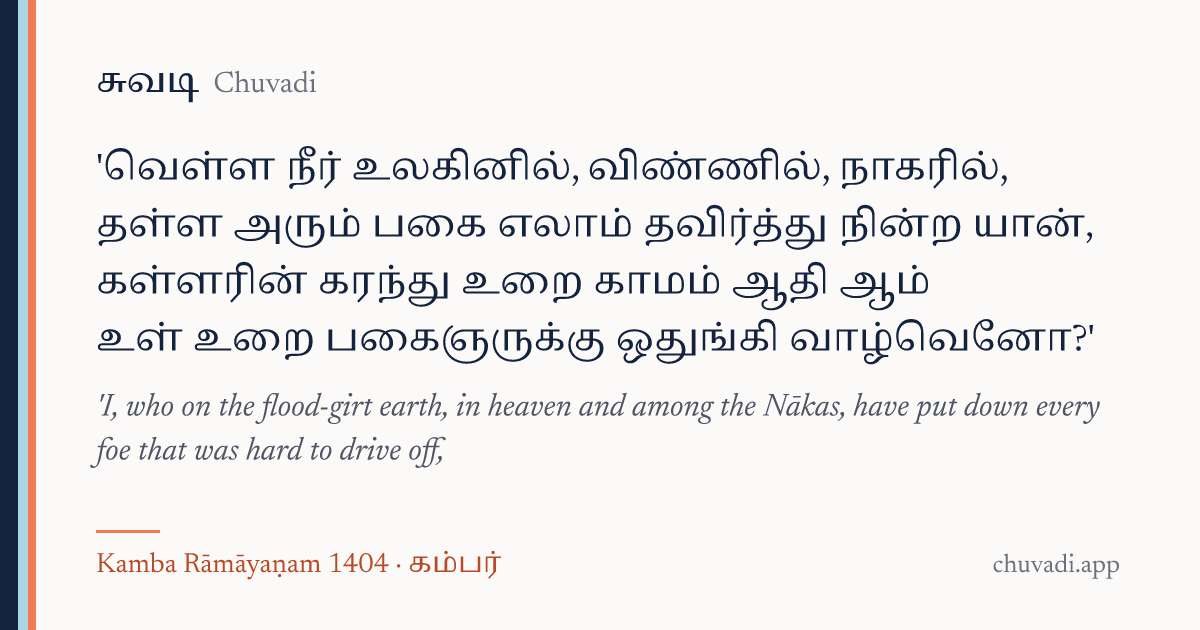
கம்பராமாயணம் 1404 · அயோத்தியா 1.17
பாடல் · The poem
Tap a word to see its gloss in the commentary and where else it occurs.
பொருள் · Meaning in Tamil
“வெள்ள நீர் உலகில் - கடலால் சூழப்பட்ட இந்த உலகத்திலும்; விண்ணில் - வானுலகத்திலும்; நாகரில் - நாகர்கள் வாழும் கீழுலகத்திலும்; தள்ள அரு பகைஎலாம் - நீக்குதற்கு அரிய (புறப்) பகைவர்களை எல்லாம்; தவிர்த்து நின்ற யான் - ஒழித்து வென்றுநின்ற யான்; கள்ளரின் - திருடர்களைப் போன்று; கரந்துஉறை காமம் ஆதி ஆம் - ஒளிந்து வாழும் காமம்முதலான; உள் உறு பகைஞருக்கு - உள்ளே பொருந்திய பகைவர்களுக்கு; ஒதுங்கிவாழ்வெனோ - அஞ்சி அடங்கி வாழ்வேனோ? (வாழேன்)
புறப் பகையை வென்ற யான் அகப் பகையினுக்கு அஞ்சி அடங்கமாட்டேன் என்பது கருத்து. காமம் ஆதிப் பகைவர்கள்: காமம், குரோதம், லோபம் (கடும்பற்றுள்ளம்), மோகம், மதம், மாற்சரியம் என்பன; இவற்றை வடநூலார் அரிஷட்வர்க்கம் என்பர். இவ்வாறனையும் காமம், வெகுளி, மயக்கம் என்னும் மூன்றனுள் அடக்கிக் கூறுவது தமிழ்மரபு.
தயரதன் மூவுலகும் வென்றவன் என்பது, “மாகமும் நாகமும் மண்ணும் வென்றவாளான்” (1515) என்று பின்னரும் சுட்டப்படுவது காணலாம். ஓகாரம் எதிர்மறை.
ஆங்கிலம் · English translationAI
Translation
- 'I, who on the flood-girt earth, in heaven and among the Nākas,
- have put down every foe that was hard to drive off,
- shall I, before desire and the rest, who lurk hidden like thieves,
- the enemies dwelling within, shrink back and live on?'
What the poem says
Tacarataṉ has defeated enemies on earth, in heaven and in the underworld of the Nākas. Now he means to fight the enemies within: desire, anger, greed, delusion, pride and envy, the six inner foes of Sanskrit tradition, which Tamil tradition groups as desire, anger and delusion.
They hide in the mind like thieves, and a king who conquered three worlds should not live cowed by them.