



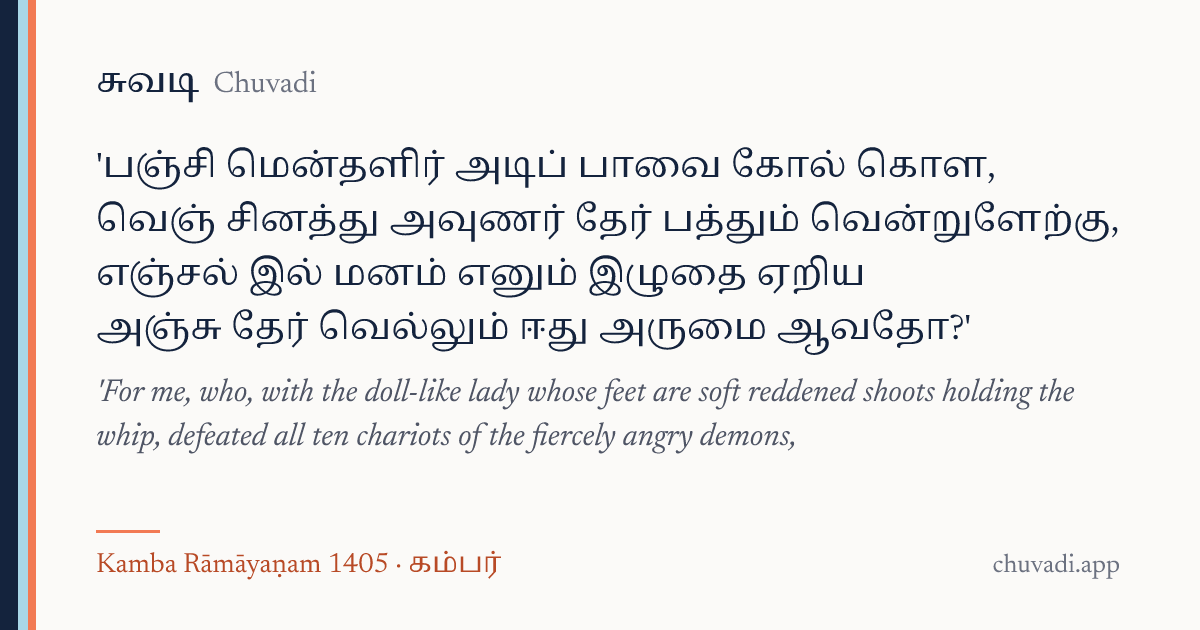
கம்பராமாயணம் 1405 · அயோத்தியா 1.18
பாடல் · The poem
Tap a word to see its gloss in the commentary and where else it occurs.
பொருள் · Meaning in Tamil
“பஞ்சி மென் தளிர் அடிப் பாவை - செம்பஞ்சுக் குழம்பு பூசப்பட்ட மென்மையான தளிர்போலும் பாதங்களையுடைய கைகேயி; கோல்கொள - சாட்டைகொண்டு தேரோட்ட; வெம் சினத்து அவுணர் தேர் பத்தும் - கொடிய கோபத்தையுடைய அசுரர்களின் பத்துத் தேர்களையும்; வென்று உளேற்கு - வென்றுள்ளவனாகிய எனக்கு; எஞ்சல்இல் மனம் எனும் - குறைவு அற்ற மனம் என்னும்; இழுதை ஏறிய - பேய் ஏறிச்செலுத்துகிற; அஞ்சு தேர் - பொறியாகிய ஐந்து தேர்களை; வெல்லும்ஈது - வெல்லும் தொழிலாகிய இது; அருமை ஆவதோ - அருமைப்பாடு உடையது ஆகுமோ? (ஆகாது)”
பஞ்சிமென் தளிர்அடி - பஞ்சினையும் தளிரினையும் நிகர்த்த அடிகள் எனலும் ஆம். கோல் கொள்ளுதலாகிய காரணம் தேரை ஓட்டுதலாகிய காரியத்தை உணர்த்தியதால் உபசார வழக்கு. இழுதை - பேய்; “இழுதை நெஞ்சினோன்” (2201). பத்துத் தேர்களை வென்றவனுக்கு ஐந்து தேர்களை வெல்லுவது அரிதாவதோ என்றது நயம்.
ஆங்கிலம் · English translationAI
Translation
- 'For me, who, with the doll-like lady whose feet are soft reddened shoots holding the whip,
- defeated all ten chariots of the fiercely angry demons,
- is it any hard thing to conquer the five chariots
- mounted by the goblin called the mind, that never wanes?'
What the poem says
Tacarataṉ recalls a famous exploit: in a war against the demons, with Kaikēyi driving his chariot, he defeated ten demon chariots. The five senses are only five chariots, even with the restless mind riding them like a goblin; surely he can beat them.
The commentary enjoys the arithmetic of ten against five. Readers will also remember that it was in that battle Kaikēyi earned the two boons she is about to claim, an irony the king cannot see.