



கம்பராமாயணம் 1406 · அயோத்தியா 1.19
பாடல் · The poem
Tap a word to see its gloss in the commentary and where else it occurs.
பொருள் · Meaning in Tamil
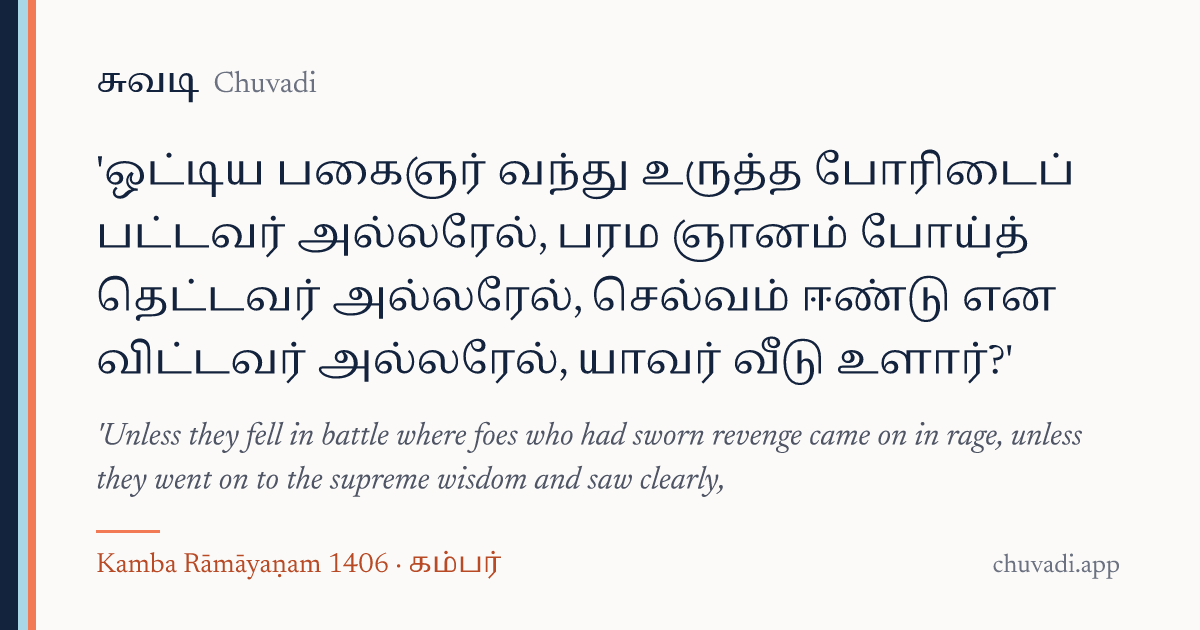
“ஒட்டிய பகைஞர் வந்து - வஞ்சினம் கூறிய பகைவர்கள் எதிர்த்து வந்து; உருத்த போரிடை - சினந்து செய்யும் போர்க்களத்தில்; பட்டவர் அல்லரேல் - இறந்தவர் அல்லராயின்; பரம ஞானம் போய்த்தெட்டவர் அல்லரேல் - மேலான ஞானம் கைவரப் பெற்றுத் தெளிந்தோர் அல்லராயின்; “செல்வம் ஈண்டு” என - “பொருள் பயன்படுவது இவ்வுலகில் மட்டுமே” என்று உணர்ந்து; விட்டவர் அல்லரேல் - அதனை முற்றுத் துறந்தவர் அல்லராயின்; யாவர் வீடு உளார் - யாவர் வீட்டுலகத்தை அடைபவர் ஆவார்? (ஒருவரும் ஆகார்).”
போர்க்களத்தில் வீழ்ந்த மறவரும், ஞானம் மிக்கு மெய்யுணர்வு கூடப் பெற்றவரும், செல்வ நிலையாமை உணர்ந்து துவரத் துறந்தவரும் வீடு பெறுவார் என்பது கருத்து. உருத்தல் - சினத்தல். பரமஞானம் - எல்லாம் இறைவனாகக் காணும் மேலான ஞானம். தெட்டவர் - தெளிந்தவர். தயரதனுக்குப் பகையின்மையால் போரிடை வீழ்தலும், பரம ஞானம் கூடாமையால் தெளிவும் வாய்த்தில. ஆதலால் செல்வ நிலையாமை உணர்ந்து துறவுநெறி சேர்தலே த பெறற்குவழியாய் அமைந்தது என்பது போதரும்.
ஆங்கிலம் · English translationAI
Translation
- 'Unless they fell in battle where foes who had sworn revenge came on in rage,
- unless they went on to the supreme wisdom and saw clearly,
- unless they gave up wealth, knowing it serves only here,
- who are they who have reached release?'
What the poem says
Tacarataṉ names the three roads to liberation open to a king: death in battle, the highest spiritual wisdom, or giving up wealth once one knows it is of use only in this world.
The commentary points out that the first two are closed to him: he has no enemies left to fall to, and he has not attained supreme wisdom. Renunciation is the road that remains.