



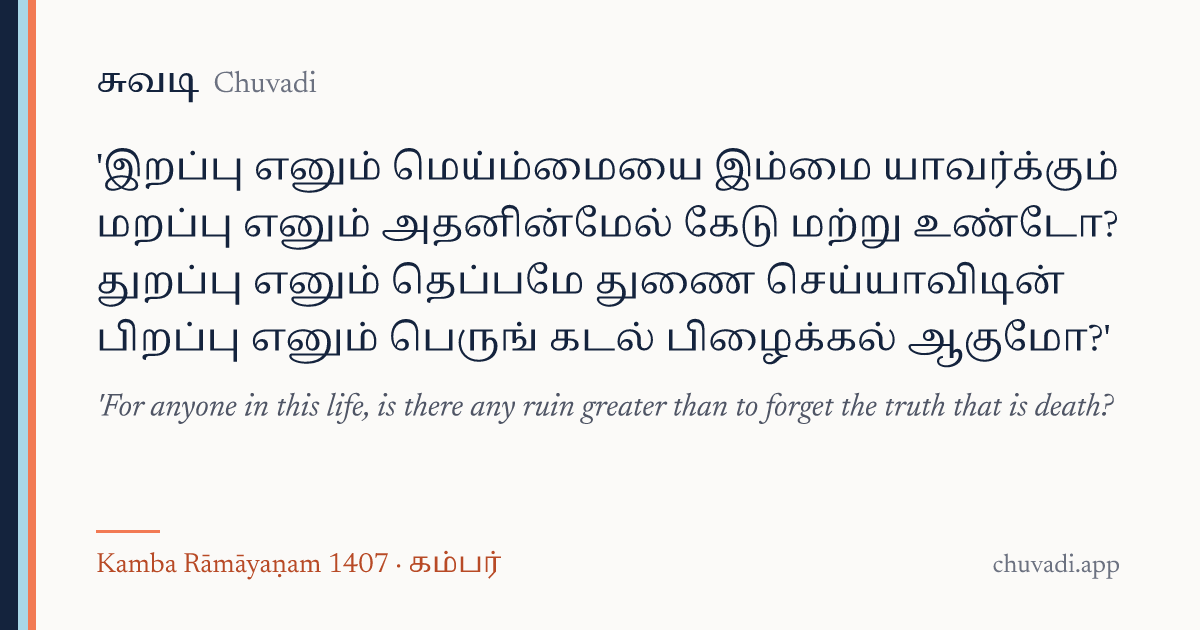
கம்பராமாயணம் 1407 · அயோத்தியா 1.20
பாடல் · The poem
Tap a word to see its gloss in the commentary and where else it occurs.
பொருள் · Meaning in Tamil
இம்மை யாவர்க்கும் - இப்பிறப்பிலே எவர்க்கும்; இறப்பு எனும் மெய்ம்மையை - சாவு உண்டு என்னும் உண்மையை; மறப்பு எனும் அதனின்மேல் - மறத்தல் என்னும் அதற்கு மேற்பட; கேடு மற்று உண்டோ - கெடுதல் வேறு உண்டோ? (இல்லை); துறப்பு எனும் தெப்பமே - துறத்தல் என்னும் மிதவையே; துணை செய்யாவிடின் - உதவி செய்யாவிட்டால்; பிறப்புஎனும் பெருங்கடல் - பிறப்பு என்னும் பெரிய கடலினின்று; பிழைக்கல் ஆகுமோ - தப்புதல் இயலுமோ? இயலாது.
யாக்கை நிலையாமையை எஞ்ஞான்றும் மனத்துக் கொண்டால் அது பிறவியை ஒழித்தற்கு இன்றியமையாத துறவினை மேற்கொள்ளச் செய்யும்; செய்யவே, பிறவிப் பெருங்கடல் கடத்தலாகும் என்பது கருத்து. காரண காரியத் தொடர்ச்சியாய்க் கரையின்றி வருதலின் பிறவிப் பெருங்கடல் என்றார். “பிறவிப் பெருங்கடல்” (குறள், 10) என்பர் திருவள்ளுவரும். பிழைக்கல் - தப்புதல், உய்தல்.
ஆங்கிலம் · English translationAI
Translation
- 'For anyone in this life, is there any ruin greater
- than to forget the truth that is death?
- Unless the raft called renunciation lends its help,
- can one escape the great sea called birth?'
What the poem says
Tacarataṉ presses his case for retiring. The worst folly is to forget that death is certain. Keeping it in mind leads one to renounce the world, and renunciation is the only raft that can carry a soul across the endless ocean of rebirths.
The "great sea of births" is a familiar image from the opening of the Kuṟaḷ.